5 Cooking Techniques That Make Vegetables Taste Amazing
Tired of bland vegetables? Discover 5 science-backed cooking techniques—from high-heat roasting to quick pickling—that transform everyday veggies into crave-worthy dishes. Learn how to unlock flavor and boost nutrition without the stress.

Let's face a culinary truth: if your primary experience with vegetables involves sad, waterlogged broccoli or unseasoned steamed carrots, it is completely understandable if you do not look forward to eating them. In the wellness world, we are constantly bombarded with conflicting advice—eat this, avoid that, track every single morsel. But amidst the noise and overwhelm, one piece of evidence-based advice remains universally true: eating more plants is incredibly good for our physical and mental health.
However, nutrition advice often skips a crucial step: how to actually make these foods taste good. Eating vegetables should never feel like a punishment or a chore. As a nutrition professional, I can tell you that the secret to eating more vegetables isn't about forcing yourself to choke down bland salads. The secret lies in the science of cooking.
By applying a few fundamental culinary techniques, you can completely alter the chemical structure of a vegetable, unlocking deep, savory, sweet, and tangy flavors. Let's explore five transformative cooking methods that will turn your produce from an afterthought into the star of your plate.
High-Heat Roasting: The Magic of the Maillard Reaction
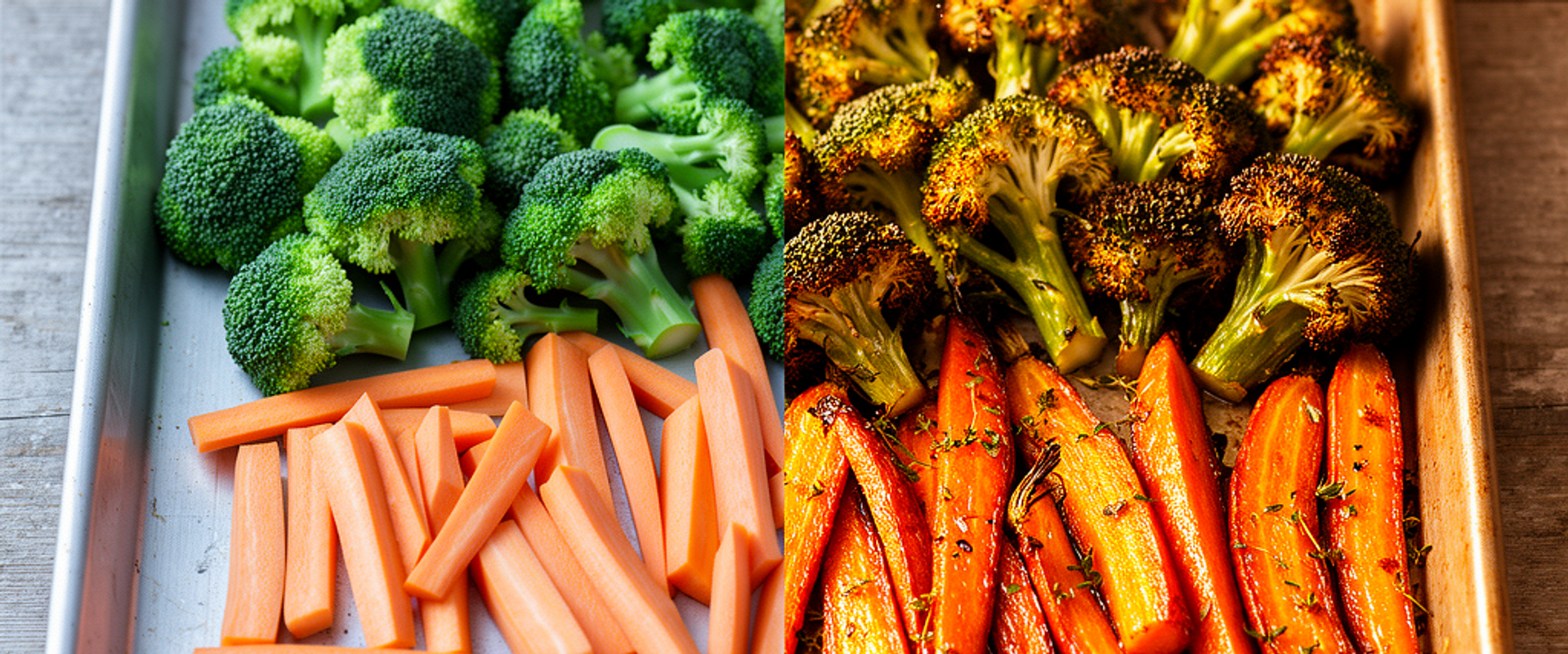
If there is one technique that converts vegetable skeptics into vegetable lovers, it is high-heat roasting. When you toss vegetables in a little oil and subject them to temperatures around 400°F to 425°F (200°C to 220°C), a fascinating scientific process occurs: the Maillard reaction.
This chemical reaction between amino acids and reducing sugars gives browned food its distinctive, complex flavor. It is the exact same process that makes a seared steak or a toasted piece of bread taste so irresistible. In vegetables like Brussels sprouts, broccoli, and cauliflower, roasting neutralizes the sulfurous, bitter compounds that make them unpleasant when boiled, replacing them with a nutty, deeply savory profile.
How to do it properly
The biggest mistake people make when roasting is crowding the pan. If the vegetables are touching, they will steam instead of roast, leading to a mushy texture.
- Chop your vegetables into uniform, bite-sized pieces.
- Make sure they are completely dry after washing. Water creates steam, which is the enemy of the Maillard reaction.
- Toss them with 1 to 2 tablespoons of olive oil or avocado oil. You need enough fat to coat them lightly—this conducts the heat and helps your body absorb fat-soluble vitamins.
- Spread them in a single layer on a large baking sheet, ensuring there is plenty of space between the pieces.
- Roast at 425°F until the edges are dark brown and crispy (usually 20 to 30 minutes, depending on the vegetable).
Try this today: Sheet Pan Crispy Broccoli
Toss 4 cups of dry broccoli florets (about 4 servings) with 1.5 tablespoons of olive oil, half a teaspoon of kosher salt, and a pinch of black pepper. Roast at 425°F for 20 minutes. Finish with a squeeze of fresh lemon juice and a sprinkle of parmesan cheese.
Caramelization: Unlocking Natural Sweetness
While roasting relies on high heat for a quick transformation, caramelization is an exercise in patience. This technique involves cooking vegetables low and slow, allowing their complex carbohydrates to break down into simpler sugars. As the water evaporates, these sugars undergo pyrolysis (browning), resulting in a rich, deep sweetness.
Onions are the most famous candidates for caramelization, but carrots, bell peppers, fennel, and leeks also respond beautifully to this method. Caramelized vegetables become incredibly soft, jammy, and intensely flavorful, making them perfect for folding into other dishes to boost the overall taste profile without relying on heavy, pre-made sauces.
How to do it properly
Patience is key. You cannot rush caramelization by cranking up the heat; that will only lead to burning.
- Slice your vegetables thinly and uniformly.
- Heat a tablespoon of olive oil or butter in a wide skillet over medium-low heat.
- Add the vegetables and a pinch of salt. The salt draws out moisture, which helps the breakdown process.
- Stir occasionally. If they start to dry out or stick, add a splash of water or vegetable broth to deglaze the pan.
- Cook for 30 to 45 minutes until they are a deep, rich mahogany color.
Try this today: Caramelized Onion and Mushroom Fold-in
Caramelize two large sliced yellow onions. During the last 10 minutes of cooking, add two cups of sliced cremini mushrooms and a splash of balsamic vinegar. Use a 1/2 cup portion of this savory, sweet mixture as a topping for whole-grain toast, fold it into a morning omelet, or stir it into a bowl of lentil pasta for an instant flavor upgrade.
Charring and Blistering: The Power of Smoke and Bitter
Sometimes, the best way to make a vegetable taste amazing is to push it right to the edge of burning. Charring or blistering creates a smoky, slightly bitter flavor that perfectly balances the natural sweetness of the produce. Our taste receptors appreciate complexity; a hint of bitterness makes the accompanying savory and sweet notes taste even more pronounced.
This technique works exceptionally well for vegetables with a high water content or thin skins, such as green beans, shishito peppers, cherry tomatoes, snap peas, and even hearty greens like cabbage.
How to do it properly
You need intense, direct heat and very little movement. A heavy cast-iron skillet is your best friend here.
- Heat a dry cast-iron skillet over medium-high to high heat until it is smoking hot.
- Toss your vegetables with just a tiny coating of high-heat oil (like avocado oil)—too much oil will cause splattering and frying rather than dry charring.
- Place the vegetables in the pan and leave them alone. Resist the urge to stir. Let them sit for 2 to 3 minutes until distinct black, blistered spots appear.
- Toss them once or twice to blister the other sides, then remove from the heat immediately so they retain their satisfying crunch.
Try this today: Blistered Green Beans with Almonds
Blister 2 cups of fresh, trimmed green beans in a hot skillet until spotted black but still crisp-tender. Transfer to a bowl and toss immediately with a teaspoon of toasted sesame oil, a splash of low-sodium soy sauce (or tamari), and two tablespoons of toasted sliced almonds. This makes two delicious, fiber-rich servings.
Quick Pickling: The Acid Trip
When a meal feels heavy, flat, or boring, it usually lacks acid. Acidity brightens food, cuts through richness, and stimulates the palate. Quick pickling is a brilliant technique that not only infuses vegetables with a tangy, vibrant flavor but also slightly breaks down tough cellular walls, making raw vegetables more palatable and easier to digest.
Unlike traditional fermentation or canning, which takes weeks and requires careful sterilization, quick pickling takes about 15 minutes of hands-on prep and a few hours in the fridge. It is a fantastic way to preserve vegetables that are starting to look a little sad in your crisper drawer.
How to do it properly
The basic brine ratio is incredibly easy to remember: equal parts water and vinegar.
- Thinly slice your target vegetables: red onions, radishes, cucumbers, carrots, or jalapeños. Pack them tightly into a clean glass jar.
- In a saucepan, combine 1 cup of water, 1 cup of vinegar (apple cider, white wine, or rice vinegar work beautifully), 1 tablespoon of kosher salt, and 1 to 2 tablespoons of sugar or honey to balance the harshness.
- Heat the liquid on the stove just until the salt and sugar dissolve.
- Pour the warm brine over the vegetables, let it cool to room temperature, and then seal and refrigerate. They will be ready to eat in an hour and last for up to two weeks.
Try this today: Vibrant Pickled Red Onions
Keep a jar of quick-pickled red onions in your fridge. Add a 1/4 cup portion to your lunchtime sandwiches, taco bowls, or scrambled eggs. They instantly elevate a simple meal, adding a satisfying crunch and a pop of bright flavor that makes heavy, store-bought dressings unnecessary.
Flavor-Layering: Harnessing Umami and Healthy Fats
Vegetables are naturally low in fat and protein, which means they can sometimes leave us feeling unsatisfied if eaten entirely on their own. This is where the culinary concept of flavor-layering comes in. By deliberately pairing vegetables with healthy fats and umami-rich ingredients, you create a dish that is deeply satisfying on a neurological level.
Umami, the savory "fifth taste," signals to our brain that we are eating something rich and satiating. Ingredients like miso paste, nutritional yeast, tomato paste, soy sauce, and aged cheeses are packed with glutamate, the amino acid responsible for umami.
Furthermore, pairing vegetables with healthy fats is a strict nutritional necessity. Many vital nutrients found in plants—specifically vitamins A, D, E, and K—are fat-soluble. This means your digestive tract literally cannot absorb them unless they are consumed alongside a source of fat. Adding olive oil, tahini, nuts, or seeds doesn't just make the dish taste better; it physically unlocks the nutritional value of the vegetable.
How to do it properly
Think about building a dressing or a finishing sauce that hits multiple flavor notes: fat (for mouthfeel and nutrient absorption), umami (for savory depth), and acid (for brightness).
Try this today: The Ultimate Massaged Kale Salad
Raw kale can be tough and bitter. Take 2 cups of chopped, stemless kale leaves (one large serving). In a small bowl, whisk together 1 tablespoon of extra virgin olive oil, 1 teaspoon of white miso paste (your umami booster), and a squeeze of fresh lemon juice (your acid). Pour this over the kale and literally massage it with your hands for one to two minutes. The physical manipulation breaks down the tough plant fibers, while the fat and salt soften the leaves. Top with a tablespoon of pumpkin seeds. The result is a tender, deeply savory salad that actually keeps you full and energized.
Conclusion: Your Practical Takeaway
Eating well is a marathon, not a sprint, and it begins with finding genuine joy in the foods that nourish you. You do not need to overhaul your entire diet, restrict the foods you love, or learn complex professional chef skills to improve your nutrition.
Your actionable step: Pick just one of these techniques to try this week. If you usually boil your broccoli, try roasting it at 425°F instead. If your grain bowls feel boring, spend 15 minutes making a jar of quick-pickled onions to keep in the fridge. By treating vegetables with the same culinary respect and flavor-layering as the rest of your meal, you will naturally want to eat more of them—no willpower required.