Nutrition for Desk Workers: Eating Well When You Sit All Day
Sitting at a desk all day doesn't mean your energy has to crash. Learn science-backed, practical nutrition strategies to stabilize blood sugar, reduce inflammation, and fuel your brain without the stress of diet culture.

It is 3:00 PM. You have been staring at a spreadsheet for two hours, your lower back is stiff, your eyelids feel like they are made of lead, and you are suddenly intensely craving a sugary coffee or a pastry from the breakroom.
If this sounds familiar, you are not alone. The "afternoon slump" is a nearly universal experience for desk workers. But here is the good news: this crash is not a personal failing or a lack of willpower. It is a biological response to a combination of prolonged sitting and the way we fuel our bodies.
When you work a sedentary job, navigating nutrition can feel overwhelming. You are bombarded with conflicting advice—intermittent fasting, low-carb diets, meal replacement shakes—all promising to optimize your workday. But eating well at a desk job does not require extreme diets or punishing yourself for sitting. It is simply about understanding how your metabolic needs shift when you are inactive, and giving your body the specific nutrients it needs to maintain steady energy, support brain function, and keep your joints feeling good.
Let's break down the science of desk-worker nutrition and explore practical, evidence-based strategies you can start using today.
The Biology of the Desk Worker: What Happens When We Sit
To understand how to eat for a desk job, we first need to understand what happens to our bodies when we sit for prolonged periods.
When we are active, our muscles are constantly contracting. These contractions act like a sponge, soaking up glucose (sugar) from our bloodstream to use for energy, a process that happens even without the help of insulin. However, when we sit for hours, our muscles are largely inactive. This means they are not demanding as much immediate glucose.
If we eat a meal that is very high in fast-digesting carbohydrates—think a massive bowl of white pasta, a giant bagel, or a sugary drink—that glucose enters the bloodstream rapidly. Because our inactive muscles aren't pulling that glucose in right away, our blood sugar spikes. In response, the pancreas pumps out a large surge of insulin to clear the sugar out of the blood. This rapid clearance is what causes your blood sugar to plummet an hour or two later, leaving you feeling exhausted, brain-fogged, and craving more sugar.
Furthermore, prolonged sitting can slow down digestion and contribute to mild, systemic inflammation, which can manifest as stiff joints or a general feeling of sluggishness.
The goal, therefore, is not to stop eating carbohydrates (your brain needs them to function!), but to eat in a way that provides a slow, steady drip of energy rather than a sudden flood.
Strategy 1: Master the Blood Sugar Curve
The most effective way to prevent the afternoon crash is to build meals that stabilize your blood sugar. You can do this by combining your carbohydrates with three key elements: protein, fiber, and healthy fats. Think of these three nutrients as the "brakes" that slow down the digestion of your meal.
Prioritize Protein
Protein is highly satiating, meaning it keeps you feeling full longer. It also requires more energy to digest than fats or carbs, which gently supports your metabolism.
- The Goal: Aim for 20 to 30 grams of protein at lunch.
- What that looks like: A palm-sized portion of chicken breast (about 4 oz), 1 cup of edamame, 1/2 block of firm tofu, a cup of Greek yogurt or cottage cheese, or 4 oz of baked salmon.
Focus on Fiber
Fiber is the indigestible part of plant foods. Because your body cannot break it down, it physically slows the emptying of your stomach and the absorption of sugars into your bloodstream.
- The Goal: Aim for 8 to 10 grams of fiber per meal.
- What that looks like: Half your plate filled with non-starchy vegetables (like leafy greens, broccoli, or bell peppers), plus a serving of complex carbohydrates like 1/2 cup of black beans, 1/2 cup of quinoa, or a slice of dense, seeded whole-grain bread.
Add Healthy Fats
Your brain is nearly 60% fat, and it relies on dietary fats to maintain cell integrity and optimal cognitive function. Fat also digests very slowly, providing lasting energy.
- The Goal: Include 1 to 2 tablespoons of healthy fats per meal.
- What that looks like: 1/4 of an avocado, a tablespoon of extra virgin olive oil in your dressing, a small handful of walnuts, or 2 tablespoons of pumpkin seeds.
Strategy 2: Anti-Inflammatory Foods for Stiff Joints and Brain Fog
Sitting in a chair all day can cause blood to pool in the lower extremities and lead to stiffness in the hips, neck, and shoulders. While getting up to stretch is crucial, your diet can also play a major role in managing the mild inflammation associated with a sedentary lifestyle.
Omega-3 Fatty Acids
Research consistently shows that Omega-3 fatty acids are powerful anti-inflammatory agents. They are particularly good for brain health and joint lubrication.
- How to get them: Fatty fish is the best source. Try to include wild-caught salmon, sardines, or mackerel in your lunch rotation twice a week. If you are plant-based, incorporate 2 tablespoons of chia seeds, ground flaxseeds, or hemp hearts into your morning oatmeal or lunch salads.
Antioxidant-Rich Produce
Antioxidants help neutralize free radicals, which are unstable molecules that can cause cellular damage and inflammation. The brighter and deeper the color of the plant, the higher the antioxidant content.
- How to get them: Keep a container of dark berries (blueberries, blackberries, or raspberries) at your desk for snacking. Add a handful of dark leafy greens (like spinach or kale) to your meals. Turmeric is also highly anti-inflammatory; try adding a pinch of turmeric and black pepper to roasted vegetables or soups.
Strategy 3: Hydration—The Unsung Energy Hero
Many desk workers mistake dehydration for hunger or fatigue. Even a mild dehydration level of 2% can impair cognitive performance, reduce concentration, and cause headaches.
Office environments, with their constant air conditioning or heating, can be incredibly drying. Plus, when we are deeply focused on a screen, we simply forget to drink.
- The Goal: Aim for at least 64 to 80 ounces (about 2 to 2.5 liters) of water a day, adjusting for your body size and activity level.
- Practical Tips:
- The Visual Cue: Keep a large, 32-ounce water bottle on your desk, right in your line of sight. Make it a rule to finish one before lunch and one before you clock out.
- Flavor It: If plain water is boring, infuse it. Drop in a few slices of cucumber, a wedge of lemon, or some crushed mint leaves.
- Watch the Caffeine: While a morning cup or two of coffee is perfectly fine (and actually provides antioxidants!), relying on caffeine to push through the afternoon can disrupt your sleep later. After 12:00 PM, switch to herbal teas, sparkling water, or green tea, which contains L-theanine—an amino acid that promotes calm, focused energy without the jitters.
Lunch Strategies: No More "Sad Desk Salads"
A common trap is eating a tiny, restrictive lunch (like a plain bowl of lettuce with fat-free dressing) in an attempt to be "healthy." Because this meal lacks adequate calories, protein, and fat, it inevitably leads to intense afternoon cravings.
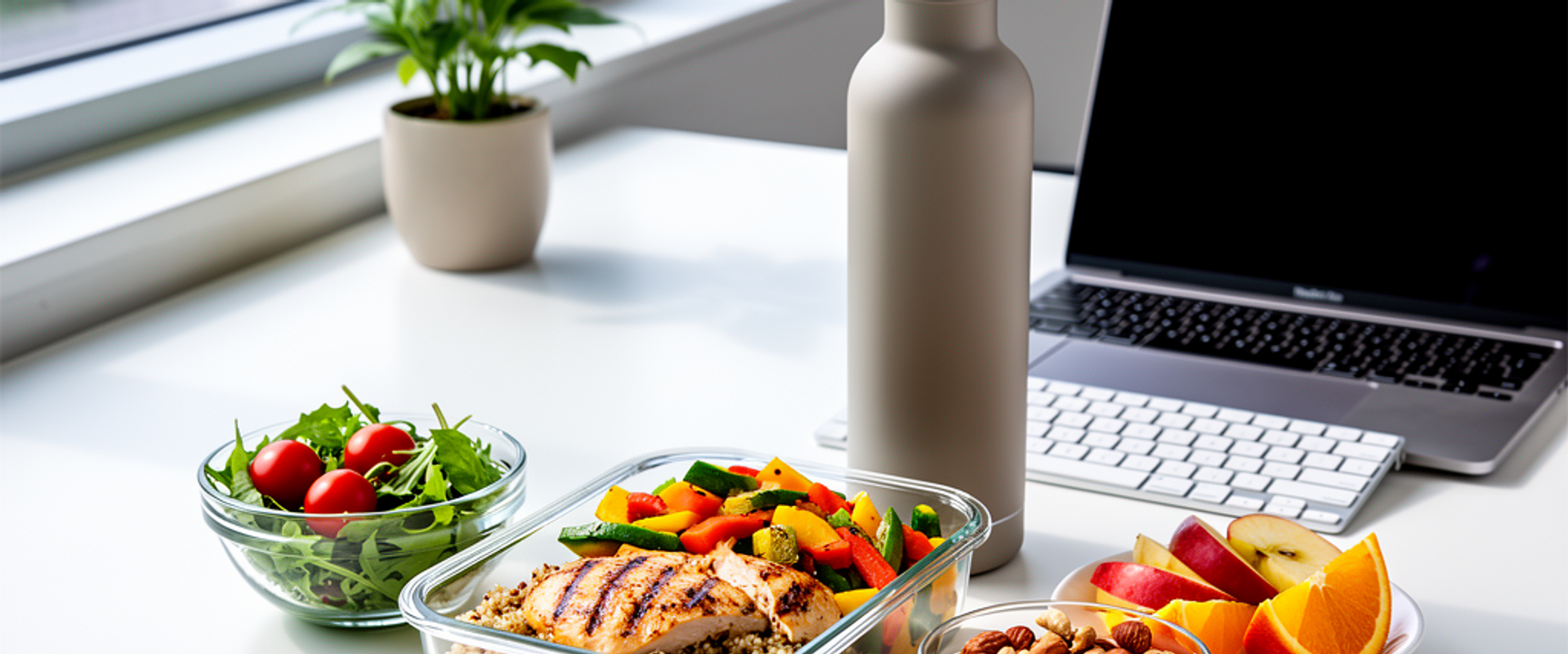
Instead of restricting, focus on building a nourishing meal. Here are three easy, metabolism-supporting lunch templates you can prep in advance:
1. The "Adult Lunchable" Mezze Box
Perfect for days when you don't have access to a microwave.
- Protein: 2 hard-boiled eggs or 1/2 cup of roasted chickpeas.
- Fiber/Veggies: 1 cup of cherry tomatoes and cucumber slices, plus 1/4 cup of hummus.
- Carbs: 1/2 cup of whole-wheat pita wedges or a serving of high-fiber seed crackers.
- Fat: 10-12 Kalamata olives or a handful of almonds.
2. The Brain-Power Bowl
This bowl is packed with Omega-3s and complex carbs.
- Base: 1/2 cup of cooked quinoa or brown rice.
- Greens: A large handful of baby arugula or spinach.
- Protein: 4 oz of canned wild salmon (mixed with a little Dijon mustard and Greek yogurt) or baked tempeh.
- Color: 1/2 cup of roasted sweet potato cubes.
- Dressing: 1 tablespoon of olive oil mixed with lemon juice.
3. The 5-Minute Upgraded Wrap
When you need something fast and comforting.
- Base: 1 large whole-grain or spinach wrap.
- Protein: 3-4 slices of high-quality turkey breast, or 1/2 cup of mashed white beans.
- Fat: 1/4 of an avocado, mashed.
- Veggies: A generous handful of mixed greens and shredded carrots.
- Side: A crisp apple or a cup of berries.
Smart Snacking: Swaps That Prevent the Slump
Snacking is not a bad habit; in fact, a well-timed snack can bridge the gap between lunch and dinner, preventing you from arriving home ravenous. The trick is to avoid the office candy bowl and choose snacks that offer a balance of macronutrients.
- Instead of a candy bar: Try 1/4 cup of dark chocolate chips mixed with 1/4 cup of raw almonds. You get the sweetness from the chocolate, plus fiber and fat from the nuts to slow the sugar absorption.
- Instead of vending machine potato chips: Bring 2 cups of air-popped popcorn sprinkled with a little sea salt and nutritional yeast (which provides B-vitamins for energy).
- Instead of a sugary flavored yogurt: Choose plain, full-fat Greek yogurt and stir in a teaspoon of honey, a dash of cinnamon (which helps support blood sugar balance), and a tablespoon of chia seeds.
The Importance of How You Eat, Not Just What You Eat
Finally, the most neglected aspect of desk-worker nutrition is how we eat. Eating while staring at a screen keeps your nervous system in a state of mild stress (sympathetic nervous system dominance). When you are stressed, digestion slows down, and you are less likely to register fullness cues.
Even if you only have 15 minutes, step away from your desk. Eat in the breakroom, on a bench outside, or even just sitting in a different chair looking out a window. Take three deep breaths before you take your first bite. This simple act shifts your body into "rest and digest" mode, allowing you to absorb your nutrients more efficiently and return to your work feeling genuinely refreshed.
Your Practical Takeaway
You do not need to overhaul your entire diet by tomorrow. Nutrition is about consistency, not perfection.
Pick one actionable step from this article to focus on this week. Maybe you buy a dedicated water bottle for your desk. Maybe you commit to adding a palm-sized portion of protein to your usual lunch. Or maybe you simply promise yourself to eat away from your keyboard. By making small, additive changes to support your body's biology, you can banish the afternoon slump and maintain steady, vibrant energy throughout your entire workday.