Plant-Based Protein: 10 Hearty Recipes That Even Meat Lovers Will Enjoy
Discover 10 hearty, science-backed plant-based protein recipes that satisfy even the biggest meat lovers. Learn how to easily add more plants to your plate without sacrificing flavor, texture, or fullness.

If you are trying to eat better, you have probably noticed that nutrition advice can be incredibly overwhelming. One day a certain food is a superfood; the next day, it is the enemy. But if there is one thing nearly all nutrition scientists, cardiologists, and dietitians agree on, it is this: eating more plants is consistently linked to better health outcomes, including improved digestion, steady energy levels, and long-term heart health.
However, transitioning to a more plant-forward way of eating often comes with a common fear: Will I be hungry? And closely following that: Will it actually taste good?
For those who grew up loving the savory, hearty satisfaction of a burger, a rich meat sauce, or a comforting stew, a plate of steamed vegetables and plain rice sounds less than thrilling. The good news? Plant-based eating does not require you to sacrifice flavor, texture, or satiety. You do not need to label yourself a vegan or vegetarian to reap the benefits of plant proteins. By understanding a little bit of food science and using the right ingredients, you can create plant-based meals that satisfy even the most devoted omnivores.
The Science of Plant-Based Satiety
To build a meal that keeps you full and energized, you need three main components: protein, fiber, and healthy fats. Traditional meat-based meals provide plenty of protein and fat, which trigger satiety hormones in the gut, but they contain zero fiber.
Plant proteins, particularly legumes like beans and lentils, are nutritional multitaskers. They naturally provide protein and fiber in one convenient package. Research published in the American Journal of Clinical Nutrition demonstrates that meals high in both protein and dietary fiber slow down gastric emptying. This means your food digests more slowly, leading to a steady release of energy rather than a rapid blood sugar spike followed by a crash.
Furthermore, the "meaty" flavor that omnivores crave is largely driven by umami—the fifth basic taste, characterized by a savory, brothy richness. While umami is abundant in meat, it is also naturally present in plant-based ingredients like tomatoes, mushrooms, soy sauce, nutritional yeast, and walnuts. By combining high-protein plants with umami-rich ingredients and satisfying fats, you can create deeply comforting meals.
Here are 10 hearty, protein-packed plant-based meal concepts designed to please everyone at your table.
1. Lentil and Walnut Bolognese
Traditional bolognese relies on slow-cooked ground beef for its rich texture. You can easily replicate this by swapping the meat for a mixture of brown lentils and finely chopped walnuts.
Why it works: One cup of cooked lentils provides about 18 grams of protein and 15 grams of fiber. Walnuts add heart-healthy omega-3 fatty acids and a dense, chewy texture that mimics ground meat.
How to make it: Sauté onions, carrots, and celery in 1 tablespoon of olive oil. Add 1 cup of dry brown lentils, 1/2 cup of finely chopped walnuts, crushed tomatoes, a splash of balsamic vinegar (for a hit of sweet acidity), and vegetable broth. Simmer for 30-40 minutes until the lentils are tender. Serve over a hearty pasta portion (about 2 ounces dry per person).
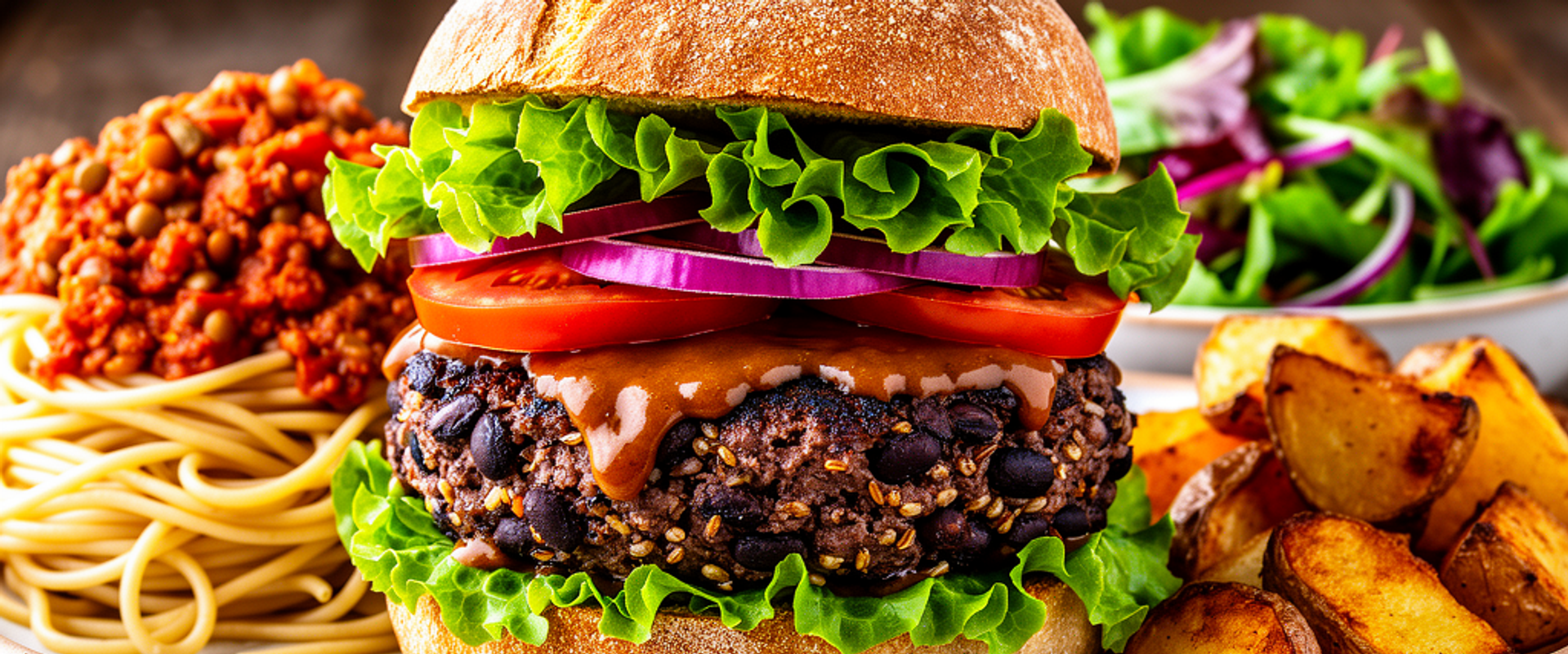
2. Smoky Black Bean and Quinoa Burgers
The biggest complaint about veggie burgers is that they are mushy. The secret to a firm, satisfying plant-based burger is managing moisture and using the right binders.
Why it works: Black beans provide an earthy base (15g protein per cup), while quinoa (8g protein per cooked cup) acts as a complete protein, containing all nine essential amino acids your body needs.
How to make it: Rinse and dry 1 can of black beans, then spread them on a baking sheet and roast at 325°F for 15 minutes to dry them out. Mash them slightly, leaving some chunks for texture. Mix with 1/2 cup cooked quinoa, 1/4 cup breadcrumbs, 1 tablespoon of smoked paprika, and a flax egg (1 tablespoon ground flaxseed mixed with 3 tablespoons water). Form into patties and pan-fry in a little olive oil until crisp.
3. Coconut Chickpea Curry (Chana Masala Style)
Curries are naturally suited to plant-based eating. The complex spices do the heavy lifting when it comes to flavor, making you forget there is no meat in the dish.
Why it works: Chickpeas are incredibly satisfying, offering about 14 grams of protein and 12 grams of fiber per cooked cup. Full-fat coconut milk adds the rich, satiating mouthfeel that helps signal to your brain that you have had a substantial meal.
How to make it: Sauté diced onions, garlic, and fresh ginger. Bloom your spices (curry powder, turmeric, cumin, and coriander) in the pan for 60 seconds to release their essential oils. Add 1 can of rinsed chickpeas, 1 can of diced tomatoes, and 1/2 cup of canned coconut milk. Simmer for 15 minutes. Serve over a 1/2 cup portion of basmati rice.
4. Crispy Tofu and Broccoli Stir-Fry
Tofu gets a bad reputation because it is often prepared incorrectly. When simply cubed and thrown into a pan, it can be spongy. When pressed and crisped, it becomes a phenomenal vehicle for flavor.
Why it works: Tofu is a complete soy protein. A standard 3-ounce serving of extra-firm tofu delivers about 8 to 10 grams of high-quality protein.
How to make it: Buy "extra-firm" tofu. Wrap the block in a clean kitchen towel and place a heavy pan on top for 15 minutes to press out excess water. Cut into cubes, toss with 1 tablespoon of cornstarch (this is the secret to the crunch) and a pinch of salt. Pan-fry in a tablespoon of avocado oil until golden brown on all sides. Toss with steamed broccoli and a savory sauce made from low-sodium soy sauce, a dash of maple syrup, sesame oil, and garlic.
5. The Tempeh "Bacon" BLT
Tempeh is tofu's earthier, denser cousin. Made from fermented whole soybeans, it has a naturally nutty flavor and a firm, meaty bite.
Why it works: Because it is fermented, tempeh is excellent for gut health and easier to digest. It is also a protein powerhouse, boasting over 15 grams of protein per 3-ounce serving.
How to make it: Slice tempeh thinly. Marinate it for 20 minutes in a mixture of 2 tablespoons soy sauce, 1 tablespoon maple syrup, 1 teaspoon apple cider vinegar, and 1/2 teaspoon liquid smoke (a crucial ingredient for that campfire bacon flavor). Pan-fry until caramelized. Layer on toasted whole-grain bread with thick slices of tomato, crisp lettuce, and a smear of mayonnaise or avocado.
6. Spicy Peanut Soba Noodles with Edamame
Sometimes the best way to satisfy a meat lover is to lean heavily into rich, savory fats like peanut butter, paired with the brilliant green crunch of edamame.
Why it works: Edamame (young soybeans) packs an impressive 17 grams of protein per cup. Soba noodles, made from buckwheat, offer an additional 6-8 grams of protein per serving compared to traditional refined wheat pasta.
How to make it: Whisk together 3 tablespoons of natural peanut butter, 1 tablespoon of soy sauce, 1 tablespoon of rice vinegar, a splash of warm water, and a pinch of red pepper flakes. Toss the sauce with cooked soba noodles, 1 cup of steamed edamame, and thinly sliced red bell peppers. Serve warm or cold.
7. White Bean and Kale "Sausage-Style" Soup
You do not need actual sausage to get the flavor profile of a rustic Italian sausage soup. The secret lies in the spice rack—specifically, fennel seeds.
Why it works: Cannellini beans (white kidney beans) provide a creamy texture and about 15 grams of protein per cup. They melt slightly into the broth, thickening the soup naturally without heavy cream.
How to make it: Sauté onions, garlic, and 1 teaspoon of crushed fennel seeds in olive oil. The fennel instantly gives the kitchen the aroma of Italian sausage. Add 2 cans of drained white beans, 4 cups of vegetable broth, and a bunch of chopped Tuscan kale. Simmer until the kale is tender. Finish with a squeeze of fresh lemon juice to brighten the rich flavors.
8. Seitan "Steak" Fajitas
If you have a dinner guest who insists they need the dense, chewy texture of a steak, seitan is your best friend. Made from vital wheat gluten, it has a remarkably meat-like texture.
Why it works: Seitan is incredibly protein-dense, containing over 20 grams of protein per 3-ounce serving. It absorbs marinades beautifully and sears just like strips of beef.
How to make it: You can buy pre-made seitan strips at most grocery stores. Toss them in a classic fajita marinade (lime juice, chili powder, cumin, and a little oil). Sauté in a screaming hot skillet with sliced bell peppers and onions until the edges of the seitan are charred. Serve in warm corn tortillas with guacamole.
9. TVP (Textured Vegetable Protein) Tacos
Textured Vegetable Protein (TVP) sounds like a science experiment, but it is simply dehydrated soy flour. When rehydrated, it has the exact texture of ground beef.
Why it works: TVP is a highly concentrated source of protein, offering about 24 grams of protein per half-cup (dry). It is also virtually flavorless on its own, meaning it acts as a sponge for whatever spices you add.
How to make it: Rehydrate 1 cup of dry TVP with 1 cup of boiling vegetable broth. Let it sit for 5 minutes. Heat a pan with 1 tablespoon of oil, add the rehydrated TVP, and stir in 2 tablespoons of your favorite taco seasoning. Cook until lightly browned. Serve in taco shells with salsa, shredded lettuce, and a cashew-based crema or regular cheese if you eat dairy.
10. Creamy Red Lentil Dal
Dal is a staple in Indian cuisine for a reason: it is deeply comforting, incredibly nutritious, and cheap to make.
Why it works: Red lentils break down as they cook, creating a naturally thick, porridge-like consistency. A 1-cup serving of cooked red lentils provides about 18 grams of protein.
How to make it: Simmer 1 cup of split red lentils with 3 cups of water or broth, a pinch of turmeric, and a pinch of salt for about 20 minutes until they dissolve into a creamy puree. In a separate small pan, heat 1 tablespoon of oil or ghee and fry cumin seeds, minced garlic, and a dried chili until fragrant (this technique is called a tadka). Pour the spiced oil over the lentils just before serving.
Practical Tips for Transitioning
If you are used to eating meat at every meal, do not feel pressured to change everything overnight. Nutrition is not an all-or-nothing game. Here are a few practical ways to start:
- The 50/50 Swap: If a fully plant-based bolognese feels like too much of a stretch, try using half ground beef and half cooked lentils. You still get the meat flavor, but you have successfully added a massive dose of fiber and plant nutrients to your plate.
- Meatless Mondays: Dedicate just one day a week to exploring these recipes. It makes the process an adventure rather than a restriction.
- Focus on Addition, Not Subtraction: Instead of thinking about what you are "giving up," focus on what you are adding to your diet: more fiber, more colorful vegetables, and new flavor profiles.
The Takeaway
You do not have to choose between eating foods that support your long-term health and eating foods that actually keep you full and satisfied. By leaning into high-protein legumes, utilizing umami-rich flavors, and mastering simple cooking techniques like pressing tofu or blooming spices, you can build a repertoire of plant-based meals that you genuinely crave.
Do this today: Pick just one recipe from this list—perhaps the Lentil and Walnut Bolognese or the TVP Tacos—and add the ingredients to your grocery list for this week. Approach it with curiosity, and you might just find a new favorite weeknight dinner.