Spice Up Your Health: 5 DIY Spice Blends Better (and Cheaper) Than Store-Bought
Upgrade your meals with these 5 easy, budget-friendly DIY spice blends. Learn how to make your own taco seasoning, curry powder, and more—without the excess sodium, anti-caking agents, or fillers.

Cooking at home is one of the most effective ways to support your overall health, but let's be honest: plain roasted chicken breast and steamed vegetables can get boring very quickly. The secret to sustainable, enjoyable nutrition isn't a restrictive diet or forcing yourself to eat bland foods. It is all about flavor.
Herbs and spices are the unsung heroes of the culinary and nutrition worlds. They transform basic ingredients into crave-worthy meals, and they pack an incredible nutritional punch. However, if you are relying on store-bought spice packets and pre-made blends, you might be getting more than you bargained for.
Commercial spice blends often contain high levels of sodium, cheap fillers like maltodextrin (a highly processed carbohydrate used to bulk up the product), and anti-caking agents like silicon dioxide or calcium silicate. While these additives are generally recognized as safe, they take up space in the jar that could be filled with actual, flavor-packed, antioxidant-rich spices.
Making your own spice blends at home is incredibly simple, far more cost-effective, and allows you to control exactly what goes into your food. Let's dive into the science of why spices are so good for you, and how to make five staple blends in your own kitchen.
The Nutritional Power of Herbs and Spices
When we talk about eating a nutrient-dense diet, we usually focus on fruits, vegetables, proteins, and whole grains. But gram for gram, herbs and spices are some of the most antioxidant-rich foods on the planet.
Spices are packed with polyphenols, which are beneficial plant compounds that help combat oxidative stress in the body. For example, a study published in the Journal of Agricultural and Food Chemistry found that herbs like oregano and thyme have incredibly high antioxidant capacities—even higher than many fruits and vegetables.
Furthermore, using robust spice blends is one of the most effective, flavor-forward ways to reduce your sodium intake without feeling deprived. While salt is an essential nutrient and makes food taste great, the American Heart Association notes that most of us consume far more sodium than we need, largely from processed foods. By creating your own blends, you can use a controlled, mindful pinch of salt while letting the spices do the heavy lifting for flavor.
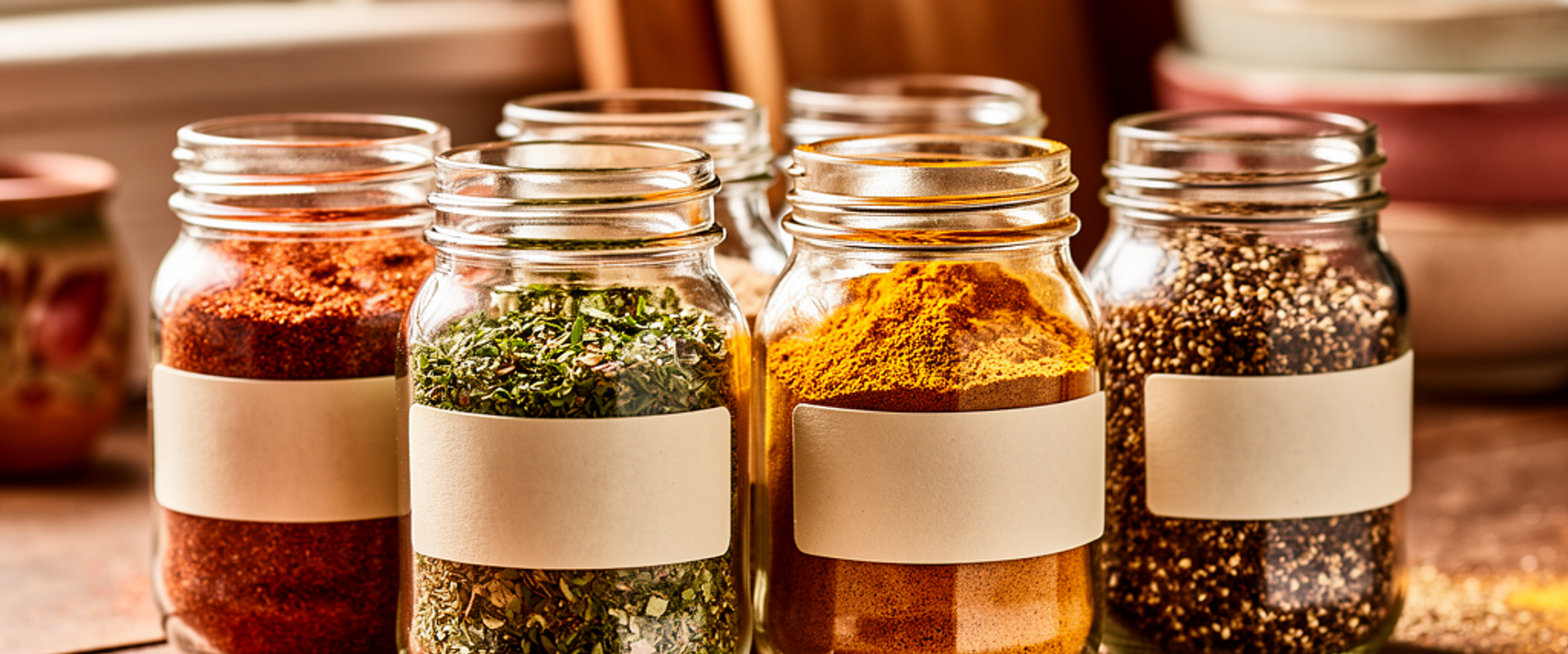
Here are five incredible spice blends you can mix up today. For each, simply combine the ingredients in a small bowl, whisk them together, and store them in an airtight glass jar.
1. The Ultimate DIY Taco Seasoning
Store-bought taco seasoning packets are notorious for their high sodium content and reliance on cornstarch or wheat flour as thickeners. When you make it at home, you get a pure, smoky, and savory flavor profile that elevates any protein.
The Recipe
- 2 tablespoons chili powder
- 1 tablespoon ground cumin
- 1 teaspoon ground coriander
- 1 teaspoon smoked paprika
- 1 teaspoon garlic powder
- 1 teaspoon onion powder
- 1 teaspoon dried oregano
- 1/2 teaspoon crushed red pepper flakes (adjust for heat)
- 1/2 teaspoon kosher salt (optional)
How to Use It
Use about 2 tablespoons of this blend per pound of protein.
Meal Idea: Create a fiber-rich Turkey and Black Bean Taco Bowl. Brown 16 ounces of lean ground turkey in a skillet, then add 2 tablespoons of your DIY taco seasoning and a splash of water. Let it simmer for two minutes. Serve a 4-ounce portion of the seasoned turkey alongside 1/2 cup of rinsed, canned black beans, 1/2 cup of cooked quinoa, and top with 2 tablespoons of fresh salsa and a quarter of a sliced avocado.
2. Vibrant Italian Herb Blend
Italian seasoning is a staple for Mediterranean-style cooking, but store-bought versions often sit on supermarket shelves for months, losing their volatile oils and vibrant flavors. Mixing this fresh at home ensures maximum potency and aroma.
The Recipe
- 2 tablespoons dried oregano
- 2 tablespoons dried basil
- 1 tablespoon dried thyme
- 1 tablespoon dried rosemary (lightly crushed in your hands before adding)
- 1 tablespoon dried marjoram
- 1 tablespoon dried garlic flakes (or garlic powder)
How to Use It
This blend is incredibly versatile. It is perfect for bringing life to roasted vegetables, homemade vinaigrettes, or simple tomato sauces.
Meal Idea: Make a 10-minute weeknight marinara. Take one 15-ounce can of crushed tomatoes (look for one with no added salt) and warm it in a saucepan. Stir in 1 tablespoon of your Italian Herb Blend, 1 tablespoon of extra virgin olive oil, and a pinch of salt. Serve 1/2 cup of this sauce over a 2-ounce portion (dry weight) of whole-wheat pasta or chickpea pasta, paired with a side salad of mixed greens.
3. Anti-Inflammatory Curry Powder
Curry powder isn't a single spice; it's a Western invention inspired by the complex spice blends of Indian cuisine (like Garam Masala). Making it at home allows you to maximize the health benefits of its star ingredient: turmeric.
Turmeric contains curcumin, a compound heavily researched for its powerful anti-inflammatory properties. However, curcumin is poorly absorbed by the human body on its own. Science offers a simple culinary solution: piperine, the active compound in black pepper. Research shows that combining piperine with curcumin enhances curcumin absorption by up to 2,000%.
The Recipe
- 2 tablespoons ground coriander
- 2 tablespoons ground cumin
- 1.5 tablespoons ground turmeric
- 1 teaspoon ground ginger
- 1 teaspoon dry mustard powder
- 1/2 teaspoon freshly ground black pepper (crucial for curcumin absorption!)
- 1/2 teaspoon ground cinnamon
- 1/2 teaspoon ground cardamom
How to Use It
Curry powder thrives when it is "bloomed"—meaning it is briefly cooked in a fat (like olive oil or coconut oil) before adding liquid ingredients. This releases the fat-soluble flavor compounds.
Meal Idea: Whip up a Coconut Curry Chickpea Stew. Sauté half a diced yellow onion in 1 tablespoon of olive oil until soft. Add 1.5 tablespoons of your curry powder and stir constantly for 30 seconds until fragrant. Pour in one 15-ounce can of rinsed chickpeas, 1/2 cup of full-fat canned coconut milk, and 1/2 cup of vegetable broth. Simmer for 10 minutes, then stir in 2 cups of fresh baby spinach until wilted. This makes two hearty, plant-powered servings.
4. Everything Bagel Seasoning (Without the Sodium Bomb)
Everything Bagel seasoning has taken the food world by storm, and for good reason—it adds incredible crunch and savory depth to almost anything. The problem? Many commercial brands are overwhelmingly salty, with salt often listed as the first or second ingredient.
By making it at home, you can enjoy the satisfying crunch of seeds and the savory punch of alliums (garlic and onion) while keeping the sodium in check.
The Recipe
- 2 tablespoons white sesame seeds
- 1 tablespoon black sesame seeds
- 2 tablespoons poppy seeds
- 1.5 tablespoons dried minced garlic
- 1.5 tablespoons dried minced onion
- 1 teaspoon flaky sea salt (like Maldon)
How to Use It
Because you control the salt, you can use a heavier hand with this blend to get more of that delicious seed crunch.
Meal Idea: Upgrade your morning avocado toast. Toast one slice of whole-grain sourdough bread. Mash half of a medium avocado with a squeeze of fresh lemon juice, spread it on the toast, and generously sprinkle 1 to 2 teaspoons of your custom Everything Bagel seasoning on top. For extra protein, add a poached egg or 2 tablespoons of hemp seeds.
5. Zesty Za'atar
If you haven't cooked with za'atar yet, you are in for a treat. This traditional Middle Eastern spice blend is earthy, savory, and uniquely tangy. The tang comes from sumac, a deep red spice made from dried and ground berries. Sumac is not only delicious but also exceptionally high in vitamin C and antioxidants.
The Recipe
- 2 tablespoons dried thyme
- 2 tablespoons toasted sesame seeds (toast them briefly in a dry skillet for best flavor)
- 2 tablespoons ground sumac
- 1 teaspoon dried oregano
- 1/2 teaspoon coarse kosher salt
How to Use It
Za'atar is traditionally mixed with olive oil to create a paste, or sprinkled over flatbreads, dips, and proteins.
Meal Idea: Create a simple, satisfying Mediterranean snack plate. Take 1/2 cup of plain, unsweetened Greek yogurt (or hummus) and spread it into a shallow bowl. Drizzle with 1 teaspoon of extra virgin olive oil and sprinkle 1 tablespoon of your DIY za'atar over the top. Serve with 1 cup of sliced cucumbers, 1/2 cup of cherry tomatoes, and a few whole-grain pita wedges for dipping. It is a perfect balance of protein, healthy fats, and fiber.
Practical Tips for Storing Your DIY Blends
To get the most out of your homemade spice blends, proper storage is key. Spices don't technically "spoil" in a way that will make you sick, but they do lose their flavor and nutritional potency over time.
- Use airtight glass containers: Small glass mason jars or repurposed (and thoroughly washed) spice jars work perfectly. Glass prevents the volatile oils in the spices from leaching out.
- Keep them cool and dark: Store your blends in a pantry, drawer, or cabinet away from the stove. Heat and sunlight degrade the quality of spices rapidly.
- Label and date them: A piece of masking tape and a marker are your best friends here. Write the name of the blend and the date you made it. For peak flavor, try to use your DIY blends within 6 months.
The Takeaway
Navigating the world of nutrition doesn't have to mean eating plain, flavorless food, nor does it require buying expensive, pre-packaged "health" foods. By spending just 10 minutes mixing up a few of these spice blends, you are taking a practical, evidence-based step toward better health. You'll reduce your intake of unnecessary sodium and fillers, boost your daily consumption of antioxidants, and—most importantly—make your healthy home-cooked meals taste absolutely incredible.
Pick just one blend from this list that sounds good to you, check your pantry to see what spices you already have, and mix up a batch this week. Small, sustainable habits are the true foundation of lifelong wellness.