The 2-Minute Habit: 5 Homemade Salad Dressings That Beat Bottled Every Time
Tired of complicated nutrition advice? Discover how to make five delicious, science-backed salad dressings in under two minutes. From creamy avocado to classic vinaigrette, learn to boost nutrient absorption and flavor effortlessly.

The Overwhelm of Eating Well
If you are trying to eat better, you have probably noticed that nutrition advice can be incredibly loud, confusing, and contradictory. One day a certain food is a superfood; the next day, an influencer is telling you to avoid it entirely. It is enough to make anyone want to throw their hands in the air and give up on cooking altogether.
But as a nutrition professional, I am here to offer a deep breath and a simpler approach. Eating well does not require a degree in biochemistry, nor does it require spending hours meal-prepping on a Sunday. Instead, sustainable nutrition is built on small, enjoyable habits that seamlessly fit into your life.
One of the highest-return habits you can build? Making your own salad dressing.
Store-bought dressings are perfectly fine in a pinch, but they often lack the vibrant, fresh flavor of a homemade version. More importantly, making your own dressing takes under two minutes, requires zero fancy equipment, and allows you to use high-quality ingredients that actually help your body absorb the nutrients in your vegetables.
Let's break down the science of why salad dressing is so important, how to build a satisfying salad, and five foolproof, two-minute dressings you can shake up today.
The Science of a Great Salad Dressing
Before we get to the recipes, we need to address a lingering myth from the 1990s: the idea that salads should be eaten dry or with fat-free dressing.
From a scientific and physiological standpoint, fat is not something to fear—it is a functional necessity, especially when eating vegetables.
Vegetables like spinach, carrots, bell peppers, and tomatoes are packed with fat-soluble vitamins (Vitamins A, D, E, and K) and powerful antioxidants like lutein and lycopene. "Fat-soluble" means exactly what it sounds like: your body literally cannot absorb and utilize these nutrients unless they are consumed alongside dietary fat.
Research has consistently shown that adding a source of fat—like extra virgin olive oil, avocado, or sesame seeds—to a salad significantly increases the bioavailability of these micronutrients. By adding a rich, flavorful dressing to your greens, you are not "ruining" the salad; you are unlocking its nutritional potential.
The Magic of Emulsification
Making dressing at home usually involves combining oil (fat) and vinegar or citrus (acid). As you may remember from middle school science, oil and water do not naturally mix.
To bring them together into a creamy, cohesive dressing, you need an emulsifier. Emulsifiers are ingredients that have one water-loving end and one oil-loving end, allowing them to bind the two liquids together. Mustard, honey, and tahini are all excellent natural emulsifiers. When you add a teaspoon of Dijon mustard to your oil and vinegar and shake vigorously, you create a stable, velvety dressing that coats your greens perfectly.
The Anatomy of a Satisfying Salad
A great dressing is only as good as the salad it coats. To build a meal that actually keeps you full, energized, and satisfied, avoid a bowl of plain lettuce. Instead, think of your salad in five parts:
- The Base: Mixed greens, arugula, baby spinach, finely chopped kale, or even shredded cabbage.
- The Color: Cherry tomatoes, shredded carrots, roasted beets, sliced bell peppers, or fresh berries.
- The Protein: Grilled chicken, baked tofu, chickpeas, edamame, hard-boiled eggs, or canned wild salmon. Protein is crucial for satiety.
- The Crunch: Pumpkin seeds, chopped walnuts, sliced almonds, croutons, or roasted sunflower seeds.
- The Flavor Catalyst: Your homemade dressing.
Now, grab a small glass jar with a tight-fitting lid (an empty jam jar works perfectly), and let's make some dressing.
5 Dressings You Can Make in 2 Minutes
Note: Each of these recipes makes about 2 servings. Simply place all the ingredients in a jar, seal the lid tightly, and shake vigorously for 10 to 15 seconds until combined.
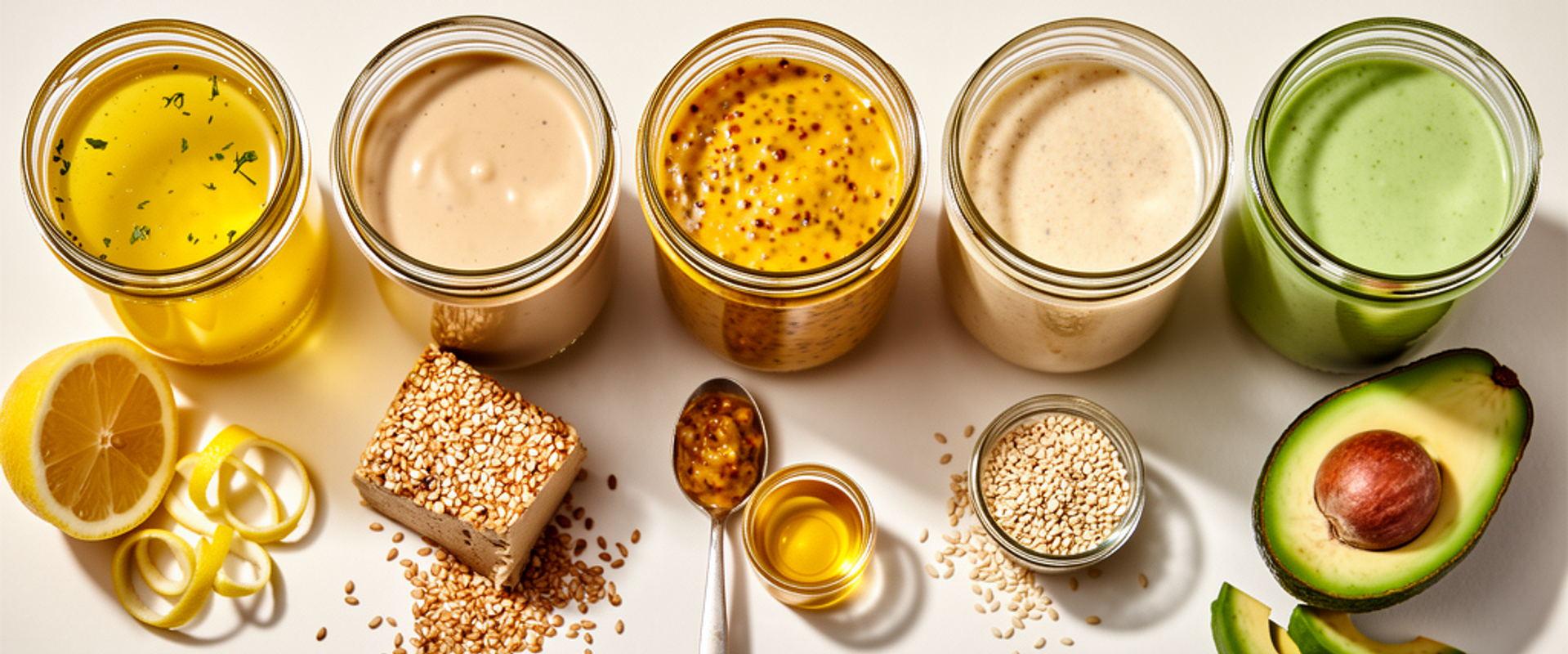
1. The Foolproof Classic Vinaigrette
This is the little black dress of salad dressings. It is versatile, bright, and works on almost anything.
The Ingredients:
- 2 tablespoons extra virgin olive oil
- 1 tablespoon apple cider vinegar (or white wine vinegar)
- 1 teaspoon Dijon mustard
- A pinch of salt and black pepper
The Science: Extra virgin olive oil is rich in oleic acid, a monounsaturated fat, and is packed with polyphenols—plant compounds with potent antioxidant properties. Apple cider vinegar provides a bright acidity that balances the richness of the oil, while the mustard acts as your emulsifier to make it creamy.
How to Serve It: Toss this vinaigrette with a base of mixed spring greens, halved cherry tomatoes, sliced cucumbers, and a scoop of quinoa. Top with grilled chicken or white beans for a balanced, refreshing lunch.
2. Creamy Lemon Tahini
If you love creamy dressings but want a dairy-free option, tahini (ground sesame seed paste) is your best friend. It has a nutty, savory flavor that pairs beautifully with roasted vegetables.
The Ingredients:
- 2 tablespoons tahini
- 1 tablespoon fresh lemon juice
- 2 tablespoons warm water (to thin)
- 1/4 teaspoon garlic powder
- A pinch of salt
The Science: Tahini is a fantastic source of plant-based calcium and iron. Here is where food synergy comes into play: the non-heme iron found in plant foods like sesame seeds is notoriously difficult for the body to absorb. However, pairing it with Vitamin C—like the fresh lemon juice in this dressing—can increase iron absorption significantly.
How to Serve It: This dressing is robust enough to handle hearty greens. Massage it into chopped kale, and top with roasted sweet potato cubes, chickpeas, and a sprinkle of hemp hearts.
3. 5-Ingredient Honey Mustard
Sweet, tangy, and incredibly satisfying. This dressing proves that you do not need refined syrups or artificial thickeners to achieve that classic restaurant-style honey mustard flavor.
The Ingredients:
- 2 tablespoons extra virgin olive oil
- 1 tablespoon apple cider vinegar
- 1 tablespoon Dijon mustard
- 1 teaspoon honey
- A pinch of salt
The Science: Mustard seeds belong to the cruciferous family (the same family as broccoli and Brussels sprouts) and contain compounds called glucosinolates. The honey provides a touch of natural sweetness that can help temper the bitterness of certain dark leafy greens, making it easier and more enjoyable to increase your vegetable intake.
How to Serve It: This is a crowd-pleaser. Try it over a bed of baby spinach topped with sliced crisp apples, chopped pecans, and grilled chicken or baked tempeh.
4. Toasted Asian Sesame
When you are craving something savory, deeply flavorful, and slightly umami, this dressing delivers. Toasted sesame oil has a very strong flavor, so we balance it with a neutral oil or simply use it sparingly.
The Ingredients:
- 1 tablespoon toasted sesame oil
- 1 tablespoon mild olive oil (or avocado oil)
- 1 tablespoon rice vinegar
- 1 tablespoon low-sodium soy sauce (or tamari if gluten-free)
- 1/4 teaspoon ground ginger (or 1/2 teaspoon freshly grated ginger)
The Science: Ginger contains gingerol, a bioactive compound with well-documented anti-inflammatory and antioxidant effects. Using toasted sesame oil not only provides a rich, nutty flavor but also offers sesamol, an antioxidant specific to sesame seeds.
How to Serve It: Create a crunchy, vibrant salad using shredded red and green cabbage, grated carrots, sliced bell peppers, and shelled edamame. Toss with the sesame dressing and top with a handful of crushed cashews.
5. Creamy Avocado Cilantro
If you love a rich, green goddess-style dressing, this avocado-based option is perfect. Because we are using whole avocado rather than just oil, this dressing requires either very vigorous mashing with a fork before shaking, or a quick blitz with a handheld milk frother if you have one.
The Ingredients:
- 1/2 ripe avocado, mashed until very smooth
- 1 tablespoon extra virgin olive oil
- 1 tablespoon fresh lime juice
- 2 tablespoons water (to thin to your desired consistency)
- 1 tablespoon finely chopped fresh cilantro (optional)
- A pinch of salt
The Science: Avocados are nutritional powerhouses, offering a stellar combination of heart-healthy monounsaturated fats, dietary fiber, and potassium. The fiber in the avocado helps slow down digestion, keeping your blood sugar stable and keeping you fuller for longer.
How to Serve It: This dressing is practically begging for a taco salad. Use a base of chopped romaine lettuce, and top with black beans, roasted corn, diced red onions, and a sprinkle of pumpkin seeds (pepitas).
Practical Prep and Storage Tips
Making your own dressing is incredibly simple, but knowing how to store it ensures you always have a flavorful option on hand.
- Shelf Life: Oil and vinegar-based dressings (like the Classic Vinaigrette and Honey Mustard) will easily last 5 to 7 days in the refrigerator. Dressings made with fresh ingredients like the Creamy Avocado Cilantro are best consumed within 2 to 3 days, as the avocado will eventually begin to oxidize and brown.
- The Solidification Factor: If you use high-quality extra virgin olive oil, you might notice that your dressing solidifies or gets cloudy in the fridge. This is completely normal and a sign of good oil! Just let the jar sit on the counter for 5 to 10 minutes before you eat, or run the base of the jar under warm tap water for 30 seconds, then give it a good shake.
- Batch Cooking: The recipes above are scaled for immediate use (about 2 servings). If you find a dressing you absolutely love, simply multiply the ingredients by three or four, make it in a larger mason jar, and keep it in the fridge for the week.
Your Practical Takeaway
Eating well is not about restriction, perfection, or choking down dry bowls of lettuce because you think you "should." It is about finding simple, joyful ways to nourish your body.
Adding a flavorful, fat-rich homemade dressing to your greens is a science-backed way to absorb more nutrients while genuinely enjoying your meal.
Your action step for this week: Pick just one of the five dressings above. Grab a jar, measure out the ingredients, and shake it up. In less than two minutes, you will have elevated your meal, boosted your nutrient absorption, and taken a practical step toward sustainable, healthy eating.