The Ultimate Guide to Meal Prep Containers: What Works, What's a Waste, and What the Pros Use
Overwhelmed by meal prep? The secret to consistent, nourishing meals lies in your containers. Discover the science of glass vs. plastic, the exact sizes you need, and practical meal ideas to streamline your week.

If you have ever spent a Sunday afternoon enthusiastically chopping vegetables, roasting pans of protein, and simmering grains, only to find yourself staring at a chaotic jumble of mismatched, lidless plastic tubs, you are not alone.
When we talk about eating well, we usually focus on the food itself: the balance of macronutrients, the colorful vegetables, and the fiber-rich carbohydrates. But as a nutrition professional, I can tell you that the unsung hero of consistent, nourishing eating is not a superfood or a complex recipe. It is your storage system.
If your meal prep containers leak in your bag, warp in the microwave, or make your food taste like yesterday's garlic, your best intentions will quickly turn into frustration and a costly takeout order.
Let us cut through the overwhelming noise of kitchen gear and conflicting health advice. Here is the science-backed, practical guide to meal prep containers: what actually works, what is a waste of money, and how to use them to make eating well the easiest part of your day.
The Great Debate: Glass vs. Plastic (and Silicone)
The material of your container dictates how you can use it, how long it will last, and how it interacts with your food. Let us look at the evidence behind the three main contenders.
The Science of Plastic
Plastic containers are lightweight, inexpensive, and won't shatter if dropped on a tile floor. However, when it comes to heating your food, plastic falls short.
Research published in journals like Environmental Health Perspectives has repeatedly shown that many plastics—even those proudly labeled "BPA-free"—can release endocrine-disrupting chemicals (EDCs) when exposed to heat. These chemicals, such as bisphenol-S (BPS) or various phthalates, can migrate into your food, particularly when that food contains fats (like olive oil, avocado, or the natural fats in salmon). The American Academy of Pediatrics even explicitly recommends against microwaving food in plastic due to these leaching concerns.
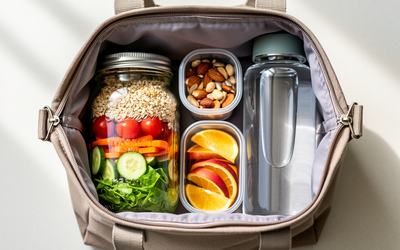
The Verdict on Plastic: Keep a few high-quality plastic containers for cold foods—like a crisp spinach salad, a handful of walnuts, or a cup of grapes. Never use them in the microwave or dishwasher, as heat breaks down the polymer chains over time, accelerating chemical release and causing the plastic to warp and stain.
The Gold Standard: Glass
Glass is inert, meaning it does not react with chemicals or leach anything into your food, regardless of how hot it gets. It is non-porous, so it will not absorb the lingering smell of a spicy curry or the red tint of a rich tomato sauce.
When shopping for glass, look for borosilicate glass or tempered glass. These are designed to withstand thermal shock, meaning you can take them out of a cold fridge and pop them directly into the microwave without them shattering.
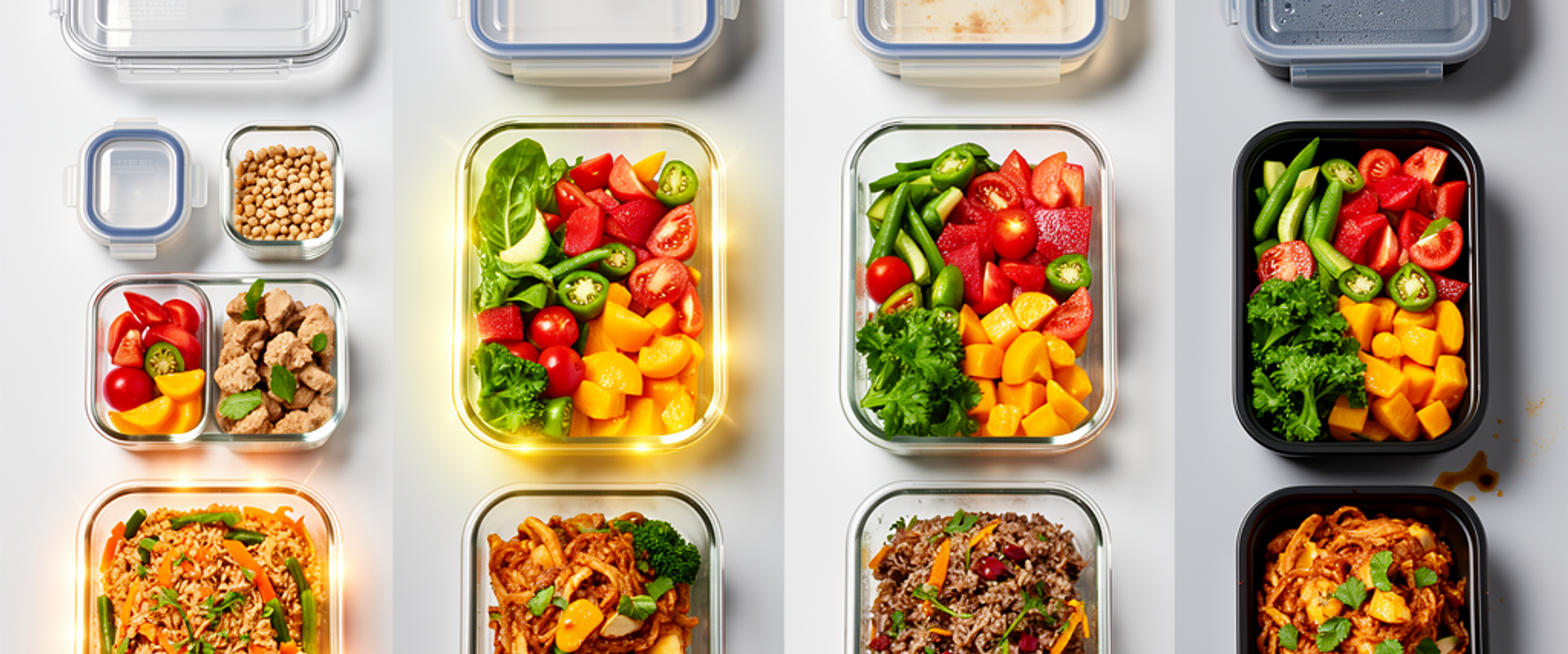
The Verdict on Glass: This is the workhorse of your meal prep arsenal. If you are packing meals that need to be reheated—like stews, roasted vegetables, or grain bowls—glass is non-negotiable for both food safety and flavor preservation.
The Modern Alternative: Food-Grade Silicone
Silicone is a synthetic rubber that is highly heat-resistant, flexible, and generally considered safe and inert by health organizations.
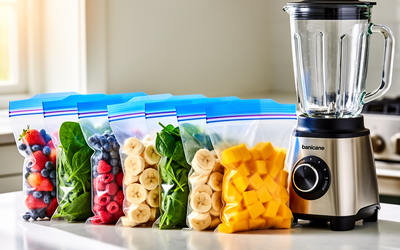
The Verdict on Silicone: Silicone bags (like Stasher bags) are incredible replacements for single-use plastic zip-top bags. They are perfect for freezing half a banana for smoothies, storing a portion of almonds, or keeping carrot sticks crisp. Thick silicone bowls are also emerging as a lightweight, microwave-safe alternative to glass, though they can sometimes retain strong odors if not washed promptly.
Size Matters: A Practical Guide to Portions
One of the biggest mistakes beginners make is buying a massive set of containers in wildly varying sizes, most of which are completely useless for a full meal. You do not need twenty tiny tubs; you need a strategic fleet of uniform vessels.
Here is the ideal size breakdown for a well-rounded meal prep system:
The Main Event: 3 to 4 Cups (750ml to 1000ml)
This is your standard "lunchbox" size, and it is perfect for building a balanced, satisfying meal. A 3-to-4-cup rectangular container comfortably holds a nourishing template without squishing your food:
- Protein: 4 to 5 ounces of grilled chicken, tofu, or baked fish.
- Complex Carbohydrates: 1/2 to 1 cup of cooked quinoa, brown rice, or roasted sweet potatoes.
- Color and Fiber: 1.5 to 2 cups of roasted broccoli, mixed greens, or snap peas.
The Soup and Side Kick: 2 Cups (500ml)
Round 2-cup containers are ideal for liquid-heavy meals or hearty sides. Use these for a comforting portion of lentil stew, a thick black bean chili, or a large portion of overnight oats topped with berries and chia seeds.
The Flavor Savers: 1/4 to 1/2 Cup (60ml to 120ml)
Do not dress your salads on Sunday if you plan to eat them on Wednesday. Small, leak-proof condiment containers are essential for keeping dressings, sauces, hummus, or a 2-tablespoon serving of pumpkin seeds separate until you are ready to eat.
The Holy Trinity of Containers: What the Pros Look For
Professional meal preppers and chefs do not buy containers based on aesthetics alone. They look for three non-negotiable features:
1. True Leak-Proofing
A container is only as good as its seal. Avoid containers with lids that merely press down. You want lids with a snap-hinge locking mechanism and a removable silicone gasket (that squishy ring inside the lid). This creates an airtight, watertight seal that prevents your vinaigrette from ruining your laptop bag.
Pro Tip: Always remove the silicone ring when washing the lids. Moisture trapped underneath the ring is a notorious breeding ground for black mold.
2. Stackability and Modularity
Fridge Tetris is a game you do not want to play. Your containers should nest inside each other when empty to save cabinet space, and stack securely on top of each other in the fridge. Rectangular containers are far more space-efficient than round ones.
3. Clear Visibility
Out of sight is out of mind. If you pack your beautifully prepped meals in opaque containers, you are far more likely to forget about them, leading to food waste. Clear glass or transparent BPA-free plastic allows you to quickly scan your fridge and see exactly what options you have for the day.
What to Skip: The Wastes of Money
Flimsy "Takeout Style" Meal Prep Containers: You have seen these cheap, black plastic containers with clear lids sold in packs of 50. They warp in the dishwasher, crack in the freezer, and leach microplastics in the microwave. They are a false economy. Skip them.
Overly Compartmentalized Bento Boxes: While a multi-compartment tray looks incredibly satisfying on social media, they are often impractical. The compartments dictate your portion sizes arbitrarily, the dividers make them a nightmare to wash, and sauces frequently spill over the walls into the other sections. Stick to a single large container and use small condiment cups for separation.
Put It Into Practice: 3 Container-Friendly Meal Ideas
Ready to put your containers to work? Here are three deeply nourishing, evidence-based meal ideas that store beautifully, reheat perfectly, and keep your energy stable throughout the day. No extreme diets or food shaming here—just delicious, functional food.
1. The "No-Reheat" Mediterranean Chickpea Salad
Best stored in: A 4-cup glass or high-quality plastic container.
This meal is packed with plant-based protein, gut-friendly fiber, and healthy fats. Because it is eaten cold, it is perfect for offices without a microwave.
- The Base: 1/2 cup cooked quinoa (a great source of complete protein and complex carbs).
- The Protein: 1/2 cup canned chickpeas, rinsed and drained.
- The Color: 1 cup chopped cucumbers, cherry tomatoes, and red bell peppers.
- The Flavor: 2 tablespoons of crumbled feta cheese and a handful of fresh parsley.
- The Dressing (stored in a separate 2oz container): 1 tablespoon olive oil, 1 tablespoon lemon juice, a pinch of oregano, salt, and pepper.
- Prep Tip: This salad actually tastes better on day two or three as the flavors meld. Just wait to pour the dressing on until right before you eat.
2. Sheet Pan Salmon, Sweet Potatoes, and Asparagus
Best stored in: A 4-cup glass container (essential for reheating).
Rich in omega-3 fatty acids for brain health and beta-carotene from the sweet potatoes, this is a powerhouse lunch that takes minimal effort.
- The Protein: One 4-ounce salmon fillet (rubbed with a little olive oil, smoked paprika, and garlic powder).
- The Carbs: 3/4 cup of diced sweet potatoes, roasted until tender.
- The Color: 1 cup of asparagus spears or green beans, roasted alongside the salmon.
- Prep Tip: Let the food cool completely to room temperature before snapping the lid on and putting it in the fridge. If you seal it while hot, the trapped steam will create condensation, leaving you with soggy vegetables.
3. The Energizing Adult Snack Box
Best stored in: A stainless steel bento box or a collection of silicone bags.
Sometimes you do not want a heavy meal; you want a variety of textures and flavors to graze on. This is a balanced "snack meal" that provides sustained energy without a blood sugar crash.
- The Protein: 2 hard-boiled eggs (sprinkled with Everything Bagel seasoning).
- The Fat & Calcium: 1 ounce of sharp cheddar cheese cubes.
- The Carbs & Antioxidants: 1 cup of red grapes or apple slices.
- The Crunch: 1/4 cup of lightly salted almonds or walnuts.
- Swap: If you are allergic to nuts, swap them for roasted pumpkin seeds or sunflower seeds.
The Bottom Line
You do not need to throw away every piece of plastic in your kitchen today, nor do you need to spend hundreds of dollars to start meal prepping.
Start small. Invest in a set of four to six high-quality, 4-cup rectangular glass containers with snap-locking lids. (Brands like Pyrex Snapware, OXO Good Grips, or Ello are excellent, durable choices).
By giving your food a reliable, safe, and visually appealing home, you remove the friction between wanting to eat well and actually doing it. You are not just buying glass boxes; you are buying future time, peace of mind, and the daily gift of a nourishing meal ready precisely when you need it.