How to Build Muscle While Losing Fat: The Evidence-Backed Body Recomposition Guide
Think you have to choose between losing fat and gaining muscle? Science says otherwise. Discover the evidence-based body recomposition approach to building strength and shedding fat simultaneously without extreme diets.

For decades, the fitness and nutrition industries have sold us a rigid, binary narrative: you are either "bulking" (eating a surplus of calories to build muscle, often gaining fat in the process) or "cutting" (eating a restrictive diet to lose fat, often sacrificing hard-earned muscle).
If you want to eat better, feel stronger, and improve your health, this back-and-forth cycle is not only exhausting—it is entirely unnecessary.
Enter body recomposition: the physiological process of losing body fat and building muscle mass at the exact same time.
For a long time, simultaneous muscle gain and fat loss was thought to be a myth, reserved only for genetic anomalies or absolute beginners. However, modern sports nutrition and clinical research have proven that body recomposition is highly achievable for most people. It simply requires stepping away from extreme diets and leaning into precision: a slight caloric deficit, adequate protein, progressive strength training, and a healthy dose of patience.
Here is your evidence-based, practical guide to fueling your body for simultaneous fat loss and muscle growth, without a side of food guilt or diet-culture dogma.
The Science of Body Recomposition
To understand how body recomposition works, we have to address the elephant in the room: thermodynamics.
Traditional advice states that you need a calorie surplus to build muscle (anabolism) and a calorie deficit to lose fat (catabolism). Because these are opposite states, doing them simultaneously sounds like breaking the laws of physics.
But here is the science-backed secret: your body stores energy in the form of body fat. If you are in a slight calorie deficit, your body will tap into those fat stores to make up the energy difference.
At the same time, muscle tissue is not built out of thin air—it is built from the amino acids found in dietary protein. A landmark 2020 meta-analysis by researchers Barakat and Campbell reviewed the literature on body recomposition and confirmed that if you provide your body with a strong enough stimulus (lifting weights) and enough building blocks (protein), your body can easily use its own fat stores to fuel the energy-intensive process of building muscle.
Body recomposition is not magic; it is simply directing your body's resources efficiently.
Pillar 1: The "Goldilocks" Calorie Deficit
When people decide they want to lose fat, the temptation is to slash calories drastically. This is the fastest way to sabotage body recomposition.
If your calorie deficit is too large (e.g., 500 to 1,000 calories below your maintenance level), your body perceives a state of scarcity. In this state, it will refuse to build metabolically expensive muscle tissue and may even break down existing muscle for energy.
To achieve body recomposition, you need a "Goldilocks" deficit—not too big, not too small, but just right.
The Actionable Target: Aim for a very slight deficit of 200 to 300 calories below your daily maintenance needs.
This small deficit is enough to encourage your body to burn stored fat, but small enough that your body still feels "safe" enough to build muscle. Practically, a 200-calorie deficit does not mean starving yourself. It often looks like:
- Using 1 tablespoon of olive oil (120 calories) instead of a heavy, unmeasured pour when roasting vegetables.
- Swapping a large daily latte made with whole milk and syrup for a cappuccino with standard milk.
- Stopping your meal when you feel comfortably satisfied, rather than stuffed.
Pillar 2: Protein as Your Primary Building Block
If there is a magic bullet in body recomposition, it is protein. Protein is the only macronutrient that provides the nitrogen required to synthesize new muscle tissue.
Furthermore, protein is highly satiating, meaning it keeps you feeling full and satisfied, which is incredibly helpful when you are in a slight calorie deficit. It also has a high Thermic Effect of Food (TEF)—your body actually burns about 20-30% of the calories from protein simply by digesting it.
The Actionable Target: Evidence suggests that to build muscle in a calorie deficit, you should aim for 1.6 to 2.2 grams of protein per kilogram of body weight (about 0.7 to 1 gram per pound of body weight).
If you weigh 150 pounds, your goal is roughly 105 to 150 grams of protein per day. To hit this without feeling overwhelmed, distribute your protein evenly across three to four meals.
What does 30 grams of protein look like?
- 4 ounces of cooked chicken breast or turkey.
- 1 generous cup of low-fat Greek yogurt or cottage cheese.
- 4 large whole eggs (or 2 whole eggs mixed with 1/2 cup liquid egg whites).
- 5 ounces of cooked salmon or any firm white fish.
- 1.25 cups of extra-firm tofu or 1 cup of tempeh.
- 1 scoop of a high-quality whey or plant-based protein powder.
Pillar 3: Fueling with Carbohydrates and Fats
In the pursuit of fat loss, carbohydrates are often wrongfully demonized. But if you want to build muscle, carbs are your best friend. Carbohydrates are your body's preferred fuel source for high-intensity exercise, like lifting weights. If you deplete your carbs, your workouts will suffer, and your muscle-building stimulus will weaken.
Fats are equally vital, as they regulate hormone production, including testosterone, which plays a key role in muscle growth.
The Actionable Target: Once you have secured your protein target, fill the rest of your daily calories with a mix of nutrient-dense carbohydrates and healthy fats.
- Smart Carbs: Focus on fiber-rich sources that provide steady energy, such as rolled oats, sweet potatoes, quinoa, brown rice, beans, and an abundance of fruits and vegetables.
- Smart Fats: Incorporate avocados, walnuts, chia seeds, flaxseeds, and extra virgin olive oil.
Pillar 4: The Training Stimulus
You cannot eat your way to more muscle. Nutrition provides the building blocks, but strength training provides the blueprint.
To force your body to adapt and grow, you need to engage in resistance training with a focus on progressive overload (gradually increasing the weight, reps, or intensity of your exercises over time).
The Actionable Target: Aim for 3 to 4 days of strength training per week. Focus on compound movements—exercises that work multiple muscle groups at once. Think squats, deadlifts, lunges, push-ups, overhead presses, and rows.
Practical Application: A Day on a Plate
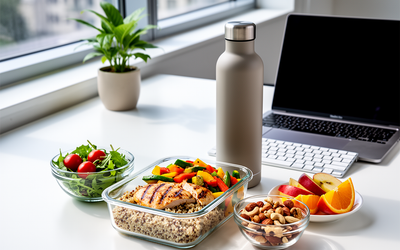
Theory is great, but how does this look in real life? Here is an example of a delicious, nutrient-dense day of eating designed for body recomposition. (Note: Portion sizes should be scaled up or down based on your specific caloric needs).
Breakfast: Power Protein Oats
- 1/2 cup dry rolled oats cooked in water or unsweetened almond milk.
- Stir in 1 scoop of protein powder (vanilla or chocolate) after the oats are cooked.
- Top with 1/2 cup of mixed berries (blueberries, raspberries) for fiber and antioxidants.
- 1 tablespoon of chia seeds or crushed walnuts for healthy fats.
- Nutrition check: ~350 calories, 30g protein. High fiber, slow-digesting carbs.
Lunch: Mediterranean Turkey & White Bean Salad
- 4 ounces of roasted turkey breast (or leftover chicken), chopped.
- 1/3 cup of cannellini beans (great source of fiber and carbs).
- 2 cups of mixed greens, cherry tomatoes, cucumbers, and red onion.
- Dressing: 1 tablespoon extra-virgin olive oil mixed with lemon juice, salt, and oregano.
- Nutrition check: ~400 calories, 35g protein. High volume, nutrient-dense.
Afternoon Snack: Savory Cottage Cheese Bowl
- 1 cup of 2% cottage cheese.
- Top with a handful of cherry tomatoes, a sprinkle of everything bagel seasoning, and 10 almonds.
- Nutrition check: ~250 calories, 25g protein. Perfect for holding you over until dinner.
Dinner: Soy-Ginger Salmon and Edamame Stir-Fry
- 5 ounces of baked salmon glazed with a little low-sodium soy sauce and fresh ginger.
- 1/2 cup of cooked quinoa.
- 1.5 cups of broccoli florets and 1/4 cup shelled edamame, stir-fried in 1 teaspoon of sesame oil.
- Nutrition check: ~500 calories, 40g protein. Rich in Omega-3s and complete proteins.
Smart Food Swaps for Body Recomposition
Sometimes, hitting your protein and calorie goals is just a matter of making simple, frictionless swaps that don't compromise on taste.
- The Pasta Swap: Swap standard white pasta for lentil or chickpea pasta. Why? A 2-ounce serving of standard pasta has about 7g of protein. The same serving of chickpea pasta delivers 14g of protein and double the fiber, keeping you fuller longer.
- The Sour Cream Swap: Swap sour cream or mayonnaise for plain, non-fat Greek yogurt. Why? Greek yogurt offers the exact same creamy texture and tang but provides roughly 18g of protein per 3/4 cup, whereas sour cream provides almost entirely fat and minimal protein.
- The Snack Swap: Swap potato chips for dry-roasted edamame. Why? You still get the salty, crunchy satisfaction, but a 1/3 cup serving of roasted edamame boasts 14 grams of plant-based protein and 6 grams of fiber.
Setting Realistic Expectations: Throw Away the Scale
The most challenging part of body recomposition isn't the diet or the workouts—it is the psychology of tracking your progress.
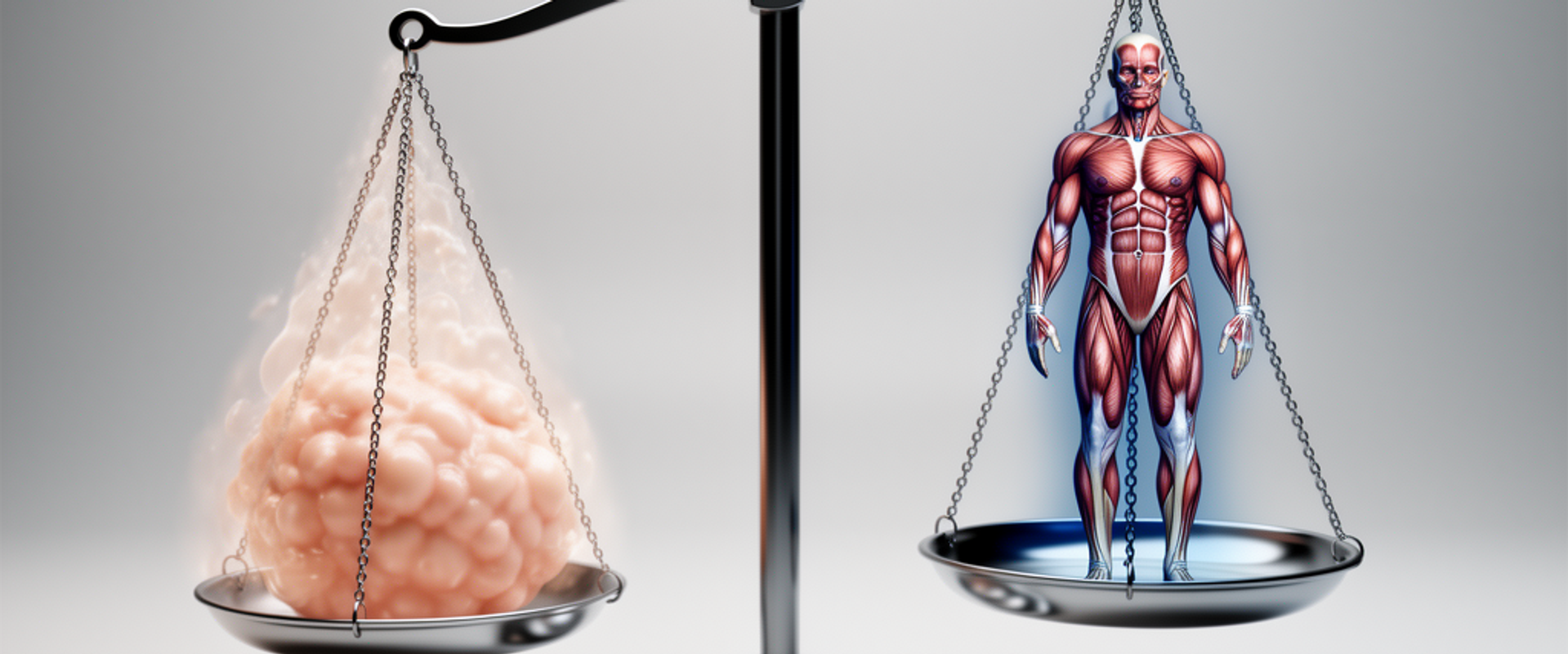
If you are losing fat and gaining muscle at the same time, the scale might not move at all. Muscle is denser than fat. It takes up less space per pound. You could lose 3 pounds of fat, gain 3 pounds of muscle, and the scale will show zero change. However, your clothes will fit looser, your waist will be smaller, and your muscles will look more defined.
If you rely solely on the scale, you will think you are failing when you are actually succeeding perfectly.
How to track properly:
- Take front, side, and back photos in the same lighting every two weeks.
- Use a simple fabric tape measure to check the circumference of your waist, hips, and arms once a month.
- Track your strength in the gym. If you are lifting heavier weights or doing more reps, and your clothes are fitting better, your body recomposition is working.
The Practical Takeaway
Building muscle while losing fat is not a myth, nor does it require a miserable, restrictive lifestyle. It is the natural result of treating your body with respect and providing it with precision fuel.
To start your body recomposition journey today, focus on these three practical steps:
- Eat slightly less energy, but significantly more protein. Aim for a gentle 200-300 calorie deficit while ensuring a protein source is the star of every meal.
- Train to build, not to burn. Go to the gym to get stronger, not to burn calories. Lift challenging weights 3 to 4 times a week.
- Measure what matters. Ignore the daily fluctuations of the bathroom scale. Focus on how your clothes fit, your energy levels throughout the day, and the weight on your barbell.
By stepping off the exhausting bulk-and-cut rollercoaster, you can build a strong, resilient, and nourished body—sustainably.