How to Cook Juicy Chicken Breast Every Time: The Science of Never Eating Dry Meat Again
Tired of dry, rubbery chicken breast? Learn the food science behind perfectly cooked poultry. Discover simple techniques like brining, pounding, and five easy marinades that transform bland chicken into a delicious, nutrient-dense staple.

The Chicken Breast Dilemma
If you are trying to eat a nutrient-dense diet, you have probably found yourself staring down a piece of chicken breast. As a nutritionist, I see it all the time: people want to eat better, so they load up their grocery carts with boneless, skinless chicken breasts. It is a fantastic source of highly bioavailable protein, offering about 26 grams of protein per 4-ounce serving, alongside essential nutrients like vitamin B6, niacin, and selenium.
But there is a glaring problem: chicken breast is notoriously easy to ruin.
Far too often, it ends up dry, chalky, and flavorless—a meal you have to force yourself to chew. This leads to flavor fatigue, making you dread your home-cooked meals. But eating well should never feel like a punishment. You do not need to rely on extreme diets or force down rubbery meat to support your health.
Instead, we can turn to food science. By understanding exactly why chicken breast dries out and applying a few fundamental culinary techniques, you can transform this basic protein into something genuinely delicious.
Why Your Chicken is Dry (The Science of Muscle Fibers)
To cook better chicken, we first need to understand what it is made of. Chicken breast is composed of tightly bundled muscle fibers, water, and very little intramuscular fat. A standard 4-ounce portion of skinless chicken breast contains only about 3 grams of fat.
Fat acts as an insulator and a lubricant during the cooking process. When you cook a chicken thigh (which has a higher fat content), that fat melts, keeping the meat moist and tender even if you accidentally leave it on the stove for a few extra minutes.
Chicken breast does not have this built-in safety net. When heat is applied to meat, the proteins (specifically myosin and actin) begin to denature and tightly coil. Imagine wringing out a wet sponge. As the temperature rises, the protein fibers squeeze together, forcefully expelling the water trapped inside them.
If you have ever seen a pool of white liquid form in your pan while cooking chicken, you are watching those proteins squeeze out moisture. The reason your chicken is dry is simple: it is overcooked. But do not worry, fixing this is entirely within your control.
The Golden Rule: Internal Temperature Matters
If you want to instantly improve your cooking, buy a digital instant-read meat thermometer. It is the single most important tool in your kitchen for cooking animal proteins.
Many of us grew up being taught to cook chicken until it was tough and completely white inside, terrified of foodborne illness. The FDA officially recommends cooking poultry to an internal temperature of 165°F (74°C). At this temperature, harmful bacteria like Salmonella are killed instantly.
However, food safety is not just about temperature; it is a function of temperature and time. According to the USDA's own pasteurization curves, you can achieve the exact same level of bacterial destruction by cooking your chicken to 155°F (68°C) and holding it at that temperature for just 45 to 50 seconds.
Furthermore, meat experiences "carryover cooking." When you remove a chicken breast from a hot pan, the residual heat will continue to raise the internal temperature by another 3 to 5 degrees while it rests.
The Actionable Tip: Cook your chicken breast until the thickest part registers 155°F (68°C) on your digital thermometer. Remove it from the heat immediately and let it rest for 5 to 10 minutes. The carryover heat will push it to a perfectly safe 158°F-160°F, and the time spent resting will ensure it is fully pasteurized while remaining incredibly juicy.
Preparation Technique 1: The Pound-It-Flat Method
Take a look at a whole chicken breast. It has a very thick, bulbous end and a thin, tapered tail.
If you toss that whole breast into a skillet, the thin tail will reach 165°F while the thick center is still raw and sitting at 110°F. By the time the thick center is safely cooked, the tail has reached 200°F and turned to shoe leather.
The solution is the "pound-it-flat" method. By evening out the thickness of the meat, the entire breast cooks at the exact same rate.
How to do it:
- Place your chicken breast inside a large zip-top freezer bag, or between two pieces of heavy-duty plastic wrap. (This prevents raw chicken juices from splattering across your kitchen).
- Using a meat mallet, a rolling pin, or even the bottom of a heavy skillet, gently pound the thicker part of the breast.
- Use a slight outward pushing motion as you strike, coaxing the meat to flatten until the entire breast is an even 1/2-inch to 3/4-inch thickness.
Preparation Technique 2: The Magic of Brining
If pounding ensures even cooking, brining ensures maximum moisture retention.
Brining is the process of exposing meat to salt before cooking. While "wet brining" (soaking meat in saltwater) is popular, I highly recommend "dry brining." Dry brining is less messy, takes up less fridge space, and results in better browning in the pan.
When you salt the outside of a chicken breast, osmosis draws a little bit of moisture out of the meat. That moisture dissolves the salt, creating a concentrated liquid brine on the surface. Within about 30 minutes, the meat reabsorbs this salty liquid.
Once inside, the salt works magic on the protein structures. It partially dissolves the myosin proteins, relaxing the tightly coiled fibers. Because the fibers are relaxed, they cannot squeeze together as tightly during cooking. The result? The chicken retains up to 15% more of its natural moisture.
How to dry brine:
- Pat your freshly pounded chicken breasts completely dry with a paper towel.
- Sprinkle both sides generously with kosher salt. A good rule of thumb is 1/2 teaspoon of kosher salt per pound of meat.
- Place the chicken on a plate or wire rack in the fridge, uncovered, for at least 30 minutes, or up to 24 hours.
5 Marinades That Transform Bland into Delicious
While salt and proper cooking temperatures handle the texture, marinades bring the flavor. A scientifically sound marinade requires three components:
- Fat: Such as olive oil or avocado oil. Fat helps transfer fat-soluble flavor compounds (like those in garlic and herbs) into the meat and promotes beautiful browning.
- Acid: Such as citrus juice or vinegar. Acid provides a bright flavor contrast and gently tenderizes the surface. (Note: Do not marinate chicken in high-acid mixtures for more than 4-6 hours, or the surface proteins will turn mushy).
- Flavorings: Herbs, spices, aromatics, and umami boosters.
Here are five easy, highly flavorful marinades. Each recipe is designed for roughly 1 pound of chicken breast (about 2 large breasts). Whisk the ingredients together, coat the pounded chicken, and let it sit in the fridge for 30 minutes to 4 hours.
1. The Mediterranean Lemon-Herb
This is a bright, fresh classic that pairs beautifully with whole grains and fresh vegetables.
- The Mix: 2 tablespoons extra virgin olive oil, the juice and zest of 1 lemon, 2 minced garlic cloves, 1 teaspoon dried oregano, 1/2 teaspoon black pepper, and 1/2 teaspoon kosher salt (omit salt if you already dry-brined).
- The Meal Idea: Serve 4 ounces of this sliced chicken alongside 1/2 cup of cooked quinoa and a large salad made of chopped cucumbers, cherry tomatoes, red onion, and a sprinkle of feta cheese.
2. The Soy-Ginger Glaze
This marinade uses soy sauce, which is rich in glutamates, providing a deep, savory "umami" flavor that chicken breast naturally lacks.
- The Mix: 2 tablespoons low-sodium soy sauce (or tamari), 1 tablespoon toasted sesame oil, 1 tablespoon rice vinegar, 1 tablespoon freshly grated ginger, and 1 minced garlic clove.
- The Meal Idea: Stir-fry 4 ounces of the sliced, cooked chicken with 1 cup of broccoli florets and snap peas. Serve over 1/2 cup of cooked brown rice or soba noodles.
3. The Yogurt-Spiced (Tandoori-Style)
Dairy is a secret weapon for marinades. The lactic acid and enzymes in plain yogurt gently break down proteins, resulting in incredibly tender meat.
- The Mix: 1/3 cup plain whole-milk Greek yogurt, 1 tablespoon avocado oil, 1 teaspoon smoked paprika, 1 teaspoon ground cumin, 1/2 teaspoon turmeric, and a pinch of cayenne pepper.
- The Meal Idea: Serve the chicken over a bed of mixed greens, paired with 1/2 cup of roasted chickpeas and a dollop of tzatziki sauce for a satisfying, high-fiber, high-protein meal.
4. The Honey Mustard Balsamic
The natural sugars in the honey and balsamic vinegar will caramelize in the pan, creating a beautiful, slightly sweet crust.
- The Mix: 1 tablespoon Dijon mustard, 2 tablespoons balsamic vinegar, 1 tablespoon olive oil, 1 teaspoon honey, and 1/2 teaspoon dried thyme.
- The Meal Idea: Pair 4 ounces of this chicken with 1 cup of roasted sweet potato cubes and a serving of lightly steamed asparagus tossed in olive oil.
5. The Cilantro-Lime Fajita
Perfect for meal-prepping lunches, this marinade brings vibrant, earthy flavors without relying on store-bought packets loaded with excess sodium.
- The Mix: 2 tablespoons avocado oil, the juice of 2 limes, 1/4 cup chopped fresh cilantro, 1 teaspoon chili powder, 1 teaspoon ground cumin, and 1/2 teaspoon garlic powder.
- The Meal Idea: Slice the cooked chicken and serve it inside two 6-inch warm corn tortillas. Top with sautéed bell peppers, onions, and 1/4 of a sliced avocado for healthy fats.
The Foolproof Stovetop Cooking Method
Now that your chicken is pounded flat, brined, and marinated, it is time to cook. Here is a reliable stovetop method for perfect results:
- Heat the pan: Place a large skillet (cast iron or stainless steel works best) over medium-high heat. Add 1 tablespoon of cooking oil (like avocado oil, which has a high smoke point).
- Sear: Once the oil is shimmering, add the chicken breasts. Let them cook undisturbed for 4 to 5 minutes to develop a golden-brown crust.
- Flip and cover: Flip the chicken breasts. Immediately turn the heat down to medium-low and cover the skillet with a tight-fitting lid.
- Temp check: Let it cook covered for another 4 to 6 minutes. Check the internal temperature with your digital thermometer. You are looking for 155°F (68°C).
- Rest: Remove the chicken from the pan directly onto a cutting board.
The Crucial Final Step: Resting
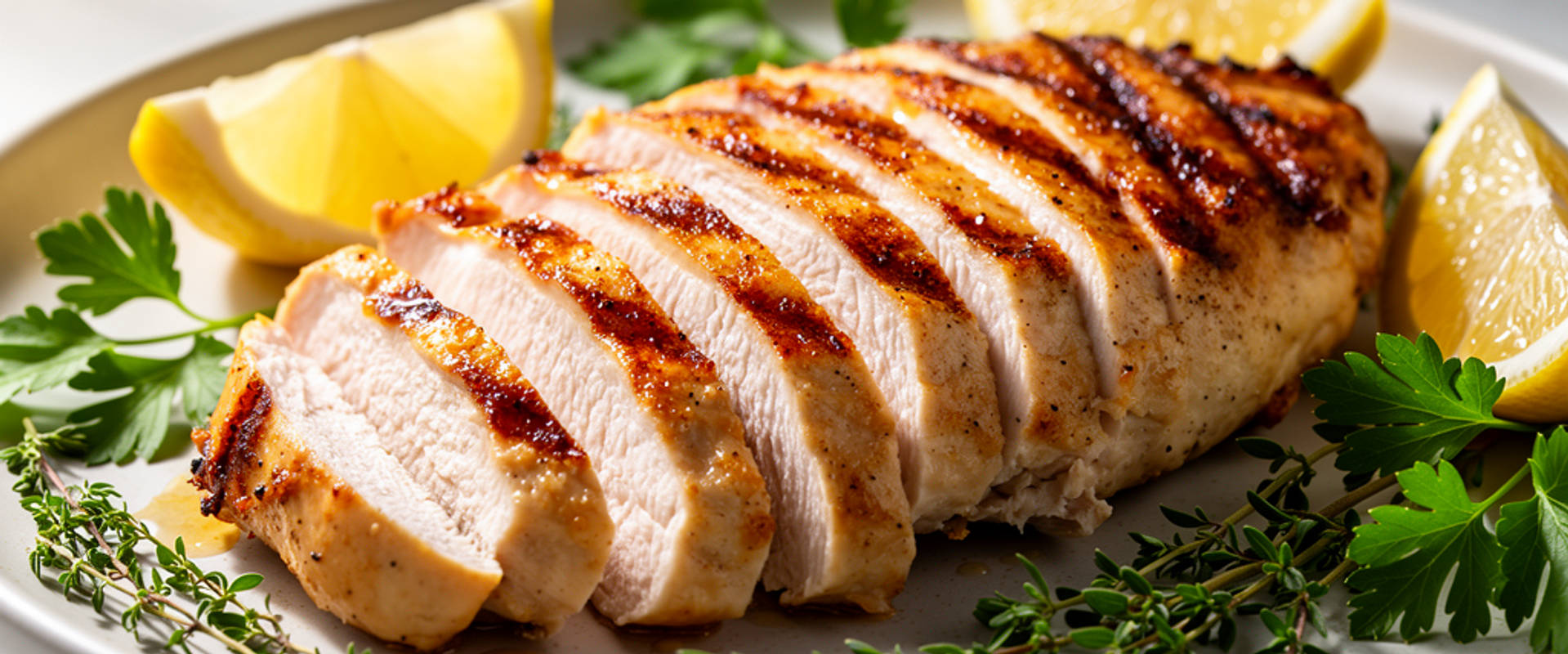
Do not skip the resting phase! If you slice into a chicken breast the second it comes off the stove, all the juices that were pushed to the center of the meat during cooking will spill out onto your cutting board, leaving the meat dry.
Letting the chicken rest for 5 to 10 minutes allows the muscle fibers to relax and the internal juices to redistribute evenly throughout the entire breast. When you finally slice it, those juices stay in the meat, right where you want them.
The Practical Takeaway
Eating foods that support your health shouldn't mean choking down dry, uninspired meals. You don't need to be a professional chef to make delicious chicken breast; you just need to follow a few simple rules of food science.
Next time you prep chicken, remember this checklist: pound it to an even thickness, salt it early to relax the proteins, use a thermometer to pull it off the heat at 155°F, and always let it rest. Pair it with a vibrant marinade and a balanced plate of complex carbohydrates and vegetables, and you will have a meal that actually tastes as good as it makes you feel.