How to Eat Healthy on a Tight Budget: The Ultimate Evidence-Based Guide
Eating healthy doesn't have to be expensive. Discover science-backed strategies to build a nutrient-dense grocery list and enjoy balanced, delicious meals for under $40 a week—without the stress.

If you scroll through social media, you might think eating well requires a second mortgage. Between the adaptogenic powders, the $15 cold-pressed juices, and the exotic superfoods, the wellness industry has painted a picture of health that feels entirely out of reach for the average person.
But as a nutrition professional, I'm here to let you in on a poorly kept secret: the most nourishing, health-promoting foods on the planet are often the cheapest.
You do not need to shop at high-end grocery stores to fuel your body well. True, evidence-based nutrition is remarkably unglamorous. It relies on humble, shelf-stable staples that have sustained human populations for centuries.
If you are feeling overwhelmed by conflicting diet advice and rising grocery prices, take a deep breath. We are going to strip away the noise and focus on what actually matters. In this guide, we will explore the science of budget nutrition, build a nutrient-dense grocery list, and lay out a practical, delicious weekly meal plan for under $40.
The Myth of the Expensive Healthy Diet
There is a common misconception that fresh is always best, and that packaged or frozen foods are inherently less nutritious. This belief drives up grocery bills and increases food waste.
Nutrition science tells a different story. Your body does not care how much a food costs or how beautiful its packaging is. Your body simply extracts macronutrients (proteins, carbohydrates, and fats) and micronutrients (vitamins and minerals) from the foods you consume. A vitamin C molecule from a 20-cent serving of frozen broccoli is utilized by your cells exactly the same way as a vitamin C molecule from a $5 organic, heirloom tomato.
By focusing on nutrient density—the amount of beneficial nutrients in a food relative to its energy content or cost—we can build a diet that supports longevity, energy, and overall well-being without breaking the bank.
The "Big Five" Budget Superfoods
When we talk about eating on a budget, five foundational foods emerge as the absolute champions of cost-to-nutrient ratio. These are the staples you should always have in your kitchen.
1. Beans and Lentils
Beans and lentils are the undisputed kings of budget nutrition. At around $1.50 per pound dry, they offer an incredible return on investment. Nutritionally, they are a powerhouse of plant-based protein, complex carbohydrates, and soluble fiber.
From a scientific perspective, beans are rich in resistant starch. This is a type of carbohydrate that resists digestion in the small intestine and ferments in the large intestine, feeding your beneficial gut bacteria. Studies consistently link regular legume consumption to improved heart health, stabilized blood sugar, and increased satiety.
Practical tip: 1/2 cup of cooked black beans provides about 7 grams of protein and 8 grams of fiber.
2. Eggs
Eggs are one of the most bioavailable sources of protein available, meaning your body can easily absorb and utilize the amino acids they contain. Even with recent price fluctuations, a dozen eggs usually costs between $2 and $4, making the cost per meal incredibly low.
Don't skip the yolk! While the egg white contains protein, the yolk houses essential nutrients like choline (vital for brain health), vitamin D, and lutein and zeaxanthin (antioxidants that protect your eyes).
Practical tip: Two large whole eggs provide 12 grams of high-quality protein and keep you full for hours.
3. Frozen Vegetables
If you worry that frozen vegetables are less nutritious than fresh, you can put that fear to rest. In fact, research shows that frozen vegetables often contain more vitamins than their fresh counterparts.
Fresh produce is often picked before it is fully ripe to survive transport, and it loses nutrients as it sits on store shelves and in your fridge. Frozen vegetables are harvested at peak ripeness and flash-frozen within hours, locking in their nutritional value. A $2 bag of frozen mixed vegetables (peas, carrots, corn, and green beans) is a fantastic source of vitamins A and C, fiber, and potassium.
4. Rice (Brown and White)
Rice is the ultimate budget-friendly energy source. While brown rice contains the bran and germ (offering more fiber and B vitamins), white rice is also a perfectly healthy, easily digestible carbohydrate.
When you pair rice with beans, you create a "complete protein." This means the combination provides all nine essential amino acids your body cannot produce on its own. This classic pairing is a staple in many global cuisines for a reason—it is cheap, filling, and nutritionally complete.
5. Bananas
At around 60 cents per pound, bananas are nature's pre-packaged fast food. They are rich in potassium, which is essential for blood pressure regulation and muscle function.
Slightly green bananas are also high in the resistant starch we mentioned earlier, while riper bananas offer quick, easily digestible energy perfect for a pre-workout snack or sweetening a bowl of morning oatmeal.
The $40 Weekly Grocery List
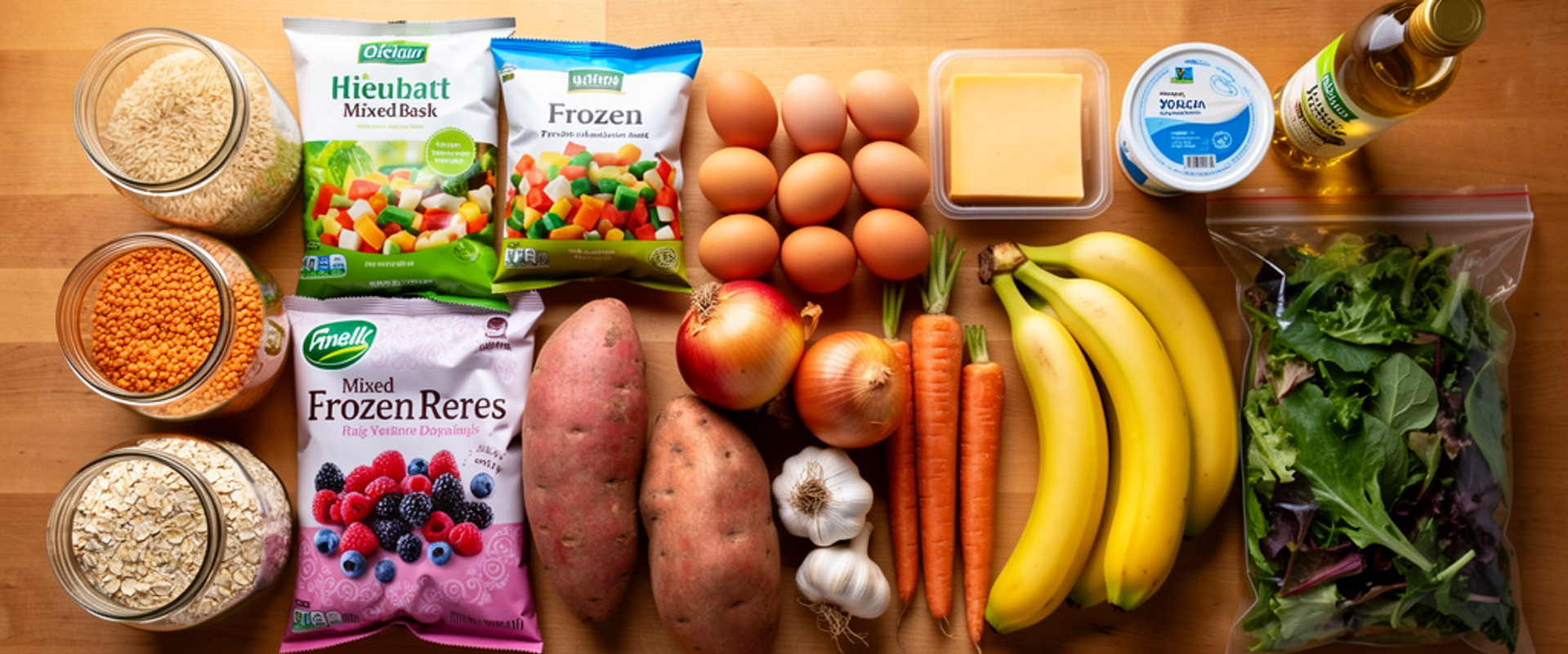
Let's put this into practice. Here is an evidence-based, highly nutritious grocery list that comes in under $40 at most standard supermarkets (prices will vary slightly by region, but this represents national averages).
Produce:
- Bananas (2 lbs): $1.20
- Bag of apples (3 lbs): $4.00
- Onions (2 lbs): $2.00
- Carrots (1 lb bag): $1.00
- Frozen mixed vegetables (16 oz): $1.50
- Frozen chopped spinach (16 oz): $1.50
- Frozen broccoli florets (16 oz): $1.80
Proteins & Dairy:
- Eggs (1 dozen): $3.00
- Canned tuna in water (3 cans): $3.50
- Dried black beans (1 lb): $1.50
- Dried brown or green lentils (1 lb): $1.50
- Peanut butter (16 oz jar): $2.50
Grains & Carbs:
- Rolled oats (18 oz container): $2.50
- Brown or white rice (2 lb bag): $2.00
- Whole wheat pasta (16 oz): $1.50
- Canned crushed tomatoes (28 oz): $2.00
Pantry/Fats (Assuming you have basics, but budgeting for one staple):
- Bottle of olive oil or canola oil (small): $4.00
- Total Estimated Cost: $37.00
(Note: This assumes you already have basic salt, pepper, and a few spices in your pantry. If not, budget an extra few dollars to buy one new spice per week, like garlic powder or cumin, to build your collection over time.)
The $40 Weekly Meal Plan
Here is how you can turn that simple grocery list into a week of varied, satisfying, and deeply nourishing meals. This plan provides ample protein, high dietary fiber, and a wide spectrum of micronutrients.
Breakfasts
Option 1: Power Oatmeal
- Portion: 1/2 cup dry rolled oats cooked with water, topped with 1 sliced banana and 1 tablespoon of peanut butter.
- Nutrition: The oats provide beta-glucan (a soluble fiber that lowers cholesterol), the banana offers potassium, and the peanut butter adds satiating fat and protein.
Option 2: Spinach and Egg Scramble
- Portion: 2 eggs scrambled with 1/2 cup of thawed frozen spinach and a pinch of salt.
- Nutrition: A massive hit of vitamin K, iron, and high-quality protein to start your day with stable blood sugar.
Lunches
Option 1: The Classic Rice & Bean Bowl
- Portion: 1 cup cooked rice, 1/2 cup cooked black beans, 1/2 cup sautéed onions and carrots. Toss with a little oil and any spices you have (cumin and chili powder are great here).
- Nutrition: Complete plant protein, sustained energy from complex carbs, and plenty of fiber.
Option 2: Tuna Pasta Salad
- Portion: 2 oz whole wheat pasta (cooked), 1 can of tuna, 1/2 cup frozen mixed vegetables (thawed). Toss with a drizzle of oil, salt, and pepper.
- Nutrition: Whole wheat pasta provides extra fiber, while the tuna is an excellent source of lean protein and omega-3 fatty acids.
Dinners
Option 1: Hearty Lentil Stew
- Portion: 1 cup cooked lentils simmered with 1/2 cup crushed tomatoes, diced onions, and chopped carrots.
- Nutrition: Lentils cook much faster than beans (no soaking required!) and are incredibly rich in iron and folate. This stew is warming, deeply satisfying, and freezes beautifully.
Option 2: Veggie Fried Rice with Egg
- Portion: 1 cup cooked, day-old rice pan-fried with 1 cup frozen mixed veg, 1/2 a diced onion, and 2 beaten eggs scrambled in at the end.
- Nutrition: A perfect balance of carbohydrates, proteins, and colorful vegetables.
Option 3: Pasta with Broccoli and White Beans
- Portion: 2 oz whole wheat pasta, 1 cup steamed frozen broccoli, 1/2 cup black beans (or white beans if you swap them on your list), tossed in oil and a splash of the starchy pasta cooking water to make a simple sauce.
- Nutrition: Broccoli is a cruciferous vegetable known for its cancer-fighting compounds (glucosinolates), paired with fiber-rich pasta and beans.
Snacks
- A fresh apple.
- A hard-boiled egg.
- A spoonful of peanut butter.
Actionable Food Swaps You Can Make Today
If you want to start reducing your grocery bill without overhauling your entire life, start with these simple, evidence-based swaps:
- Swap fresh berries for frozen berries. Fresh berries mold quickly and are highly seasonal. Frozen berries are cheaper, last for months, and retain all their antioxidant power. Throw them into your oatmeal as it cooks.
- Swap half your ground meat for lentils. If a recipe calls for a pound of ground beef, use half a pound of beef and one cup of cooked lentils. You will cut the cost in half, drastically reduce the saturated fat, and massively increase the fiber content while keeping the texture surprisingly similar.
- Swap pre-flavored oatmeal packets for plain rolled oats. Flavored packets are expensive and often loaded with added sugars. Buy the large canister of plain oats and flavor it yourself with cinnamon, a banana, or a spoonful of peanut butter.
Overcoming the "Bland Food" Barrier
One of the biggest hurdles to budget eating is the fear that cheap food tastes boring. Rice and beans can be bland, but they don't have to be.
The secret to making budget staples taste like restaurant-quality meals comes down to three things: salt, fat, and acid.
Make sure you are properly salting your food as you cook, not just at the table. Use your cooking oil to carry flavor—sautéing onions or spices in oil before adding your beans unlocks fat-soluble flavor compounds. Finally, finish your meals with a hit of acid. A squeeze of lemon juice or a splash of cheap apple cider vinegar stirred into a lentil stew right before serving works culinary magic, brightening the whole dish.
The Practical Takeaway
Eating a deeply nourishing, health-promoting diet does not require wealth, nor does it require a degree in nutritional science. By building your meals around inexpensive, nutrient-dense staples like legumes, whole grains, eggs, and frozen produce, you can support your physical health and your financial well-being simultaneously.
Start small. You don't need to throw out everything in your pantry today. This week, try swapping out one expensive convenience meal for a batch of hearty lentil stew or a simple rice and bean bowl. Focus on what you are adding to your body—fiber, vitamins, and high-quality protein—rather than what you are restricting. Healthy eating is for everyone, and your kitchen is the perfect place to start.