The Beginner's Guide to Tracking Macros Without Obsessing
Learn how to track macros casually using the hand-portion method and the 80/20 rule. Discover a science-backed, flexible approach to nutrition that prioritizes your relationship with food without the stress of calorie-counting apps.

Welcome to the Post-Obsession Era of Nutrition
You want to eat better, but a quick internet search leaves you drowning in a sea of conflicting advice. One influencer tells you to weigh every gram of spinach you consume, while another insists that tracking your food is toxic. If you are feeling overwhelmed, you are entirely normal.
Tracking macronutrients (macros) can be an incredibly effective tool for understanding what your body needs. However, the traditional method—logging every morsel into an app and stressing over hitting exact numerical targets—often leads to burnout, anxiety, and a strained relationship with food.
Fortunately, there is a middle ground. You can absolutely understand and manage your macros without letting them manage you. Think of this approach like using a GPS: you want to know the general direction you are heading, but you don't need to panic if you take a scenic detour.
This guide will show you how to track macros casually using the hand-portion method, how to implement the 80/20 rule, and how to fuel your body with science-backed nutrition—all without a food scale.
What Are Macros (and Why Do They Matter)?
Before we dive into how to track them, let's briefly demystify what macros actually are. Macronutrients are the primary building blocks of the food we eat. Your body requires them in relatively large amounts to function, produce energy, and maintain your overall health. There are three main macros:
1. Protein
Protein is the biological contractor of your body. It repairs tissues, builds muscle, and creates essential enzymes and hormones. From a practical standpoint, protein is highly satiating, meaning it keeps you feeling full. Research consistently shows that adequate protein intake helps preserve lean muscle mass and regulates appetite. Where to find it: Chicken breast, turkey, salmon, tofu, tempeh, eggs, Greek yogurt, cottage cheese, and lentils.
2. Carbohydrates
Carbs are your body's preferred source of energy. Despite the fear-mongering of the early 2000s, carbohydrates are not the enemy. They fuel your brain, power your workouts, and carry essential micronutrients and fiber that keep your digestion running smoothly. Where to find them: Oats, sweet potatoes, brown rice, quinoa, apples, berries, beans, and whole-grain bread.
3. Dietary Fats
Fats are essential for hormone production, brain health, and the absorption of fat-soluble vitamins (A, D, E, and K). They also add flavor and texture to food, making your meals deeply satisfying. Where to find them: Avocados, olive oil, almonds, walnuts, chia seeds, flaxseeds, and nut butters.
The Problem with Obsessive Tracking
Using a digital food diary can be a great short-term educational tool. It teaches you that a handful of almonds is mostly fat, not protein, and that a seemingly innocent restaurant salad might contain three days' worth of sodium.
However, long-term, rigid tracking often backfires. Studies in the field of nutritional psychology show that rigid dietary restraint—like obsessing over hitting exact macro grams—is strongly associated with an increased risk of disordered eating, food anxiety, and eventual weight cycling.
When you obsess over numbers, you stop listening to your body's internal cues. You might force yourself to eat a can of tuna at 10 PM just to "hit your protein goal," even if you aren't hungry. Or worse, you might skip a family dinner because you don't know the exact macro breakdown of your grandmother's lasagna.
Nutrition should enhance your life, not isolate you. That is where casual tracking comes in.
The Hand-Portion Method: Your Built-In Macro Tracker
Pioneered by the nutrition experts at Precision Nutrition, the hand-portion method is a brilliantly simple, evidence-based way to track your macros. Instead of using a scale or an app, you use your own hand to measure portions.
Because your hands are proportionate to your body size, they automatically provide a customized portion guide. Here is how it works for a general, balanced meal:
The Palm for Protein
A portion of protein is roughly the size and thickness of your palm (excluding your fingers).
- For women: Aim for 1 palm-sized portion per meal (roughly 20-30 grams of protein).
- For men: Aim for 2 palm-sized portions per meal (roughly 40-60 grams of protein).
- Examples: A chicken breast, a thick slice of firm tofu, or a fillet of cod.
The Fist for Vegetables
A portion of non-starchy vegetables is the size of your fist. Vegetables provide vital micronutrients, water, and fiber.
- For women: 1 fist-sized portion per meal.
- For men: 2 fist-sized portions per meal.
- Examples: Roasted broccoli, a handful of mixed greens, or sautéed bell peppers and onions.
The Cupped Hand for Carbohydrates
A portion of carbohydrate-dense foods fits into your cupped hand.
- For women: 1 cupped handful per meal (roughly 20-30 grams of carbs).
- For men: 2 cupped handfuls per meal (roughly 40-60 grams of carbs).
- Examples: Cooked quinoa, roasted butternut squash, or a serving of fresh berries.
The Thumb for Fats
A portion of fat is about the size of your entire thumb (from the base to the tip).
- For women: 1 thumb-sized portion per meal (roughly 7-12 grams of fat).
- For men: 2 thumb-sized portions per meal (roughly 15-25 grams of fat).
- Examples: A dollop of peanut butter, a drizzle of extra virgin olive oil, or a small handful of cashews.
Note: These are baseline recommendations. If you are highly active, you may need more cupped handfuls of carbs. If you are trying to lean out, you might slightly reduce the fat or carb portions. The beauty is in its flexibility.
The 80/20 Approach: Flexibility is the Ultimate Superpower
One of the most liberating concepts in modern nutrition is the 80/20 rule. This approach eliminates the idea of "good" and "bad" foods, a binary mindset that often leads to guilt and binge eating.
The 80%: Aim to get 80% of your daily intake from whole, nutrient-dense, minimally processed foods. These are the foods that make your body run efficiently: lean proteins, vibrant vegetables, complex carbohydrates, and healthy fats.
The 20%: Leave the remaining 20% for "soul foods"—the foods you eat purely for pleasure, social connection, or convenience. This might be a slice of pizza on a Friday night, a piece of dark chocolate after dinner, or a glass of wine with a friend.
Research on psychological flexibility shows that people who allow themselves unconditional permission to eat all foods in moderation are actually more likely to maintain a healthy weight and have lower levels of food-related anxiety. When you know you can have a cookie tomorrow, you are much less likely to eat the entire box today.
When Tracking Helps vs. When It Becomes Counterproductive
How do you know if your current approach to nutrition is serving you? Here is a quick checklist to help you navigate when to lean into tracking and when to step back.
When Tracking (Even Casually) Helps:
- You are a beginner: If you have no idea how much protein is in an egg (it's about 6 grams) versus a chicken breast (about 31 grams), temporary tracking provides a vital education.
- You have hit a plateau: If your energy levels have tanked or your gym progress has stalled, a few days of tracking can reveal blind spots—like realizing you are chronically under-eating carbohydrates.
- You are transitioning to a new diet: If you recently became plant-based, tracking ensures you are combining foods to get adequate essential amino acids and enough overall calories.
When It Is Time to Step Back:
- You feel anxious about eating out: If the thought of a restaurant meal sends you into a panic because you cannot accurately track the cooking oils, it is time to put the app away.
- You ignore your hunger cues: If you are starving but refuse to eat because you are "out of macros" for the day, tracking has become a hindrance, not a tool.
- Your self-worth is tied to the numbers: If hitting your macro targets makes you feel "good" and missing them makes you feel "bad," you need a break to reset your relationship with food.
Putting It Into Practice: Actionable Meal Ideas
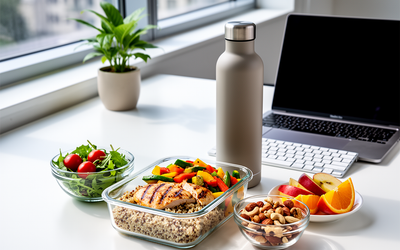
Ready to put the hand-portion method and the 80/20 rule into action? Here are some practical, macro-balanced meal ideas you can try today. No food scale required.
Breakfast: The Macro-Balanced Yogurt Bowl
- Protein (1-2 palms): Plain Greek yogurt or skyr.
- Carbs (1-2 cupped hands): Half a cup of frozen blueberries (thawed) and a sprinkle of rolled oats.
- Fats (1-2 thumbs): A spoonful of almond butter or a sprinkle of chia seeds.
- Veggies: (Skip the veggies here, or add a side of spinach to a morning scramble instead!)
Lunch: The "Kitchen Sink" Mason Jar Salad
- Protein (1-2 palms): Leftover shredded rotisserie chicken or a drained can of chickpeas.
- Veggies (1-2 fists): A massive handful of mixed greens, cherry tomatoes, and diced cucumbers.
- Carbs (1-2 cupped hands): Cooked farro or quinoa.
- Fats (1-2 thumbs): Half an avocado or a homemade olive oil vinaigrette.
Dinner: The Sheet Pan Classic
- Protein (1-2 palms): A baked salmon fillet.
- Veggies (1-2 fists): Asparagus spears or Brussels sprouts roasted with garlic.
- Carbs (1-2 cupped hands): Cubed, roasted sweet potatoes.
- Fats (1-2 thumbs): The olive oil used to roast the vegetables.
Smart, Stress-Free Food Swaps
If you want to gently improve your macro profile without overhauling your entire life, try these simple swaps:
- Instead of a giant bowl of pasta (Carb-heavy): Try half a portion of regular pasta mixed with a handful of zucchini noodles or spaghetti squash. You keep the texture and flavor of the pasta but increase your vegetable intake.
- Instead of a mid-afternoon candy bar (High sugar, low satiety): Try an apple (cupped hand of carbs) sliced and dipped in peanut butter (thumb of fat). It hits the sweet craving but provides fiber and fats to keep your blood sugar stable.
- Instead of sour cream on your tacos (Fat-heavy): Swap it for plain, full-fat Greek yogurt. It tastes nearly identical but adds a solid boost of protein to your meal.
The Practical Takeaway
Nutrition does not have to be a math equation. You do not need a spreadsheet to be healthy, and you certainly do not need to sacrifice your social life to hit an arbitrary protein goal.
Start small. For the next three days, don't change what you eat; just look at your plate through the lens of the hand-portion method. Notice where you might be missing a palm of protein or where you could add a fist of vegetables.
By combining the visual ease of hand portions with the psychological freedom of the 80/20 rule, you can build a sustainable, nourishing relationship with food that lasts a lifetime—no batteries required.