The Science of the 5-Day Salad Jar: A Nutritionist's Guide to Fresh, Stress-Free Lunches
Tired of soggy salads and confusing nutrition advice? Discover the science-backed layering method for mason jar salads. These five satisfying, nutrient-dense combinations stay perfectly fresh all workweek, making healthy eating effortless.

If you are trying to eat better, you have likely run into a frustrating wall of conflicting nutrition advice. One day, carbohydrates are the enemy; the next, you are told you need complex starches for gut health. Social media feeds are packed with influencers debating the merits of specific fats, the timing of your meals, or the supposed dangers of everyday vegetables. It is enough to make anyone throw their hands up and just order takeout.
Let's step back from the noise. As a nutrition professional, I can tell you that the most robust, consistently proven dietary advice is beautifully simple: eat a diverse variety of plants, secure enough protein to sustain your energy, and ensure your meals are actually satisfying.
One of the biggest barriers to this isn't a lack of willpower—it is a lack of time. We want nourishing, energy-sustaining work lunches, but nobody wants to eat a sad, wilted salad on a Wednesday.
Enter the 5-day mason jar salad. By applying a little bit of food science and a strategic layering technique, you can prep five days of lunches on Sunday afternoon and enjoy crisp, vibrant, and deeply satisfying meals all week long. No food shaming, no extreme restrictions—just smart, practical meal prep.
The Food Science of Wilting (And How to Stop It)
To understand why mason jar salads work, we have to understand why traditional pre-mixed salads fail.
The culprit behind a soggy salad is a biological process called osmosis, combined with the degradation of plant cell walls. Salad dressings generally contain an acid (like vinegar or citrus juice) and salt. Plant leaves, like spinach and romaine, are packed with water held inside delicate cell walls fortified by pectin.
When delicate greens come into prolonged contact with salty, acidic dressing, the salt draws water out of the plant cells (osmosis), and the acid begins to break down the pectin. The result? The cells collapse, releasing their water into the bowl, leaving you with a limp, unappetizing mess.
The mason jar method solves this through physical architecture. By utilizing a tall, narrow vessel, we minimize the surface area between ingredients. By strictly organizing the ingredients from most moisture-resistant at the bottom to most delicate at the top, we create a structural barrier that keeps the dressing completely isolated from the greens until the exact moment you are ready to eat.
The Foolproof Layering Formula
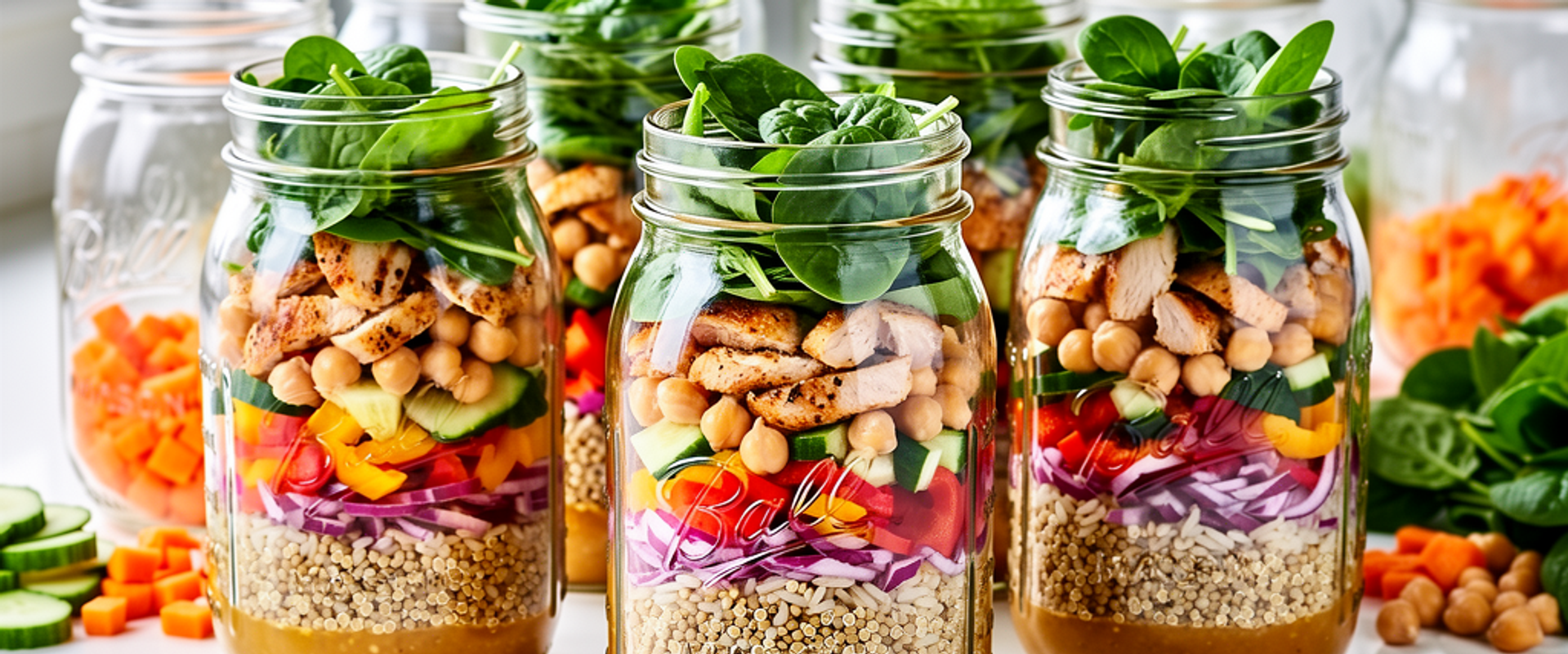
To build a salad that lasts from Monday to Friday, you need a 32-ounce (quart-sized) wide-mouth glass jar. Here is the exact architectural blueprint, from bottom to top:
Layer 1: The Base (Dressing)
Portion: 2 to 4 tablespoons Always start with your liquid. Putting your dressing at the very bottom keeps it trapped. From a nutrition standpoint, ensure your dressing contains a healthy fat (like extra virgin olive oil or tahini). Many of the vitamins in your vegetables—specifically vitamins A, D, E, and K—are fat-soluble. Without fat in your meal, your body cannot properly absorb these vital nutrients.
Layer 2: The Sturdy Shields (Hard Vegetables)
Portion: 1/2 to 1 cup These are the ingredients that can sit in dressing for five days and actually improve by marinating. Think raw carrots, celery, bell peppers, radishes, cucumbers, and whole cherry tomatoes (do not cut the tomatoes, or they will release water and dilute your dressing).
Layer 3: The Sustaining Middle (Proteins and Complex Carbs)
Portion: 1/2 to 1 cup This layer acts as a secondary barrier and provides the macronutrients necessary to keep your blood sugar stable and your energy high throughout the afternoon. Add your cooked and completely cooled grains (quinoa, brown rice, farro), legumes (chickpeas, black beans, edamame), and proteins (diced chicken, tofu, hard-boiled eggs).
Layer 4: The Soft Add-ins (Cheese, Fruit, and Crunch)
Portion: 1/4 cup Keep these far away from the moisture of the bottom layers. This is where you add crumbled feta, sharp cheddar, dried cranberries, fresh berries, nuts, and seeds.
Layer 5: The Delicate Crown (Greens)
Portion: 1 to 2 cups (packed) The top of the jar is reserved for your leafy greens. Arugula, spinach, romaine, mixed greens, or chopped kale go here. Because they are at the very top, suspended above the moisture, they will remain as crisp as the day you bought them.
5 Science-Backed Salad Jar Combinations
Ready to prep? Here are five nutrient-dense, thoroughly satisfying combinations that will last all workweek.
1. The Mediterranean Chickpea Crunch
This jar focuses on heart-healthy fats and robust dietary fiber, which is essential for a healthy gut microbiome.
- Layer 1 (Dressing): 3 tbsp Lemon-Herb Vinaigrette (olive oil, lemon juice, oregano, garlic, salt, pepper).
- Layer 2 (Sturdy Veg): 1/2 cup diced cucumbers and whole cherry tomatoes.
- Layer 3 (Sustaining Middle): 1/2 cup rinsed canned chickpeas + 1/4 cup cooked quinoa.
- Layer 4 (Soft/Crunch): 2 tbsp crumbled feta cheese + 2 tbsp Kalamata olives.
- Layer 5 (Greens): 1.5 cups fresh baby spinach.
- The Nutrition Science: The vitamin C from the lemon juice significantly enhances your body's ability to absorb the plant-based (non-heme) iron found in the spinach and chickpeas.
2. The Edamame & Soba Noodle Powerhouse
This combination is perfect for sustained energy, utilizing complex carbohydrates and high-quality plant protein.
- Layer 1 (Dressing): 3 tbsp Sesame Ginger Dressing (sesame oil, rice vinegar, low-sodium soy sauce, grated ginger).
- Layer 2 (Sturdy Veg): 1/2 cup shredded carrots and diced red bell peppers.
- Layer 3 (Sustaining Middle): 1/2 cup shelled edamame + 1/2 cup cooked buckwheat soba noodles.
- Layer 4 (Soft/Crunch): 2 tbsp sliced almonds or sesame seeds.
- Layer 5 (Greens): 1.5 cups shredded purple cabbage and mixed greens.
- The Nutrition Science: Edamame is a complete plant protein, meaning it contains all nine essential amino acids your body cannot make on its own. Paired with fiber-rich soba noodles, this jar prevents the dreaded 3:00 PM energy crash.
3. The Roasted Sweet Potato & Black Bean Fiesta
Rich in antioxidants and incredibly satisfying, this jar relies on the synergy of beans and root vegetables.
- Layer 1 (Dressing): 3 tbsp Lime-Cilantro Dressing (olive oil, lime juice, blended cilantro, cumin).
- Layer 2 (Sturdy Veg): 1/4 cup diced red onions + 1/4 cup corn kernels.
- Layer 3 (Sustaining Middle): 1/2 cup black beans + 1/2 cup cubed, roasted sweet potatoes (ensure they are 100% cool before packing).
- Layer 4 (Soft/Crunch): 2 tbsp roasted pepitas (pumpkin seeds).
- Layer 5 (Greens): 1.5 cups chopped romaine lettuce.
- The Nutrition Science: Sweet potatoes are rich in beta-carotene (a precursor to Vitamin A). Because Vitamin A is fat-soluble, the olive oil in the dressing ensures your body actually reaps the benefits of this powerful antioxidant.
4. The Quinoa & Kale Super-Green Jar
If you want a nutrient-dense powerhouse that holds up incredibly well over time, kale is your best friend.
- Layer 1 (Dressing): 3 tbsp Balsamic Vinaigrette (olive oil, balsamic vinegar, Dijon mustard, maple syrup).
- Layer 2 (Sturdy Veg): 1/2 cup diced raw beets and chopped celery.
- Layer 3 (Sustaining Middle): 1/2 cup cooked green lentils + 1/4 cup cooked quinoa.
- Layer 4 (Soft/Crunch): 2 tbsp goat cheese + 2 tbsp chopped walnuts.
- Layer 5 (Greens): 1.5 cups chopped, de-stemmed Lacinato (dinosaur) kale.
- The Nutrition Science: Lentils are an outstanding source of soluble fiber. Soluble fiber dissolves in water to form a gel-like substance in your digestive tract, which helps lower cholesterol levels and promotes a feeling of deep, lasting fullness.
5. The Chicken & Crunchy Slaw Peanut Jar
This jar mimics the flavors of a fresh spring roll and provides a robust serving of protein to support muscle repair and satiety.
- Layer 1 (Dressing): 3 tbsp Peanut Dressing (smooth peanut butter, warm water to thin, lime juice, dash of sriracha, soy sauce).
- Layer 2 (Sturdy Veg): 1/2 cup sugar snap peas and sliced radishes.
- Layer 3 (Sustaining Middle): 3/4 cup shredded, cooked chicken breast.
- Layer 4 (Soft/Crunch): 2 tbsp crushed roasted peanuts.
- Layer 5 (Greens): 1.5 cups shredded Napa cabbage and fresh cilantro.
- The Nutrition Science: The combination of dietary fat from the peanuts and high-quality protein from the chicken significantly slows gastric emptying. This means the food stays in your stomach longer, sending sustained satiety signals to your brain.
Best Practices for Maximum Shelf Life
To guarantee your Friday salad tastes as fresh as your Monday salad, keep these three non-negotiable rules in mind:
- Cool Everything Completely: If you add warm quinoa, hot roasted sweet potatoes, or freshly cooked chicken to your jar, it will create steam. Steam turns into condensation, and condensation will instantly wilt your greens and invite bacterial growth. Let all cooked ingredients reach room temperature, or chill them in the fridge, before assembling.
- Dry Your Greens Thoroughly: Washing your greens is essential, but putting wet greens into a jar is a recipe for rot. Use a salad spinner and pat your greens completely dry with a clean kitchen towel before adding them as the final layer.
- Pack it Tight: Oxygen is the enemy of freshness (it causes oxidation, which makes food turn brown and spoil). By packing your jar relatively tightly, you reduce the amount of air circulating inside, helping to preserve the ingredients.
The Practical Takeaway
Healthy eating does not require extreme diets, expensive superfood powders, or stressing over every morsel you consume. It simply requires a bit of practical planning.
When you are ready to eat, simply unscrew the lid, pour the contents into a large bowl, toss so the dressing coats the greens, and enjoy. You don't have to prep all five jars your first time. This weekend, try making just two or three jars. Notice how it feels to open your fridge on a busy Tuesday and find a vibrant, crunchy, scientifically-layered meal waiting for you. By removing the daily friction of deciding what to eat, you make nourishing your body the easiest choice of your day.