The Science of Weight Loss: What Actually Works Long-Term
Ditch the fad diets and food guilt. Discover the evidence-based science of sustainable weight loss, from the power of protein to metabolic adaptation, with practical habits you can start today.

If you have ever felt overwhelmed standing in the grocery store aisle, wondering if you should be eating low-carb, low-fat, paleo, or keto, you are not alone. The health and wellness space is incredibly noisy, often heavily saturated with extreme claims, restrictive rules, and a heavy dose of food guilt.
But here is the good news: sustainable weight loss does not require you to completely eliminate your favorite foods, drink unpalatable detox teas, or live at the gym. When we strip away the marketing hype and look directly at the clinical nutrition research, weight loss becomes much less about willpower and much more about biology.
Let’s dive into the evidence-based science of weight loss, exploring what actually works long-term and how you can build a sustainable, enjoyable way of eating.
The Fundamental Rule: Understanding Energy Balance
At the core of all weight loss is a principle of physics and biology called energy balance. To lose weight, you must be in a caloric deficit—meaning you consume fewer calories than your body expends. Every single diet that results in weight loss, whether it is intermittent fasting or a plant-based protocol, works because it inadvertently creates a caloric deficit.
However, understanding this science shouldn't lead to obsessive calorie counting. Instead, it helps to understand how your body burns energy. Your Total Daily Energy Expenditure (TDEE) is made up of four components:
- Basal Metabolic Rate (BMR): The energy your body needs just to stay alive (breathing, pumping blood). This accounts for about 60-70% of your daily calorie burn.
- Non-Exercise Activity Thermogenesis (NEAT): The calories burned through daily movements like walking to your car, fidgeting, or doing dishes.
- Thermic Effect of Food (TEF): The energy your body uses to digest, absorb, and metabolize food.
- Exercise Activity Thermogenesis (EAT): The calories burned during intentional workouts.
The secret to a sustainable caloric deficit is keeping it gentle. Slashing your calories by 1,000 a day will make you miserable and hungry. Instead, aim for a modest deficit of 200 to 500 calories a day. You can achieve this without tracking every bite by making small, strategic swaps—like switching from a heavy, sugar-sweetened Frappuccino to an iced latte with regular milk, or using one tablespoon of olive oil (120 calories) instead of three (360 calories) when roasting vegetables.
Why Slow and Steady Wins: The Reality of Metabolic Adaptation
We live in a culture that celebrates rapid weight loss. “Lose 10 pounds in 10 days!” screams every magazine cover. But science shows us exactly why crash diets consistently backfire.
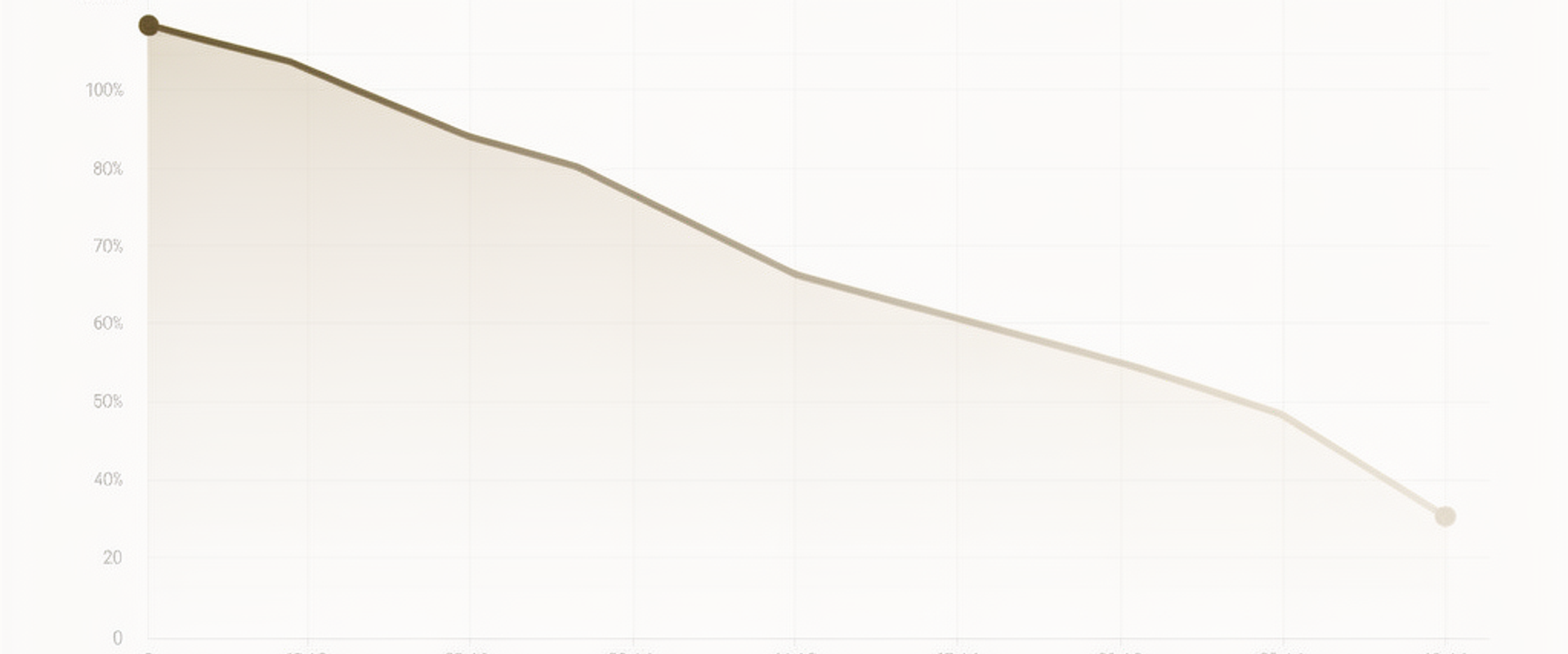
When you lose weight rapidly through severe calorie restriction, your body perceives this as a threat to your survival—a famine. In response, it triggers a biological defense mechanism known as metabolic adaptation.
First, your body slows down your BMR to conserve energy. Second, it alters your hunger hormones. It increases the production of ghrelin (the hormone that makes you feel ravenously hungry) and decreases leptin (the hormone that signals fullness). This is not a failure of your willpower; this is your biology actively fighting to put the weight back on to keep you safe.
A famous study on contestants from the television show The Biggest Loser perfectly illustrated this. Years after the show ended, researchers found that the contestants' metabolisms had slowed down drastically, burning hundreds of calories less per day than expected for their new body sizes.
This is why a slow rate of weight loss—about 0.5 to 1 pound per week—is the gold standard. It minimizes metabolic adaptation, preserves your resting metabolism, and keeps your hunger hormones relatively stable.
The Protein Advantage: Satiety and Muscle Preservation
If there is one macronutrient that acts as a secret weapon for sustainable weight loss, it is protein.
Protein serves two massive biological functions when you are in a gentle caloric deficit:
1. It preserves lean muscle mass. When you lose weight, you want to lose body fat, not muscle. Muscle is metabolically active tissue, meaning it burns calories even at rest. Consuming adequate protein ensures your body breaks down fat stores for energy rather than your hard-earned muscle.
2. It keeps you exceptionally full. Protein is the most satiating macronutrient. It takes longer to digest than carbohydrates, keeping you fuller for longer. Furthermore, protein has a high Thermic Effect of Food (TEF). Your body burns about 20-30% of the calories in protein just to digest it, compared to only 5-10% for carbohydrates and 0-3% for fats.
Actionable Tip: Aim for 20 to 30 grams of protein at every meal.
- Breakfast: 1 cup of plain Greek yogurt (20g) or 3 large eggs (18g).
- Lunch: 4 ounces of sliced turkey breast (30g) or 1 cup of edamame (17g).
- Dinner: 4 ounces of baked salmon (25g), a cup of lentils (18g), or 4 ounces of extra firm tofu (16g).
Volume Eating: How to Eat More and Weigh Less
One of the biggest misconceptions about weight loss is that your portions need to be tiny. If you are eating the right foods, your plates can actually be enormous. This concept is called "volume eating," and it relies on the science of energy density.
Foods with low energy density have very few calories relative to their physical weight and volume. These foods are typically rich in water and dietary fiber. Fiber is an indigestible carbohydrate that adds bulk to your meals, physically stretching your stomach. When your stomach stretches, it sends mechanical signals to your brain to tell you that you are full.
Compare a handful of potato chips to a bowl of strawberries. A single ounce of potato chips (about 15 chips) contains roughly 150 calories. For those same 150 calories, you could eat over three cups of fresh strawberries. The chips will leave you wanting more in five minutes; the three cups of strawberries will leave you physically full.
Actionable Tip: Focus on adding to your plate, not subtracting. Aim to fill half of your plate with water-rich, high-fiber vegetables at lunch and dinner. Spinach, zucchini, broccoli, cauliflower, carrots, and bell peppers are fantastic volume foods.
Real-Life Application: Easy Swaps and Meal Ideas
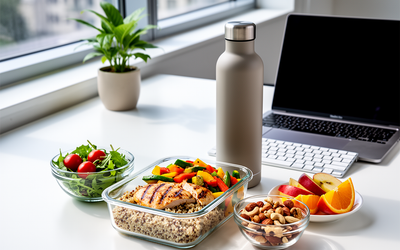
Knowing the science is only half the battle. The magic happens when you translate these biological principles into your daily routine. Here are a few practical, delicious meal ideas and swaps that prioritize protein, fiber, and gentle calorie control.
The Breakfast Shift
- Instead of: A bowl of sugary cereal with a glass of orange juice. This meal is high in refined carbs and sugar, which will spike your blood sugar and leave you crashing and hungry by 10 AM.
- Try this: A "Power Oatmeal" bowl. Cook ½ cup of rolled oats with water or almond milk. Once cooked, stir in 1 scoop of your favorite whey or plant-based protein powder, 1 tablespoon of chia seeds (for healthy fats and massive fiber), and top with ½ cup of raspberries. This meal provides roughly 30g of protein and 10g of fiber. You will feel energized and full until lunch.
The Lunch Upgrade
- Instead of: A pre-packaged, mayo-heavy chicken salad sandwich on white bread.
- Try this: A massive "Kitchen Sink" Salad. Start with 3 cups of mixed greens (huge volume, almost zero calories). Add 4 ounces of grilled chicken breast or half a can of rinsed chickpeas. Add ½ cup of diced cucumbers, ¼ cup of shredded carrots, and ¼ cup of cherry tomatoes. Dress it with 1 tablespoon of extra virgin olive oil mixed with fresh lemon juice and a pinch of salt.
The Snack Swap
- Instead of: Reaching for crackers or cookies at 3 PM.
- Try this: 1 cup of baby carrots and sliced bell peppers dipped into ¼ cup of hummus or tzatziki. The crunch will satisfy your stress-chewing urge, while the fiber and protein will stabilize your blood sugar.
Beyond the Plate: Sleep and Stress
We cannot talk about the science of weight loss without discussing sleep and stress. You can have the most perfectly balanced meals in the world, but if you are sleeping four hours a night and living in a state of chronic stress, your body will fight your weight loss efforts.
Chronic stress elevates cortisol. Consistently high cortisol levels can lead to insulin resistance and specifically encourage the storage of visceral fat (belly fat).
Similarly, sleep deprivation wreaks havoc on your hunger hormones. Studies show that people who sleep less than six hours a night consume, on average, 300 to 400 more calories the following day. Their brains become hyper-responsive to highly palatable, calorie-dense foods (like donuts and pizza), while their impulse control drops.
Actionable Tip: Treat a 7 to 8-hour sleep window with the same level of importance as your grocery shopping. Create a wind-down routine, turn off screens an hour before bed, and try to wake up at the same time every day.
The Clear, Practical Takeaway
Sustainable weight loss is not found in a 10-day detox or a restrictive list of "bad" foods. It is found in understanding your biology and working with your body rather than against it.
The most successful, long-term approach to weight loss focuses on addition, not restriction. Add 20-30 grams of protein to your meals to preserve muscle and stay full. Add massive volumes of colorful, fiber-rich vegetables to physically fill your stomach. Add an extra hour of sleep to balance your hunger hormones.
By creating a gentle caloric deficit and focusing on whole, satiating foods 80% of the time—while leaving 20% of your diet for the fun foods you love—you build a lifestyle that is not just scientifically effective, but actually enjoyable to live.