The One-Meal Rule: A Science-Backed Guide to Family Meal Planning Without the Tears
Stop acting like a short-order cook. Learn how to plan single family meals that both kids and adults will love using the Division of Responsibility, clever vegetable integration, and 10 nutritionist-approved meal ideas.

If you are a parent, you have likely experienced the 6:00 PM dinner dread. You are exhausted, you want to eat something nourishing, but your toddler is demanding buttered noodles, and your older child suddenly hates everything except chicken nuggets. Before you know it, you are standing at the stove acting as a short-order cook, preparing three different meals for three different people.
It is incredibly common to feel overwhelmed by family meal planning, especially when you are trying to navigate conflicting nutrition advice. You want your family to eat well, but you also want peace at the dinner table.
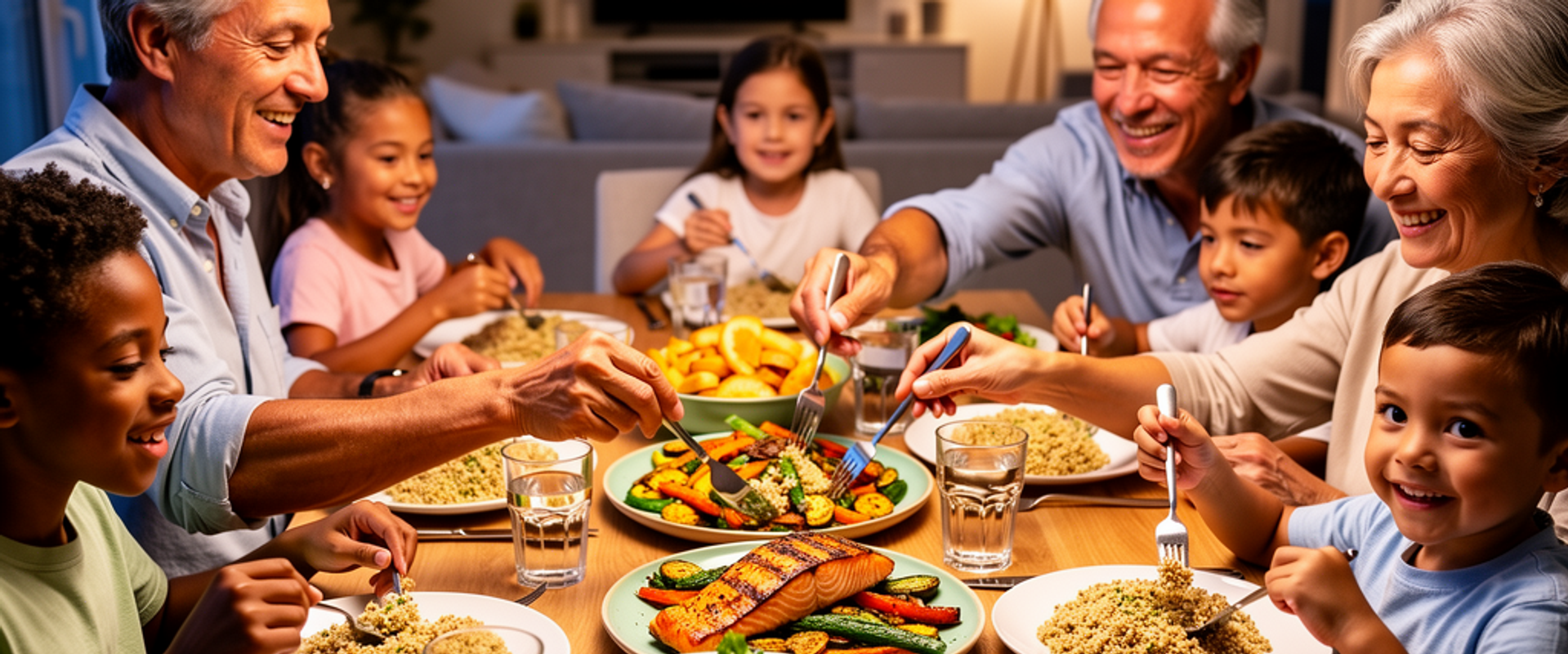
The good news? Nutrition does not have to be complicated, and you do not need to make separate meals to keep everyone happy. By adopting a family-style approach—where one meal is served and everyone eats from it—you can reduce mealtime stress, improve your family's nutrient intake, and foster a healthier relationship with food.
Here is a science-backed, practical guide to getting kids and adults to eat the same healthy food, without tears, food shaming, or restriction.
The Science of Family Meals
Research consistently shows that eating together as a family has profound benefits. Children and adolescents who participate in regular family meals tend to consume more fruits, vegetables, and dietary fiber, and less fried food and soda. Beyond nutrition, family meals are linked to better psychosocial outcomes, including higher self-esteem and lower rates of depression.
However, the environment of the meal matters just as much as the food on the plate. If dinnertime is a battleground of pressure, bribery ("eat your broccoli and you can have dessert"), or restriction, those benefits quickly evaporate.
To create a positive environment where the "one meal" rule actually works, we need to shift how we think about feeding our families.
The Golden Rule: The Division of Responsibility
If there is one concept that will completely transform your family meals, it is Ellyn Satter's Division of Responsibility in Feeding (sDOR). Backed by decades of pediatric nutrition research, this model eliminates mealtime power struggles by clearly defining who is responsible for what.
The Parent's Job:
- What: You decide what food is being served (the menu).
- When: You decide when meals and snacks happen (the schedule).
- Where: You decide where food is eaten (e.g., at the dining table, away from screens).
The Child's Job:
- Whether: The child decides whether to eat what is offered.
- How Much: The child decides how much to eat from what is provided.
When you adopt this model, your job ends once you place the balanced meal on the table. If your child chooses only to eat the bread and the fruit, you do not comment, you do not coax, and you do not jump up to make them a sandwich. You trust their body to regulate its intake over the course of a week, rather than stressing over a single meal.
The "Safe Food" Strategy
To make the Division of Responsibility work, always include 1 to 2 "safe foods" on the table. A safe food is a component of the meal you know your child reliably accepts. This might be a side of plain pasta (1/2 cup), a serving of fruit like sliced strawberries, or a piece of whole-grain bread. This ensures the child always has something to safely fill their belly, preventing a hunger meltdown later, while still exposing them to the rest of the family meal.
To Hide or Not to Hide Vegetables?
One of the most common questions parents ask is whether they should hide vegetables in their kids' food. The answer is nuanced: you should enhance meals with vegetables, but you should not deceive your children.
Blending half a cup of puréed butternut squash into macaroni and cheese or finely grating zucchini into turkey meatballs is a fantastic way to boost the nutrient density of a meal for the entire family. Adults benefit from these extra vitamins and fiber just as much as kids do!
However, if you only ever hide vegetables, children never learn to accept them in their whole form. Research shows it can take up to 15 or 20 exposures to a new food before a child will even taste it, let alone like it.
The Best Approach: Blend and Expose. Add that half-cup of riced cauliflower to your chili for a nutritional boost, but also serve a small, visible side of roasted cauliflower or raw bell peppers on the table. Let them see the vegetables, interact with them, and eventually taste them on their own terms.
Involving Kids in the Kitchen
Studies show that children who are involved in food preparation are significantly more likely to eat vegetables and try new foods. When kids help cook, they feel a sense of ownership over the meal, which reduces their natural hesitation toward new ingredients.
Involvement looks different at every age:
- Toddlers (Ages 2-3): Can wash produce in the sink, tear lettuce for salads, or dump pre-measured ingredients into a bowl.
- Preschoolers (Ages 4-5): Can stir room-temperature batters, mash avocados or potatoes, and use a safe, plastic nylon knife to cut soft foods like bananas or mushrooms.
- School-Aged (Ages 6+): Can measure dry ingredients, peel carrots, crack eggs, and eventually learn basic stovetop skills with supervision.
10 Family-Approved "One Meal" Ideas
The secret to the "one meal" rule is serving deconstructed meals. Instead of serving a mixed casserole where the ingredients cannot be separated, serve meals in components. Adults can mix everything together into a complex, flavorful dish, while kids can keep their foods separated and safe.
Here are 10 highly customizable, nutritionist-approved meals to try this week:
1. The Deconstructed Taco Bar
- The Setup: Brown 1 pound of lean ground turkey or beef with mild taco seasoning. Set out bowls of black beans (1/2 cup per adult), shredded cheese, diced tomatoes, shredded lettuce, avocado slices, and whole-grain tortillas.
- Adult Plate: Load up a large tortilla or make a taco salad bowl with all the fixings.
- Kid Plate: A plain tortilla, a small pile of meat, a sprinkle of cheese, and avocado slices served separately.
2. Build-Your-Own Grain Bowls
- The Setup: Cook a base of quinoa or brown rice. Roast a sheet pan of diced sweet potatoes (1/2 cup per serving) and broccoli florets tossed in olive oil. Grill 3-4 ounces of chicken breast per person. Whisk together a simple lemon-tahini dressing.
- Adult Plate: A beautiful, mixed bowl drizzled generously with tahini dressing.
- Kid Plate: Rice in one section, chicken in another, sweet potatoes in a third. Dressing offered on the side as a "fun dip."
3. Enhanced Meatballs with Whole Wheat Pasta
- The Setup: Make meatballs using 1 pound of ground meat, mixing in 1/2 cup of finely grated zucchini and 1/4 cup of grated carrots. Serve with a high-quality marinara sauce and 1 cup of whole wheat or legume-based pasta per adult.
- Adult Plate: Pasta topped with sauce, meatballs, and a side salad.
- Kid Plate: Pasta (with or without sauce, depending on preference), one cut-up meatball, and a safe fruit like grapes (halved).
4. Sheet Pan Salmon and Rainbow Veggies
- The Setup: Roast 4-ounce salmon fillets alongside cherry tomatoes, asparagus, and diced potatoes, all tossed in olive oil, garlic powder, and a pinch of salt.
- Adult Plate: A balanced plate of omega-3-rich salmon and roasted vegetables.
- Kid Plate: Flaked salmon (free of bones), roasted potatoes, and perhaps a side of raw baby carrots if they prefer raw over roasted veggies.
5. Customizable Personal Pita Pizzas
- The Setup: Use whole-wheat pitas as the crust. Set out tomato sauce, shredded mozzarella (1/4 cup per pita), and a variety of toppings: spinach, sliced bell peppers, mushrooms, and turkey pepperoni.
- Adult Plate: A veggie-loaded pizza baked until crispy.
- Kid Plate: A simpler cheese or pepperoni pizza, with the option to add veggies. Let them assemble it themselves!
6. Breakfast for Dinner
- The Setup: Scramble eggs (2 per adult, 1 per child). Make a batch of whole-grain or oat-based pancakes. Serve with a large fruit salad (berries, melon, bananas).
- Adult Plate: A comforting, protein-rich breakfast plate. Add a handful of spinach to the adult eggs for extra greens.
- Kid Plate: A pancake, a scoop of scrambled eggs, and plenty of fruit.
7. Chicken and Veggie Stir-Fry with Noodles
- The Setup: Sauté sliced chicken breast with a bag of frozen mixed stir-fry vegetables (edamame, snap peas, carrots). Toss with 1 cup of udon or soba noodles and a mild, low-sodium teriyaki sauce.
- Adult Plate: A generous bowl of the mixed stir-fry.
- Kid Plate: Use tongs to pull out plain noodles, a few pieces of chicken, and the specific vegetables they tolerate (like edamame beans) before mixing the whole pan with sauce.
8. The "Snack Dinner" Charcuterie Board
- The Setup: Arrange a large wooden board with nutrient-dense finger foods: 1 ounce of cheese per person, whole-grain crackers, 1/4 cup of mixed nuts (for kids over 4), sliced cucumbers, cherry tomatoes, hummus, and hard-boiled eggs.
- Adult Plate: Graze directly from the board for a fun, relaxed, tapas-style dinner.
- Kid Plate: Kids love the novelty of snack dinners. They naturally gravitate toward building their own balanced plate from the colorful options.
9. Mild Turkey Chili with Toppings
- The Setup: Cook a mild, bean-heavy chili (kidney and black beans provide excellent fiber). Serve with bowls of toppings: shredded cheese, diced avocado, and plain Greek yogurt (an excellent swap for sour cream).
- Adult Plate: A hearty bowl of chili loaded with toppings.
- Kid Plate: A small bowl of chili with tortilla chips for dipping. If they refuse the chili, they can eat a deconstructed version of the toppings (avocado, cheese, chips) alongside a glass of milk.
10. Baked Potato Bar
- The Setup: Bake large Russet or sweet potatoes. Set out steamed broccoli, 1/2 cup of black beans or leftover chili, and cheese.
- Adult Plate: A loaded baked potato stuffed with beans, broccoli, and a dollop of plain Greek yogurt.
- Kid Plate: A potato sliced open, lightly buttered, with beans and broccoli served on the side.
Actionable Swaps for Better Nutrition
You do not need to overhaul your entire pantry overnight. Make these small, unnoticeable swaps to improve the nutritional profile of the meals you already make:
- The Rice Swap: If your family loves white rice, do not ban it. Instead, cook a 50/50 blend of white rice and brown rice. You get the familiar texture of white rice with the added fiber of brown rice.
- The Sour Cream Swap: Replace sour cream with plain, full-fat Greek yogurt. It tastes nearly identical in tacos and chili but adds a significant boost of protein and gut-friendly probiotics.
- The Pasta Swap: Try using half standard pasta and half lentil or chickpea pasta. This gently introduces the texture of legume-based pastas while drastically increasing the fiber and protein content of the meal.
The Practical Takeaway
Transitioning to a single family meal is a marathon, not a sprint. Start by picking just one deconstructed meal from the list above to try this week. Remember your job: provide a balanced meal with at least one "safe food," sit down, eat your own food, and let your kids manage the rest. By removing the pressure, you make room for nourishment, connection, and ultimately, a healthier, happier family table.