Ancient Grains Explained: Why Quinoa, Amaranth, and Farro Are Worth Your Time
Discover why ancient grains like quinoa, amaranth, and farro are nutritional powerhouses. Learn how their protein and fiber outshine modern wheat, plus get easy cooking tips and daily meal swaps to boost your health without the stress.

If you have spent more than five minutes scrolling through nutrition advice online, you are probably feeling a little overwhelmed. One day carbohydrates are the enemy, and the next day, a new documentary insists that whole grains are the secret to a long, healthy life. It is enough to make anyone want to throw up their hands and order takeout.
As a nutrition professional, I am here to offer a deep breath and some reassuring news: eating well does not have to be an all-or-nothing game. You do not need to banish carbohydrates from your plate to improve your health. Instead, you can simply upgrade them.
Enter ancient grains.
You have likely seen bags of quinoa, amaranth, and farro lining grocery store shelves, perhaps with premium price tags that made you wonder, Are these actually worth it? The short answer is yes. These nutrient-dense staples offer a practical, delicious way to add more protein, fiber, and essential minerals to your diet.
Let's cut through the noise, look at the science of why these grains outperform modern refined wheat, and—most importantly—learn exactly how to cook and enjoy them without overhauling your entire life.
Modern Wheat vs. Ancient Grains: What Does the Science Say?
To understand why ancient grains are so beneficial, it helps to understand what happened to modern wheat.
During the mid-20th century, an agricultural boom known as the Green Revolution transformed how we grow food. Scientists bred new varieties of wheat that were shorter, grew faster, and produced massive yields. This was an incredible achievement that helped feed a rapidly growing global population. However, this hybridization came with a nutritional trade-off.
Research shows that as modern wheat was bred for higher yields and easier processing, its concentration of essential micronutrients—like zinc, iron, and magnesium—declined. Furthermore, modern processing often strips away the bran and the germ of the wheat kernel to make white flour, removing the bulk of the fiber and healthy fats in the process.
Ancient grains, on the other hand, are exactly what they sound like: varieties of grains and seeds that have remained largely unchanged for thousands of years. Because their complex root systems pull more nutrients from the soil, and because they are almost always consumed in their "whole" form, their nutritional profiles are incredibly robust.
Compared to refined modern wheat, ancient grains consistently offer:
- Higher Protein: Crucial for muscle repair, immune function, and keeping you full.
- More Dietary Fiber: Essential for a healthy gut microbiome, smooth digestion, and stable blood sugar levels.
- Richer Mineral Density: Packed with magnesium (vital for stress management and sleep), iron (for energy), and zinc (for immune health).
Let's dive into three of the most accessible ancient grains, exploring their unique benefits and how to get them onto your dinner table.
Quinoa: The Complete Protein Powerhouse
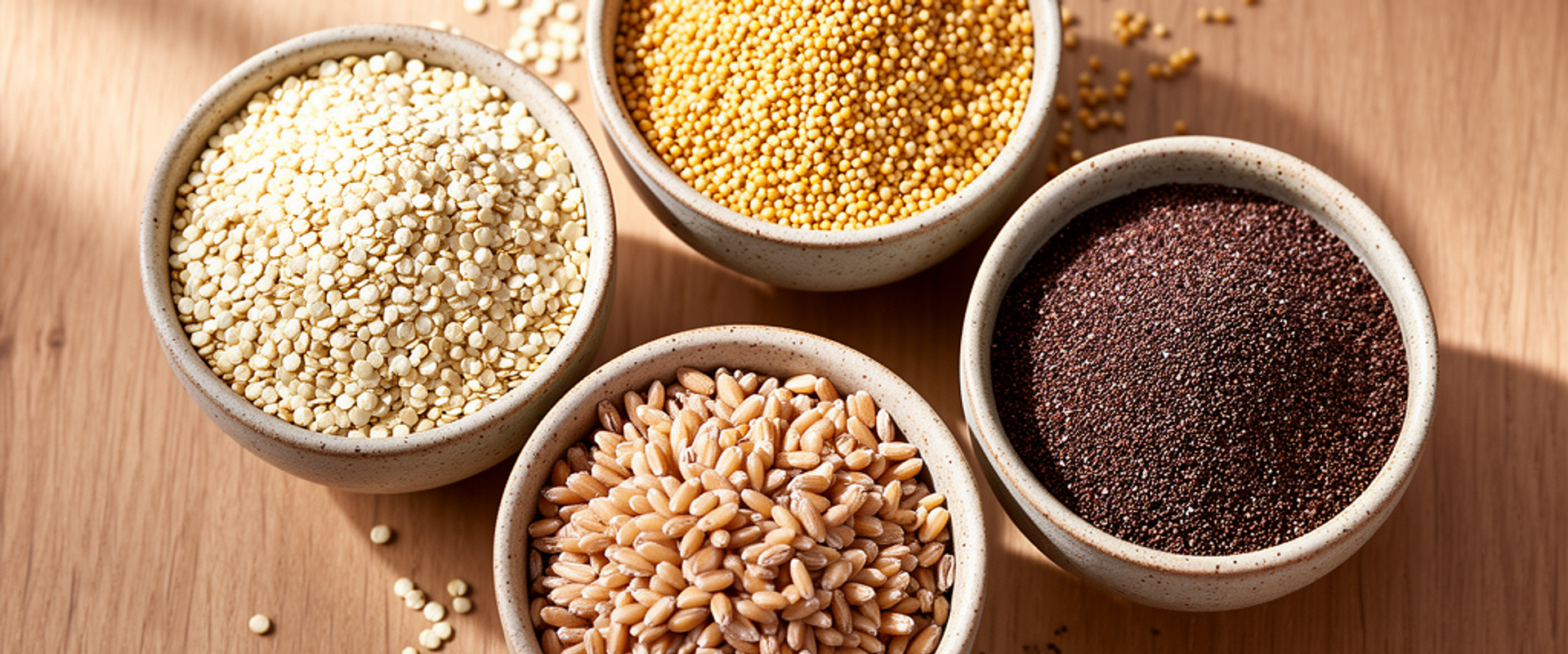
Pronounced KEEN-wah, this South American staple is technically a "pseudocereal"—a seed that is prepared and eaten like a grain. Cultivated in the Andes for over 5,000 years, quinoa is one of the most popular ancient grains for good reason.
The Nutritional Profile
What makes quinoa uniquely valuable is its protein quality. Most plant-based proteins are "incomplete," meaning they lack one or more of the nine essential amino acids our bodies cannot produce on their own. Quinoa is a rare exception. It is a complete protein, making it an exceptional choice for anyone looking to eat more plant-based meals.
A standard ½-cup serving of cooked quinoa provides about 4 grams of high-quality protein and 2.5 grams of fiber. It is also naturally gluten-free and rich in magnesium, manganese, and folate.
How to Cook Quinoa Perfectly
Many people complain that quinoa tastes bitter or mushy. The bitterness comes from a natural, soapy coating called saponin, which protects the seed from insects. The mushiness comes from using too much water.
- Rinse thoroughly: Place the dry quinoa in a fine-mesh sieve and run it under cold water for 30 seconds, rubbing the seeds with your fingers until the water runs clear.
- Use the golden ratio: Use 1 part dry quinoa to 1.5 parts liquid (water or bone broth for extra protein).
- Simmer and steam: Bring the liquid to a boil, reduce to a low simmer, cover, and cook for 15 minutes. Remove from heat and let it sit covered for 5 minutes. Fluff with a fork.
Easy Daily Swaps
- The Breakfast Bowl: Swap out your morning oatmeal for quinoa. Simmer it in almond milk and top with walnuts, berries, and a drizzle of maple syrup.
- The Salad Booster: Toss ½ cup of chilled, cooked quinoa into your standard green salad to instantly transform it from a light side dish into a satisfying, energizing meal.
Amaranth: The Tiny Calcium Champion
Like quinoa, amaranth is a gluten-free pseudocereal. It was a dietary staple of the Aztec empire, where it was so highly valued that it was used in religious ceremonies. The seeds are incredibly tiny—about the size of poppy seeds—and have a slightly earthy, peppery, and nutty flavor.
The Nutritional Profile
Amaranth is a nutritional heavyweight. A ½-cup serving of cooked amaranth boasts nearly 5 grams of protein and is notably high in iron and magnesium.
However, amaranth truly shines in its calcium content. It contains roughly three times the calcium of other grains, making it a fantastic addition for those looking to support bone health without relying entirely on dairy. It is also the only grain documented to contain Vitamin C, and it is rich in squalene, a powerful antioxidant that supports skin health and reduces inflammation.
How to Cook Amaranth
Because the seeds are so small, amaranth behaves differently than fluffy grains like rice or quinoa. When boiled, it releases starches that give it a thick, gelatinous texture similar to porridge or polenta.
- For Porridge: Combine 1 part dry amaranth with 3 parts liquid. Bring to a boil, reduce heat, cover, and simmer for about 20-25 minutes until the liquid is absorbed and the texture is creamy.
- For Popping: You can actually pop amaranth just like popcorn! Heat a dry skillet over medium-high heat. Add 1 tablespoon of dry amaranth at a time. It will immediately start popping. Shake the pan constantly for 10-15 seconds until the popping slows, then quickly pour it into a bowl to prevent burning.
Easy Daily Swaps
- The Soup Thickener: Instead of using cornstarch or flour, stir ¼ cup of dry amaranth into a simmering pot of soup or chili 20 minutes before it is done. It will naturally thicken the broth while adding a massive nutrient boost.
- The Crunchy Topping: Use popped amaranth as a nutritious, crunchy topping for Greek yogurt, smoothie bowls, or even sprinkled over peanut butter toast.
Farro: The Chewy, Fiber-Rich Comfort Grain
If you prefer hearty, chewy textures and are not sensitive to gluten, farro is about to become your new best friend. Farro is an ancient strain of wheat (often tracing back to Emmer wheat) that fueled the Roman legions. It has a complex, nutty flavor with a satisfyingly firm bite.
The Nutritional Profile
Farro is an absolute fiber champion. A ½-cup serving of cooked farro delivers roughly 3.5 to 5 grams of dietary fiber, alongside a solid 4 grams of protein.
This high fiber-to-protein ratio makes farro incredibly satiating. It slows down digestion, ensuring a steady, sustained release of energy rather than the rapid blood sugar spike and crash associated with white pasta or refined breads. It is also loaded with B vitamins, particularly niacin (Vitamin B3), which helps your body convert food into usable energy.
(Note: Because farro is a type of wheat, it does contain gluten and is not suitable for individuals with Celiac disease or non-celiac gluten sensitivity.)
How to Cook Farro
Farro is often sold in three forms: whole, semi-pearled, and pearled. Whole farro contains the entire bran but requires overnight soaking and a 40-minute cooking time. Pearled farro has the bran removed—it cooks in 15 minutes but loses some fiber. Semi-pearled is the sweet spot, cooking in about 25 minutes while retaining a great nutritional profile.
The easiest, most foolproof way to cook farro is the "pasta method."
- Bring a large pot of heavily salted water to a rolling boil (just like you would for spaghetti).
- Drop in 1 cup of rinsed farro.
- Boil uncovered until tender but still chewy (usually 20-30 minutes, depending on the variety).
- Drain the excess water in a colander.
Easy Daily Swaps
- "Farrotto": Swap out traditional Arborio rice for farro to make a nutrient-dense risotto. Cook the farro slowly in broth, adding mushrooms, spinach, and a touch of parmesan cheese.
- Hearty Meal Prep Bowls: Farro holds its texture beautifully in the fridge for up to five days without getting mushy. Use it as the base for a Mediterranean bowl with roasted vegetables, chickpeas, feta cheese, and a lemon-tahini dressing.
How to Add Ancient Grains to Your Week Without Overwhelm
Reading about nutrition is easy; changing your daily habits is the hard part. If you want to start incorporating quinoa, amaranth, or farro into your diet, here are a few practical, stress-free strategies:
1. The 50/50 Blend
If you or your family are used to eating white rice, do not switch to 100% ancient grains overnight. Sudden increases in dietary fiber can cause temporary bloating. Instead, try the 50/50 method. Cook a batch of quinoa or farro, and mix it half-and-half with your usual white rice. You still get the familiar texture of the rice, but you instantly double the protein and fiber of the dish.
2. Batch Cook on Sundays
Ancient grains are perfect for meal prep. Spend 30 minutes on a Sunday boiling a large batch of farro or quinoa. Let it cool completely, then store it in an airtight glass container in the fridge. Now, you have a ready-to-eat, nutrient-dense carbohydrate to scoop into salads, soups, or wraps all week long.
3. Utilize the Freezer
Did you know cooked grains freeze beautifully? If you cook a large batch of quinoa, portion it into small, freezer-safe bags, press the air out, and lay them flat in the freezer. When you need a quick side dish on a busy Wednesday night, just microwave a bag for two minutes.
The Practical Takeaway
Nourishing your body does not require strict rules, expensive supplements, or cutting out entire food groups. It is often about making small, sustainable upgrades to the foods you already eat.
Ancient grains like quinoa, amaranth, and farro offer a beautiful bridge between the past and the present. They provide the protein, fiber, and micronutrients our bodies desperately need, all wrapped up in delicious, versatile packages.
Your action step for this week: Don't try to buy all three. Pick just one ancient grain the next time you are at the grocery store. Cook a small batch using the methods above, and try swapping it into one of your favorite familiar meals. Small hinges swing big doors—and one simple grain swap might just be the easiest health upgrade you make all year.