Eat Your Way to Better Blood Pressure: A No-Stress Guide to Heart-Healthy Foods
Overwhelmed by nutrition advice? Discover how adding delicious, science-backed foods like dark chocolate, beets, and bananas to your daily routine can naturally support healthy blood pressure alongside your medical care.

If you have recently been told your blood pressure is creeping up, you are likely feeling a mix of concern and deep overwhelm. A quick internet search for "how to lower blood pressure" yields thousands of conflicting rules, restrictive diets, and extreme claims. It is enough to make anyone's blood pressure rise even further.
Let's take a deep breath and step away from the diet culture noise. Supporting your cardiovascular health does not require you to eat perfectly, banish your favorite meals, or feel ashamed of your current habits. Instead of focusing on what you need to cut out, what if we focused on what you can add?
This additive approach is the foundation of the DASH (Dietary Approaches to Stop Hypertension) eating plan, one of the most heavily researched and medically respected dietary patterns in the world. The science is clear: food is a powerful tool that can work synergistically alongside your prescribed medical treatments to help manage hypertension.
Let's explore the science behind four key blood-pressure-lowering nutrients—potassium, magnesium, nitrates, and omega-3s—and look at delicious, practical ways to add them to your plate today.
The Golden Rule: Food as a Partner, Not a Replacement
Before we dive into the grocery list, it is crucial to establish how food fits into your overall healthcare plan. If your doctor has prescribed blood pressure medication, think of these dietary changes as your medication's best friend, not its replacement.
Medication often does the heavy lifting to quickly bring dangerous numbers down to a safe range. Nutrition, on the other hand, builds a long-term foundation for cardiovascular resilience. Over time, consistent, gentle changes to your eating habits may allow your doctor to adjust your dosage, but you should never stop or change your medication without their guidance.
Now, let's look at the delicious, functional foods that help your blood vessels relax, open up, and let blood flow freely.
Potassium: The Great Sodium Balancer
When we talk about blood pressure, sodium usually gets all the attention. But potassium is the unsung hero of fluid balance. Potassium helps your kidneys flush excess sodium out of your body through your urine. Furthermore, potassium helps ease tension in your blood vessel walls, which directly lowers blood pressure.
Potassium-Rich Powerhouses
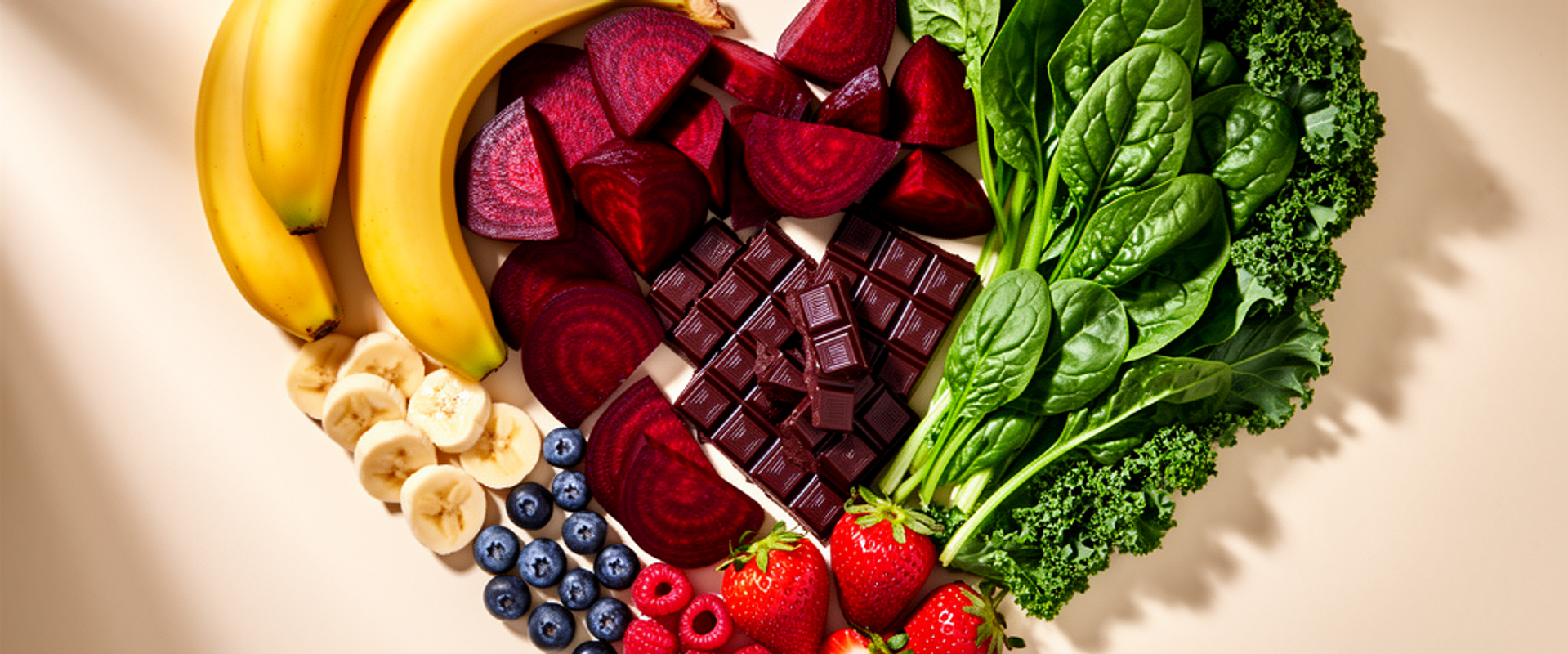
- Bananas: The most famous source of potassium. A medium banana contains about 400-450 mg of potassium. They are affordable, portable, and naturally sweet.
- Potatoes and Sweet Potatoes: Surprise! A medium baked potato with the skin on actually contains more potassium than a banana—clocking in at over 900 mg.
- Spinach: Just one cup of cooked spinach delivers roughly 800 mg of potassium.
- Beans and Lentils: A half-cup of cooked white beans provides about 600 mg of potassium, alongside a hefty dose of heart-healthy fiber.
How to Add More Potassium Today
Instead of overthinking it, look for simple swaps. If you usually have toast for breakfast, try adding half a sliced banana on top with a smear of peanut butter. If you are making a soup or stew, toss in a handful of white beans or a diced sweet potato.
Note: If you have kidney disease or are on certain blood pressure medications (like ACE inhibitors or potassium-sparing diuretics), your body might hold onto too much potassium. Always check with your doctor before significantly increasing your potassium intake.
Magnesium: The Natural Relaxant
Magnesium is a magnificent mineral that acts as a natural "calcium channel blocker." In the medical world, calcium channel blocking medications are frequently prescribed to lower blood pressure. They work by preventing calcium from entering the cells of your heart and arteries, allowing the blood vessels to relax and open. Magnesium does this naturally, albeit on a gentler scale.
Magnesium-Rich Marvels
- Dark Chocolate: Yes, you read that right. Dark chocolate is wonderfully rich in magnesium. A one-ounce serving of 70-85% dark chocolate provides about 64 mg of magnesium. It also contains flavonoids, which are plant compounds that support vascular health.
- Pumpkin Seeds: These tiny seeds are magnesium giants. Just one ounce (about a handful) contains over 150 mg of magnesium.
- Almonds and Cashews: A one-ounce serving of dry-roasted almonds gives you about 80 mg of magnesium.
- Avocados: One medium avocado provides nearly 60 mg of magnesium, plus healthy monounsaturated fats.
How to Add More Magnesium Today
Create a daily "heart-healthy trail mix" by combining a handful of pumpkin seeds, a handful of almonds, and a few squares of broken-up dark chocolate (aim for 70% cocoa or higher for the best benefit). Keep a jar on your desk for a satisfying, crunchy, sweet-and-salty afternoon snack that actively supports your blood vessels.
Dietary Nitrates: The Blood Vessel Expanders
If you want to see the magic of food science in action, look no further than dietary nitrates. When you eat foods rich in natural nitrates, the beneficial bacteria in your mouth and your digestive enzymes convert them into nitric oxide.
Nitric oxide is a signaling molecule that tells the smooth muscles around your blood vessels to relax. When those muscles relax, the vessels dilate (widen), and blood pressure drops. The effect is so potent that studies have shown measurable drops in blood pressure within just a few hours of consuming nitrate-rich foods.
Nitrate-Rich Champions
- Beets and Beet Juice: Beets are the undisputed kings of dietary nitrates. Drinking just one cup (8 ounces) of pure, unsweetened beet juice daily has been shown in clinical trials to significantly lower blood pressure.
- Arugula: This peppery leafy green is incredibly dense in nitrates.
- Swiss Chard and Bok Choy: Excellent, versatile greens that pack a nitrate punch.
- Celery: Beyond being a crunchy snack, celery contains natural compounds called phthalides that help relax the tissues of the artery walls.
How to Add More Nitrates Today
If you are intimidated by beets, try roasting them. Peel and dice a few raw beets, toss them with olive oil, salt, and pepper, and roast at 400°F (200°C) for 30-40 minutes until they are tender and caramelized. Roasting brings out their natural sweetness. Alternatively, toss a handful of arugula into your usual salad mix or blend a small raw beet into a berry smoothie where the fruit masks the earthy flavor.
Omega-3 Fatty Acids: The Inflammation Fighters
Chronic inflammation can damage the inner lining of your blood vessels, making them stiff and less able to expand. Omega-3 fatty acids are powerful anti-inflammatory agents. Research shows that consuming adequate amounts of omega-3s—specifically EPA and DHA found in marine sources—can modestly but consistently lower blood pressure.
Omega-3 All-Stars
- Fatty Fish: Salmon, mackerel, sardines, and trout are the best sources of bioavailable omega-3s. A standard serving is about 3 to 4 ounces.
- Flaxseeds: For a plant-based option, ground flaxseeds offer a type of omega-3 called ALA. (Make sure they are ground; whole flaxseeds pass right through your digestive system!).
- Chia Seeds: Two tablespoons of chia seeds provide a massive dose of ALA omega-3s, plus a highly beneficial type of soluble fiber.
- Walnuts: A fantastic, heart-healthy nut that provides crunch and ALA.
How to Add More Omega-3s Today
Aim to include fatty fish in your rotation twice a week. A simple baked salmon filet with a squeeze of lemon is a perfect weeknight dinner. If you do not eat fish, try making a daily habit of stirring a tablespoon of ground flaxseeds or chia seeds into your morning oatmeal or yogurt.
Putting It All Together: A Day of Blood-Pressure-Friendly Meals
Knowing the science is great, but applying it in the kitchen is where the magic happens. Here is an example of what a delicious, satisfying, and heart-nourishing day might look like, focusing on adding these powerful foods without stressing over perfection.
Breakfast: The Power Oatmeal
- 1/2 cup rolled oats cooked in water or your milk of choice.
- Stir in 1 tablespoon of ground flaxseeds (Omega-3s).
- Top with 1/2 sliced banana (Potassium) and a small handful of walnuts (Omega-3s).
- Why it works: You are starting your day with a massive dose of vessel-relaxing fiber, potassium, and anti-inflammatory fats, all in a warm, comforting bowl.
Lunch: The Nitric Oxide Salad
- 2 cups of mixed greens, making sure half is arugula (Nitrates).
- Top with 1/2 cup of roasted beets (Nitrates) and 1/2 cup of white beans (Potassium).
- Dress with olive oil and lemon juice.
- Why it works: This is a vasodilator dream meal. The arugula and beets work together to boost nitric oxide production, opening up your blood vessels for the afternoon.
Snack: The Afternoon Pick-Me-Up
- 1 ounce of 70% dark chocolate (Magnesium).
- 1 ounce of pumpkin seeds (Magnesium).
- Why it works: It satisfies the afternoon craving for something sweet and crunchy while delivering a targeted dose of magnesium to help your arteries naturally relax.
Dinner: The Omega-3 Plate
- 4 ounces of baked salmon (Omega-3s).
- 1 medium baked sweet potato (Potassium).
- 1 cup of sautéed spinach with garlic (Nitrates and Potassium).
- Why it works: A satisfying, deeply flavorful meal that hits three major blood-pressure-lowering targets at once.
Your Practical Takeaway
Managing your blood pressure does not require a miserable, flavorless diet. You do not have to eat all of these foods every single day to see a benefit. The goal is consistency, not perfection.
Start small. Pick just one food from this list that you genuinely enjoy—maybe it is swapping your milk chocolate for dark chocolate, or adding a banana to your morning routine. Master that habit, and then pick another. By focusing on nourishing your body with potassium, magnesium, nitrates, and omega-3s, you are actively participating in your cardiovascular health and building a resilient, happy heart.