The Science of Fermented Foods: Why Your Gut Needs Kimchi, Yogurt, and Sauerkraut
Overwhelmed by nutrition advice? Discover the science of fermented foods. Learn how a daily forkful of kimchi, yogurt, or sauerkraut can support your gut microbiome, and get practical, delicious ways to add probiotics to your everyday meals.

If you are feeling overwhelmed by the endless stream of nutrition advice on the internet, you are absolutely not alone. One minute we are told to eat a specific superfood, and the next, it is on a "do not eat" list. It is enough to make anyone want to throw their hands up and order takeout.
But what if supporting your health didn't require expensive supplements, restrictive rules, or complicated meal plans? What if one of the most powerful things you could do for your body was simply returning to an ancient culinary tradition that humans have practiced for thousands of years?
Enter fermented foods.
Foods like kimchi, yogurt, and sauerkraut have been staples in global diets for centuries. Today, modern science is finally catching up to what our ancestors knew instinctively: fermented foods are incredibly powerful allies for our health. Let's cut through the noise and explore the fascinating science of fermentation, why your gut microbiome desperately wants these foods, and how you can easily—and deliciously—add them to your daily routine.
The Science of Fermentation: What Is Actually Happening?
Before a food can be considered a probiotic powerhouse, it has to undergo a transformation. Fermentation is a metabolic process where microorganisms—like beneficial bacteria and yeast—break down carbohydrates, such as sugars and starches, into alcohols and acids.
Take cabbage, for example. When you submerge shredded cabbage in its own juices and a little bit of salt, you create an oxygen-free (anaerobic) environment. The naturally occurring Lactobacillus bacteria on the cabbage leaves begin to consume the natural sugars in the vegetable. As they feast, they multiply and produce lactic acid.
This lactic acid drops the pH of the mixture, preserving the food and giving it that signature tangy, sour flavor. But the magic doesn't stop at preservation. This process transforms the humble cabbage into sauerkraut, a living food teeming with billions of beneficial microbes, highly bioavailable nutrients, and novel health-promoting compounds known as postbiotics.
The Breakthrough Stanford Study
For a long time, we knew fermented foods were "good for us," but the exact impact on the human immune system wasn't perfectly quantified. That changed recently.
In a landmark 2021 study published in the journal Cell, researchers at Stanford University tracked healthy adults who were assigned to eat either a diet high in fermented foods or a diet high in fiber for ten weeks.
The results were stunning. The group eating fermented foods saw a significant increase in overall microbiome diversity—a key marker of good health. Even more impressively, they experienced a notable decrease in 19 different inflammatory markers, including interleukin-6, an inflammatory protein linked to chronic conditions like rheumatoid arthritis, Type 2 diabetes, and chronic stress.
The takeaway from the researchers was clear: adding fermented foods to your diet is one of the most effective, rapid ways to positively remodel your gut microbiome and calm systemic inflammation.
The Probiotic All-Stars: Which Foods Pack the Biggest Punch?
Not all fermented foods are created equal, and not everything pickled is fermented (more on that later). If you want to get the most bang for your nutritional buck, these are the heavy hitters you should look for.
1. Yogurt and Kefir
When most people think of probiotics, they think of yogurt. True yogurt is made by fermenting milk with specific bacterial cultures. It is an excellent source of calcium, protein, and beneficial Lactobacillus and Bifidobacterium strains.
Kefir is yogurt's tangy, drinkable cousin. It is fermented using "kefir grains" (a symbiotic matrix of bacteria and yeast). Because kefir relies on a more diverse community of microbes than standard yogurt, it often contains a significantly higher and more varied probiotic count.
Portion size: 1/2 to 1 cup daily. Tip: Look for plain, unsweetened versions to avoid high amounts of added sugar, which can feed the less-desirable bacteria in your gut. You can always sweeten it yourself at home with a handful of berries or a drizzle of maple syrup.
2. Sauerkraut
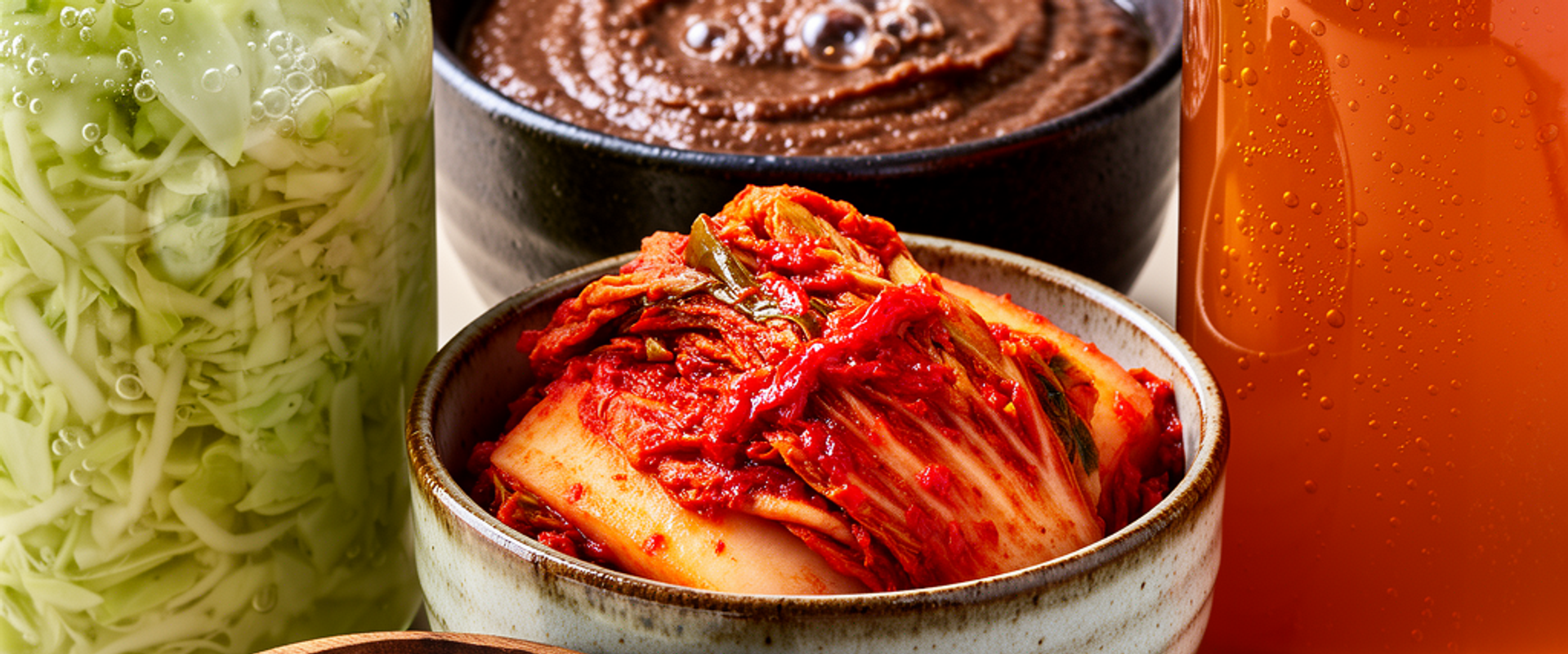
Sauerkraut is simply fermented cabbage and salt. Despite having only two ingredients, it is incredibly rich in live active cultures, vitamin C, and fiber. The fermentation process actually breaks down the cellular walls of the cabbage, making the nutrients much easier for your body to absorb than if you were eating raw cabbage.
Portion size: 1 to 2 tablespoons daily. Tip: To get the probiotic benefits, sauerkraut must be unpasteurized. You will find the good stuff in the refrigerated section of the grocery store, not in the shelf-stable canned goods aisle.
3. Kimchi
A staple in Korean cuisine, kimchi is a spicy, pungent, and incredibly flavorful fermented mix of napa cabbage, Korean radishes, garlic, ginger, and chili peppers. Beyond the lactic acid bacteria, the garlic and ginger provide prebiotic fiber (food for the probiotics) and potent antioxidant properties.
Portion size: 1/4 cup daily. Tip: Kimchi is quite robust and flavorful. If you are new to it, start small. Mix it into foods you already love, like rice or eggs, to mellow the flavor.
4. Miso and Tempeh
For those looking for plant-based options, fermented soy is a fantastic choice. Miso is a traditional Japanese paste made by fermenting soybeans with salt and a fungus called koji. It is deeply savory and rich in umami. Tempeh is an Indonesian staple made from whole fermented soybeans pressed into a hearty, nutty block. It is not only rich in probiotics but also an excellent source of complete plant protein and dietary fiber.
Why Your Gut Desperately Needs These Microbes
Eating a spoonful of sauerkraut might seem like a small act, but it has profound effects throughout your entire body. Here is why prioritizing these foods matters.
1. Smoother, Happier Digestion
If you struggle with occasional bloating, irregularity, or heaviness after meals, fermented foods can act as a gentle digestive aid. The bacteria in these foods essentially pre-digest the food for you. For example, the bacteria in yogurt break down lactose (milk sugar), which is why many people with mild lactose intolerance can digest yogurt perfectly well even if milk upsets their stomach.
2. Immune System Support
Did you know that approximately 70% of your immune system resides in your gut? Your intestinal lining is a critical barrier between the outside world and your bloodstream. The beneficial bacteria from fermented foods help fortify this barrier, crowd out opportunistic pathogens, and communicate directly with your immune cells, training them to respond appropriately to threats.
3. The Gut-Brain Connection
Perhaps the most exciting area of emerging nutrition science is the gut-brain axis. Your gut and your brain are physically connected by the vagus nerve, and they communicate constantly. In fact, an estimated 90% of your body's serotonin (the "happy" neurotransmitter) is produced in the digestive tract. A diverse, thriving microbiome supported by fermented foods has been linked in studies to better mood regulation, lower stress levels, and reduced anxiety.
How to Shop for Fermented Foods (Avoid This Common Mistake)
When you head to the grocery store, there is one crucial rule to remember: Not all pickled foods are fermented, and not all fermented foods contain live probiotics.
Many pickles and sauerkrauts on supermarket shelves are made using vinegar and high heat (pasteurization) to make them shelf-stable. While these are perfectly fine to eat and taste great, the heat completely destroys the beneficial bacteria.
To ensure you are buying foods with live, active cultures, follow these two rules:
- Shop the perimeter: True, living fermented foods need to be kept cold. Look for them in the refrigerated section of the grocery store.
- Read the label: Look for the words "unpasteurized," "raw," or "contains live active cultures." The ingredient list for sauerkraut, for instance, should just be cabbage, water, and salt—no vinegar required.
Practical Ways to Eat Fermented Foods Every Day
The goal here is not perfection; it is consistency. You don't need to eat a massive bowl of kimchi to see benefits. In fact, if you are new to fermented foods, eating too much too quickly can cause temporary bloating. Start with just a forkful or a few sips a day and gradually increase over a few weeks.
Here are some easy, practical ways to seamlessly integrate these foods into your existing meals.
Important note: Heat kills probiotics! Whenever possible, add these foods at the very end of cooking, or serve them cold or at room temperature.
Breakfast Ideas
- The 60-Second Smoothie: Blend 1/2 cup of plain full-fat kefir with a frozen banana, a handful of spinach, and a spoonful of peanut butter.
- Savory Avocado Toast: Top your standard avocado toast with 2 tablespoons of raw sauerkraut and a sprinkle of hemp seeds. The tangy crunch of the kraut perfectly cuts the richness of the avocado.
- Upgraded Oatmeal: Stir a dollop of plain Greek yogurt into your oatmeal after it has finished cooking and cooled slightly.
Lunch Swaps
- The Better Sandwich: Swap out regular mayonnaise for plain yogurt mixed with a little Dijon mustard on your turkey sandwich.
- Kimchi Tuna Salad: Mix canned tuna with a little mayo or avocado, and stir in 2 tablespoons of finely chopped kimchi. Serve with crackers or over greens.
- Miso Vinaigrette: Whisk 1 teaspoon of white miso paste with olive oil, rice vinegar, and a dash of maple syrup for a deeply flavorful, gut-friendly salad dressing.
Dinner Additions
- Grain Bowl Finisher: Whether you are having a quinoa bowl, a taco salad, or leftover roasted veggies, add a forkful of kraut or kimchi to the side of the bowl right before eating.
- Mellow Miso Soup: Stir miso paste into warm (not boiling) broth along with some tofu and green onions for a soothing, probiotic-rich appetizer.
- Kimchi Fried Rice: Make your favorite fried rice recipe. Take it off the heat, let it cool for just a minute, and stir in half a cup of chopped kimchi right before serving.
The Takeaway
Navigating nutrition doesn't have to mean tracking every macro or completely overhauling your life. Sometimes, the best interventions are the simplest.
By adding just one forkful of sauerkraut to your sandwich, a splash of kefir to your morning smoothie, or a side of kimchi to your dinner, you are actively introducing billions of beneficial microbes to your digestive tract. You are lowering inflammation, supporting your mental health, and aiding your digestion.
Start small, choose the flavors you genuinely enjoy, and let the microbes do the heavy lifting. Your gut will thank you.