Anti-Aging Foods: What Nutrition Science Actually Says About Aging
Cut through the wellness noise and discover what nutrition science actually says about healthy aging. Learn which foods support collagen, tame inflammation, and boost longevity—plus practical ways to add them to your plate today.

If you have ever felt overwhelmed walking down the supplement aisle or scrolling through wellness social media, you are not alone. We are constantly bombarded with messages about "miracle" superfoods, expensive collagen powders, and restrictive diets that promise to turn back the clock. But here is the refreshing truth: aging is a natural, beautiful privilege, and supporting your body through the years does not require a second mortgage or a miserable diet.
As a nutrition professional, I want to help you cut through the marketing hype. Nutrition science shows us that while we cannot stop time, we can absolutely influence our "healthspan"—the number of years we live feeling vibrant, energetic, and resilient.
Let's explore what the evidence actually says about antioxidants, collagen-supporting nutrients, and anti-inflammatory compounds, and how you can easily incorporate them into your daily life without stress or food shaming.
The Antioxidant Reality Check: Fighting Oxidative Stress
To understand anti-aging nutrition, we first need to talk about oxidative stress. Every day, your body produces unstable molecules called free radicals. This happens through normal processes like breathing and digestion, but it is accelerated by UV exposure, pollution, and stress. When free radicals outnumber your body's defenses, they cause "oxidative stress," which damages cells and accelerates the physical signs of aging in our skin, brain, and heart.
Antioxidants are your body's internal rust-proofing. They neutralize free radicals before they can cause damage.
The Hype vs. The Science
The Hype: You need expensive, exotic berry powders or high-dose antioxidant pills to protect your cells. The Science: High-dose antioxidant supplements can actually backfire, interfering with your body's natural defense mechanisms. The best, most bioavailable antioxidants come from whole foods, specifically those rich in polyphenols and flavonoids.
Foods to Focus On
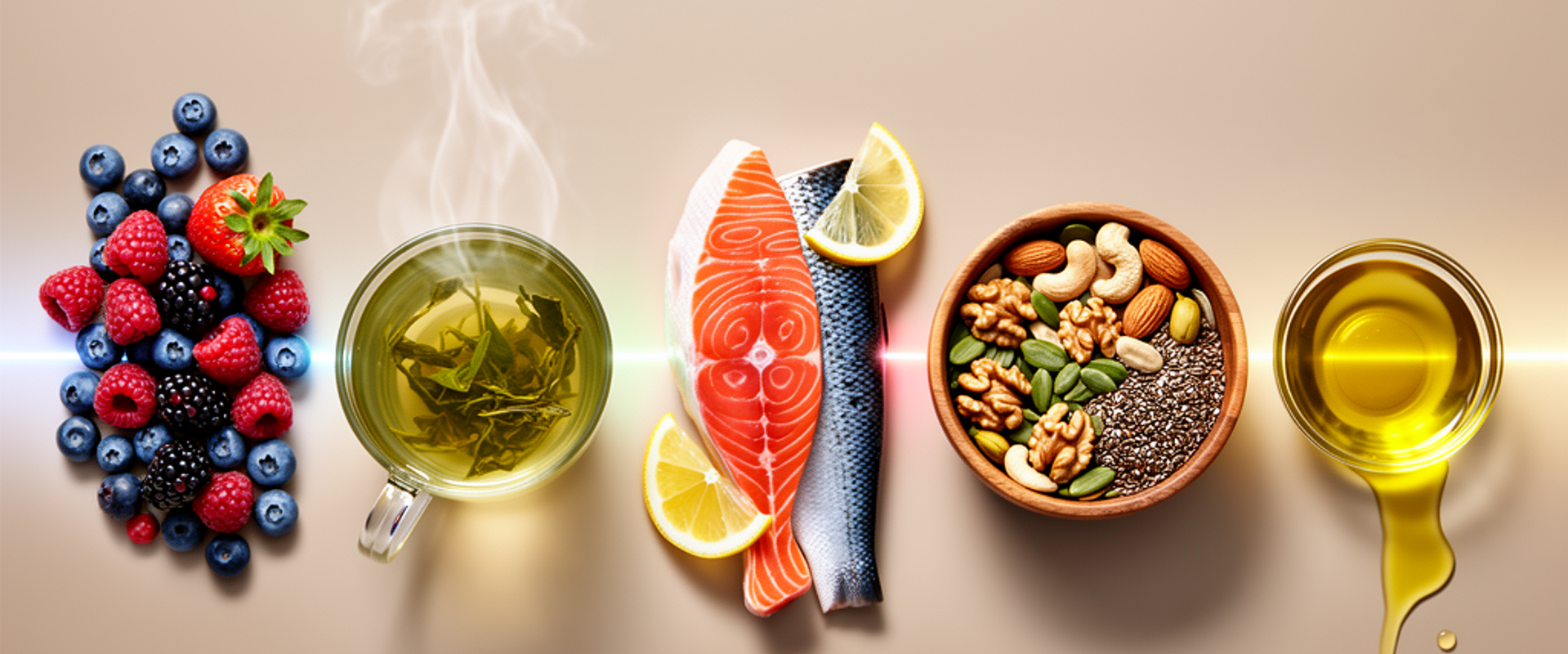
- Berries (Blueberries, Blackberries, Raspberries): Rich in anthocyanins, the compounds that give them their deep colors. Regular berry consumption is strongly linked to delayed cognitive decline and improved skin health.
- Actionable Tip: Aim for 1/2 cup of fresh or frozen berries daily. Toss them into oatmeal, blend them into a smoothie, or simply eat them by the handful.
- Dark Leafy Greens (Spinach, Kale, Swiss Chard): Packed with lutein and zeaxanthin, antioxidants that are particularly protective for eye health and skin elasticity.
- Actionable Tip: Add one large handful of greens to your morning eggs or blend them into a soup.
- Green Tea: Contains a powerful antioxidant called EGCG (epigallocatechin gallate), which research shows helps protect skin from UV damage and supports cellular health.
- Actionable Tip: Swap one of your daily coffees for a cup of brewed green tea.
Collagen: The Building Block of Youthful Skin and Joints
Collagen is the most abundant protein in the human body. Think of it as the scaffolding that keeps your skin plump, your joints lubricated, and your bones strong. As we hit our late 20s, our natural collagen production begins to decline.
The Hype vs. The Science
The Hype: You must consume expensive collagen peptides to rebuild your skin and joints. The Science: While collagen supplements show some promising clinical evidence for skin elasticity, your body breaks down all ingested protein (including collagen supplements) into individual amino acids. To build its own collagen, your body needs those amino acids plus specific micronutrients, most notably Vitamin C, zinc, and copper. You can absolutely support collagen production through whole foods.
Foods to Focus On
- Vitamin C Heavyweights (Bell Peppers, Citrus, Kiwi): Vitamin C is the essential "glue" that binds amino acids together to form collagen fibers. Without adequate Vitamin C, your body simply cannot produce collagen.
- Actionable Tip: One medium red bell pepper provides over 150% of your daily Vitamin C needs. Slice one up and dip it in hummus for a crunch-heavy, collagen-boosting snack.
- Amino Acid Sources (Bone Broth, Poultry, Beans, Edamame): These provide the raw materials (proline and glycine) needed for collagen synthesis.
- Actionable Tip: Incorporate a 1/2 cup of edamame into your salads or enjoy a warm mug of high-quality bone broth in the afternoon.
- Zinc and Copper Providers (Pumpkin Seeds, Cashews, Lentils): These trace minerals act as co-factors in the collagen-building process.
- Actionable Tip: Sprinkle 1 tablespoon of pumpkin seeds over your yogurt or soup for a satisfying crunch.
Taming "Inflammaging": The Role of Anti-Inflammatory Foods
Scientists have coined the term "inflammaging" to describe the low-grade, chronic inflammation that tends to increase as we get older. Unlike the acute inflammation that heals a paper cut, chronic inflammation simmers quietly in the background, contributing to joint pain, heart disease, and cellular aging.
The Hype vs. The Science
The Hype: You need to follow highly restrictive, elimination-style diets to "cure" inflammation. The Science: Restrictive diets often lead to stress (which actually causes inflammation!) and nutrient deficiencies. Instead, science supports an additive approach: focusing on foods rich in Omega-3 fatty acids and monounsaturated fats, much like the well-researched Mediterranean dietary pattern.
Foods to Focus On
- Fatty Fish (Salmon, Sardines, Mackerel): These are the premier sources of EPA and DHA, the active forms of Omega-3 fatty acids that directly resolve cellular inflammation.
- Actionable Tip: Aim for two 3-to-4-ounce servings of fatty fish per week. Canned wild salmon or sardines are budget-friendly, pantry-staple options.
- Extra Virgin Olive Oil (EVOO): EVOO contains a compound called oleocanthal, which has been shown to have similar anti-inflammatory properties to ibuprofen.
- Actionable Tip: Use 1 to 2 tablespoons of high-quality EVOO daily. Use it as a finishing oil over roasted vegetables or as the base for homemade salad dressings.
- Walnuts and Chia Seeds: Excellent plant-based sources of ALA (alpha-linolenic acid), another type of anti-inflammatory fat.
- Actionable Tip: Make a simple chia pudding with 2 tablespoons of chia seeds and 1/2 cup of almond milk, left in the fridge overnight.
Gut Health is Aging Health
We cannot talk about healthy aging without talking about the microbiome. As we age, the diversity of our gut bacteria tends to decrease. A robust gut microbiome is essential for absorbing all the anti-aging nutrients we just discussed, regulating our immune system, and even producing compounds that protect our brain health.
Foods to Focus On
- Fermented Foods (Kefir, Kimchi, Sauerkraut, Yogurt): These introduce beneficial live bacteria (probiotics) to your digestive tract.
- Actionable Tip: You do not need large amounts. Just one forkful of unpasteurized sauerkraut or a 1/2 cup of kefir daily is enough to support gut diversity.
- Prebiotic Fibers (Oats, Garlic, Onions, Legumes): This is the food that feeds your good gut bacteria, allowing them to produce short-chain fatty acids that protect the gut lining and reduce systemic inflammation.
- Actionable Tip: Swap refined white grains for a hearty bowl of steel-cut oats or quinoa a few times a week.
Putting It All Together: A Day on a Plate
Knowing the science is great, but translating it into your daily life is where the magic happens. Healthy aging nutrition is not about perfection; it is about consistency. Here is what a delicious, science-backed, anti-aging day of eating could look like, focusing on adding nutrients rather than restricting.
Breakfast: Berry & Seed Power Oatmeal
- The Meal: 1/2 cup of rolled oats cooked in milk (or soy milk for extra protein), topped with 1/2 cup of frozen wild blueberries, 1 tablespoon of chia seeds, and a sprinkle of cinnamon.
- The Science: You are getting prebiotic fiber from the oats, massive antioxidant power from the blueberries, and anti-inflammatory Omega-3s from the chia seeds.
Lunch: Colorful Crunch Salad with Salmon
- The Meal: 2 cups of mixed dark leafy greens, topped with 3 ounces of canned wild salmon, 1/2 cup of chickpeas, sliced red bell peppers, and a dressing made of 1 tablespoon EVOO, lemon juice, and Dijon mustard.
- The Science: The salmon provides EPA/DHA for inflammation, the bell pepper provides Vitamin C for collagen, the chickpeas offer gut-friendly fiber, and the EVOO helps your body absorb the fat-soluble vitamins in the greens.
Afternoon Snack: Hydration & Crunch
- The Meal: 1 cup of brewed green tea (hot or iced) alongside a small handful (about 1 ounce) of walnuts and an apple.
- The Science: Green tea offers EGCG for cellular protection, walnuts provide healthy fats to keep blood sugar stable, and the apple provides quercetin, a flavonoid linked to longevity.
Dinner: Mediterranean Bean & Vegetable Stew
- The Meal: A warming stew made with crushed tomatoes, garlic, onions, spinach, and white beans, simmered in vegetable broth. Serve with a slice of whole-grain sourdough bread.
- The Science: Cooked tomatoes are rich in lycopene (an antioxidant that protects skin from sun damage), garlic and onions are potent prebiotics, and beans provide the amino acids necessary for tissue repair.
Small Swaps for Big Impact
If completely overhauling your diet feels like too much, start with these simple, actionable swaps:
- Swap your afternoon soda for iced green tea with a squeeze of lemon. You reduce refined sugar (which can degrade collagen) and add powerful antioxidants.
- Swap croutons for toasted pumpkin seeds on your salad. You trade refined carbohydrates for a crunch that delivers zinc and healthy fats.
- Swap store-bought dressing for homemade EVOO and vinegar. You eliminate inflammatory seed oils and preservatives, replacing them with heart-healthy oleocanthal.
The Practical Takeaway
When it comes to nutrition and aging, the most powerful tool you have is not a $50 bottle of supplements—it is your grocery cart. By consistently filling your plate with colorful plants, healthy fats, and high-quality proteins, you are giving your cells exactly what they need to repair, protect, and thrive.
Remember, the goal of eating well is not to look 25 forever. The goal is to nourish your body so that it can carry you through a long, active, and joyful life. Remove the guilt, ignore the extreme marketing hype, and focus on the delicious, vibrant foods you can add to your day. Your future self will thank you.