Beyond Salmon: The Complete Guide to Omega-3 Foods for Every Diet
Think salmon is the only way to get your omega-3s? From chia seeds and walnuts to seaweed and grass-fed meat, discover science-backed, practical ways to boost your brain and heart health—no matter your dietary preferences.

If you have ever stood in the supplement aisle staring at an endless wall of fish oil capsules, or read an article telling you that you absolutely must eat salmon three times a week to be healthy, you are not alone. Nutrition advice can often feel overwhelming, rigid, and deeply confusing.
Let's take a collective deep breath. Eating well does not have to be an all-or-nothing game, and it certainly does not require you to eat foods you dislike or that do not align with your values.
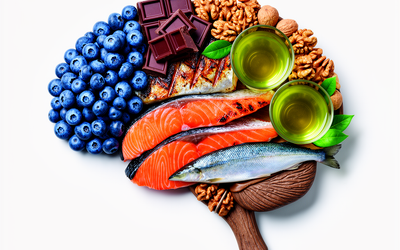
Omega-3 fatty acids are incredibly important. They are the building blocks of our cell membranes, the ultimate supporters of brain health, and powerful regulators of inflammation. But here is the good news: the ocean's most famous swimming fish do not hold a monopoly on these vital nutrients. Whether you are fully plant-based, allergic to seafood, or simply not a fan of fish, there is a rich, diverse world of omega-3 foods waiting for you.
Let's break down the science of omega-3s, explore the best non-fish sources, and look at practical, delicious ways to add them to your plate today.
The ABCs of Omega-3s: What You Actually Need to Know
Before we dive into the food, it helps to understand what we are actually looking for. Not all omega-3s are identical. They come in three main forms, which we can think of as a family with different jobs:
- ALA (Alpha-linolenic acid): This is the plant-based member of the family. Your body cannot make ALA on its own, meaning it is an "essential" nutrient you must get from food. ALA is fantastic for heart health and provides energy.
- EPA (Eicosapentaenoic acid): Found mostly in marine life, EPA is the family's anti-inflammatory specialist. It is heavily researched for its role in cardiovascular health and mood regulation.
- DHA (Docosahexaenoic acid): Also found primarily in marine life, DHA is the architect of the brain and eyes. In fact, DHA makes up a significant portion of the physical structure of your brain.
Here is the catch that often confuses people: Your body can convert the plant-based ALA into EPA and DHA, but it is not very efficient at it. Research suggests that only about 1% to 10% of ALA is converted into EPA, and even less into DHA.
Does this mean plant-based eaters are out of luck? Absolutely not. It just means that if you rely solely on plants, you want to be generous and consistent with your ALA sources, and consider a direct plant-based source of DHA (which we will cover below).
Plant-Based Powerhouses: The ALA All-Stars
If you want to boost your omega-3 intake without looking at a fish, the plant kingdom offers some incredibly potent, versatile options.
Walnuts
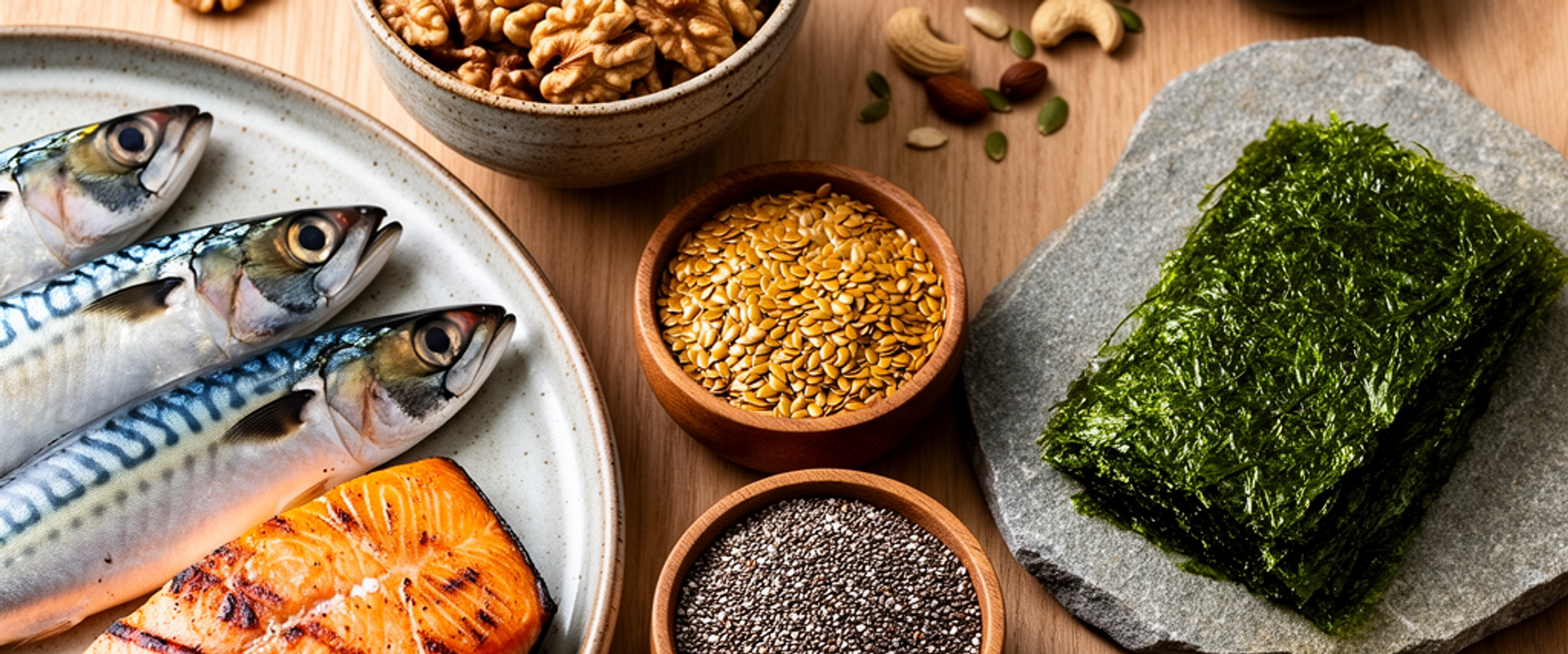
Walnuts are the undisputed kings of the nut aisle when it comes to omega-3s. While almonds and cashews are wonderful foods, walnuts are the only tree nut that offers a significant amount of ALA.
- The Numbers: A standard 1/4-cup serving of shelled walnuts provides about 2.5 grams of ALA, easily exceeding the daily minimum recommended intake.
- Actionable Tip: Keep walnuts in your fridge or freezer. Because of their high fat content, they can go rancid quickly at room temperature.
- How to Use Them: Toss a handful into your morning oatmeal, blend them into a pesto instead of pine nuts, or crush them to use as a nutrient-dense breading for baked chicken or tofu.
Flaxseeds
Flaxseeds are tiny nutritional powerhouses, but they come with one golden rule: they must be ground. If you eat whole flaxseeds, they act as roughage and pass right through your digestive system, taking all their precious omega-3s with them.
- The Numbers: Just 2 tablespoons of ground flaxseed deliver an impressive 3.2 grams of ALA, alongside a healthy dose of fiber.
- Actionable Tip: Buy pre-ground flaxseed meal and store it in the fridge, or buy whole seeds and grind them in a cheap coffee grinder once a week.
- How to Use Them: Stir them into yogurt, blend them into smoothies, or use them as a "flax egg" (1 tbsp ground flax + 3 tbsp water, let sit for 5 minutes) in your weekend baking.
Chia Seeds
Chia seeds have a unique superpower: they can absorb up to 10 times their weight in liquid, forming a thick, satisfying gel. This makes them not just a great source of omega-3s, but a brilliant culinary tool.
- The Numbers: A 2-tablespoon serving provides roughly 5 grams of ALA, plus a hefty 10 grams of fiber.
- Actionable Tip: Unlike flaxseeds, chia seeds do not need to be ground for your body to absorb their nutrients.
- How to Use Them: Make a simple chia pudding by whisking 3 tablespoons of chia seeds into 1 cup of your favorite milk. Let it sit in the fridge overnight, and wake up to a nourishing breakfast.
Hemp Hearts
Hemp hearts (the shelled seeds of the hemp plant) have a soft, buttery texture and a mild, nutty flavor. They are unique because they also provide a complete source of plant protein, containing all nine essential amino acids.
- The Numbers: 3 tablespoons of hemp hearts offer about 3 grams of ALA and 10 grams of high-quality protein.
- Actionable Tip: Hemp hearts are delicate and shouldn't be cooked at high heat. Use them as a finishing touch rather than a cooking ingredient.
- How to Use Them: Sprinkle them generously over salads, avocado toast, or pureed soups right before eating.
The Ocean's Hidden Gems: EPA and DHA Without the Fish
If you want the direct brain and heart benefits of EPA and DHA but do not eat fish, you might be wondering where to turn. The answer lies in looking at where the fish get their omega-3s in the first place.
Fish do not magically produce EPA and DHA from scratch. They get it by eating microalgae. By going straight to the source, you can get all the benefits of marine omega-3s while leaving the fish alone.
Algal Oil
Algal oil is extracted directly from marine algae. It is the single most effective way for vegans, vegetarians, or fish-averse eaters to get direct EPA and DHA.
- The Numbers: Supplements vary, but a high-quality algal oil capsule typically provides 300-500mg of combined EPA and DHA.
- Actionable Tip: If you are overwhelmed by supplements, look for a third-party tested brand (like those certified by NSF or USP) that clearly lists both EPA and DHA on the label.
Edible Seaweed
While edible seaweeds like nori, wakame, and kelp do not have the high, concentrated doses of omega-3s found in algal oil, they do contain trace amounts of EPA and DHA, alongside essential minerals like iodine.
- Actionable Tip: Treat seaweed as a nutrient-boosting condiment rather than a primary omega-3 source.
- How to Use Them: Snack on roasted nori sheets, add dried wakame to miso soup, or sprinkle furikake (a Japanese seaweed seasoning) over rice and vegetables.
Land-Roaming Sources: The Animal-Based Alternatives
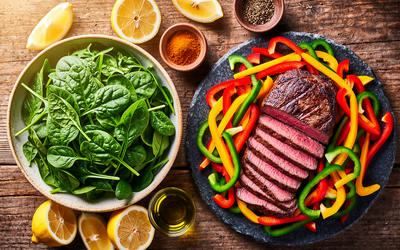
If you are an omnivore who simply does not like seafood, you can still optimize your omega-3 intake through mindful choices in the meat and dairy aisle. The diet of the animal directly impacts the nutritional profile of the food it produces.
Grass-Fed Meat
Cows that graze on open pasture eating their natural diet of grass produce meat with a distinctly different fat profile than cows raised primarily on grain.
- The Science: Grass-fed beef can contain up to five times as much omega-3 as grain-fed beef. More importantly, grass-fed meat has a much healthier ratio of omega-6 to omega-3 fatty acids, which is crucial for keeping inflammation in check.
- Actionable Tip: Grass-fed meat is often leaner and cooks faster than conventional meat. Lower your cooking temperature slightly to keep it tender.
Pasture-Raised Eggs
Chickens that are allowed to roam outdoors, foraging for bugs, worms, and wild greens, lay eggs that are naturally richer in omega-3s. Additionally, some farmers supplement their hens' feed with flaxseeds to further boost the omega-3 content.
- Actionable Tip: Look for the words "Pasture-Raised" on the carton. "Cage-Free" simply means the chickens aren't in small cages, but they are often still kept entirely indoors without access to omega-3-rich forage.
- How to Use Them: Enjoy a soft-boiled pasture-raised egg over a bowl of savory oatmeal or alongside a vibrant salad.
A Day in the Life of Omega-3s: Practical Meals & Swaps
Knowing the foods is only half the battle; the real magic happens when you integrate them seamlessly into your daily life. Here is what a highly nourishing, omega-3-rich day can look like, no fish required:
Breakfast: The Brain-Boosting Bowl
Instead of standard cereal, start your day with a bowl of warm oats. Stir in 1 tablespoon of ground flaxseed and 1/4 cup of chopped walnuts. Top with a handful of berries.
- The Benefit: You've just consumed over 4 grams of ALA before 9:00 AM, providing steady energy and fiber to keep you full until lunch.
Lunch: The Crunch Salad
Take your favorite salad base (spinach, arugula, or mixed greens) and add your protein of choice. Instead of croutons, sprinkle 3 tablespoons of hemp hearts over the top for a nutty crunch.
- The Swap: Ditch the store-bought, vegetable-oil-heavy dressing. Whisk together olive oil, lemon juice, Dijon mustard, and a teaspoon of ground chia seeds to thicken it.
Snack: The Savory Seaweed Fix
When the afternoon slump hits, skip the potato chips. Grab a pack of roasted seaweed snacks and a small handful of edamame (soybeans are a surprisingly good source of ALA).
- The Benefit: You satisfy the craving for something salty and crunchy while delivering trace minerals, EPA, and ALA to your system.
Dinner: The Pasture-Raised Plate
If you eat meat, enjoy a 4-ounce portion of grass-fed beef or lamb alongside roasted vegetables. If you are plant-based, try making "meatballs" using black beans, mushrooms, and a binder of ground flaxseed and water.
The Practical Takeaway
You do not need to force down foods you hate to build a resilient, nourished body. The world of omega-3s is vast and accommodating.
If you only take one thing away from this guide, let it be this: Pick one new omega-3 source to add to your pantry this week.
Buy a bag of walnuts to keep on your counter, pick up some hemp hearts for your salads, or grab a carton of pasture-raised eggs. Small, consistent additions to your plate are far more effective—and much more enjoyable—than drastic, restrictive dietary overhauls. Your brain, your heart, and your tastebuds will thank you.