Beyond the Math: Why Calorie Counting Alone Doesn't Work (And What to Do Instead)
Calorie counting isn't the whole story. Discover why food quality, hormones, and nutrient density matter more for your metabolism, and learn practical, science-backed habits to nourish your body without stressing over the math.

If you have ever spent a week meticulously scanning barcodes, weighing portions of spinach, and logging every morsel of food into a tracking app, you are not alone. For decades, the dominant narrative in nutrition has been a simple mathematical equation: 'calories in, calories out' (CICO). The promise is that if you burn more calories than you consume, you will lose weight, regardless of what you eat.
While this concept is technically rooted in the laws of thermodynamics, human bodies are not closed-system bomb calorimeters. We are highly complex, dynamic biological organisms. When we reduce food to mere numbers, we miss the profound ways different foods interact with our biology. Food quality, nutrient density, hormonal responses, and satiety signals all play critical roles in how our bodies process, store, and burn energy.
If you are feeling overwhelmed by conflicting nutrition advice and exhausted by the daily math of calorie counting, it is time for a paradigm shift. Let's explore the science of why calorie counting alone falls short, and more importantly, look at actionable, practical ways to eat for true health and nourishment.
The Science of Satiety: Why 100 Calories ≠ 100 Calories
Imagine you have two snacks in front of you: 100 calories of jelly beans and 100 calories of raw almonds. From a strictly mathematical standpoint, they hold the same energy value. But the moment they enter your digestive tract, they send entirely different instructions to your body.
The jelly beans are composed of simple sugars. They digest rapidly, requiring very little energy from your body to break down. They flood your bloodstream with glucose, prompting a quick spike in insulin. Within an hour, your blood sugar crashes, and your brain receives a signal that you are hungry again.
The almonds, on the other hand, are a matrix of healthy fats, protein, and fiber. This complex structure takes time to break down. The fiber slows digestion, the protein triggers hormones that signal fullness, and the fats provide a slow, steady release of energy. Two hours later, you are still satisfied.
The Thermic Effect of Food (TEF)
Your body actually burns calories during the process of digesting, absorbing, and metabolizing food. This is known as the Thermic Effect of Food (TEF), and it varies wildly depending on the macronutrient:
- Fats: 0-3% of the calories are burned during digestion.
- Carbohydrates: 5-10% of the calories are burned.
- Protein: 20-30% of the calories are burned.
This means if you eat 100 calories of pure protein, your body uses up to 30 of those calories just to process it, leaving you with a net gain of 70 calories. If you eat 100 calories of fat, you net about 97 calories. By simply shifting the composition of your plate toward high-quality protein and fiber, you naturally increase your metabolic rate.
Hormones: The Invisible Conductors of Metabolism
Weight management is largely a hormonal game, not just a mathematical one. The foods we eat dictate the behavior of key hormones that control appetite, fat storage, and energy expenditure.
Insulin and Blood Sugar
Insulin is a storage hormone. When we eat highly refined carbohydrates (like white bread, sugary cereals, or commercial baked goods), our blood sugar spikes, and insulin rushes in to clear the glucose from our blood. Frequent spikes and elevated insulin levels not only promote fat storage but also block the body's ability to access stored fat for energy.
Ghrelin and Leptin
Ghrelin is your 'hunger hormone,' signaling to your brain that it is time to eat. Leptin is your 'satiety hormone,' signaling that you have had enough. Ultra-processed foods—which are engineered to be hyper-palatable—can actually disrupt these signals.
A landmark study conducted by Dr. Kevin Hall at the National Institutes of Health demonstrated this perfectly. Participants were provided with either an ultra-processed diet or a minimally processed whole-food diet. Both diets were matched for calories, sugar, fat, and fiber. The participants were allowed to eat as much or as little as they wanted. The result? Those on the ultra-processed diet naturally consumed about 500 more calories per day and gained weight, while those on the whole-food diet naturally ate less and lost weight.
The takeaway is clear: ultra-processed foods hijack our natural satiety signals, making it incredibly difficult to rely on willpower or calorie limits.
The Gut Microbiome: Your Internal Calorie Harvesters
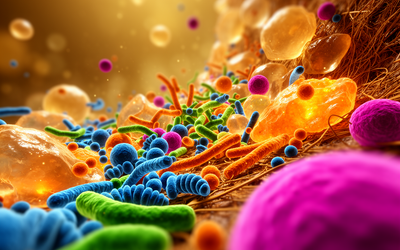
Inside your digestive tract live trillions of bacteria that make up your gut microbiome. Emerging research shows that these microscopic residents play a massive role in how we harvest energy from food.
Certain strains of gut bacteria are more efficient at extracting calories from the food you eat. If your microbiome is imbalanced, you might actually absorb more calories from the exact same meal than someone with a diverse, healthy gut.
How do you cultivate a healthy gut microbiome? Fiber. Plant fibers from vegetables, legumes, nuts, and seeds act as prebiotics—food for your good bacteria. When these bacteria ferment fiber, they produce short-chain fatty acids (SCFAs) like butyrate, which help regulate appetite, reduce inflammation, and improve insulin sensitivity.
What to Do Instead: A Paradigm Shift
Moving away from calorie counting does not mean nutrition becomes a free-for-all. Instead of asking, 'How many calories does this have?' start asking, 'What is this food doing for my body?'
By focusing on nourishment, nutrient density, and satiety, you can naturally regulate your appetite and support a healthy metabolism without the anxiety of a calculator.
1. Prioritize Protein and Fiber at Every Meal
Protein and fiber are the ultimate satiety duo. Protein stimulates the release of fullness hormones like CCK and GLP-1, while fiber physically stretches the stomach and slows digestion.
Actionable Tip: Aim for 20 to 30 grams of protein and 8 to 10 grams of fiber per meal.
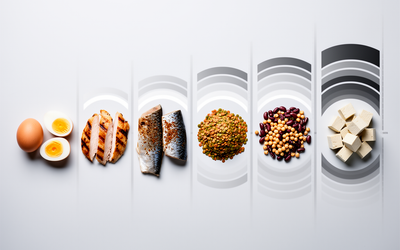
- Protein sources: 4 ounces of chicken breast, 1 cup of edamame, 4 ounces of wild-caught salmon, 1 cup of Greek yogurt, or 3 whole eggs.
- Fiber sources: 1/2 cup of black beans, 1 cup of raspberries, 1/2 cup of cooked lentils, or 2 cups of leafy greens.
2. Embrace Healthy Fats for Lasting Energy
For decades, we were told to avoid fat because it is calorie-dense (9 calories per gram). But fat is essential for hormone production, brain health, and the absorption of fat-soluble vitamins (A, D, E, and K). More importantly, fat makes food taste good and keeps you full for hours.
Actionable Tip: Include a mindful portion of healthy fats with your meals.
- Add 1/4 of an avocado to your salad.
- Drizzle 1 tablespoon of extra-virgin olive oil over roasted vegetables.
- Sprinkle 1 ounce (a small handful) of walnuts or pumpkin seeds over your morning oatmeal.
3. Upgrade Your Carbohydrates
Carbohydrates are not the enemy; refined carbohydrates are. When a grain is refined, its fiber and nutrients are stripped away, leaving behind quick-digesting starch. Upgrading your carbs means choosing whole-food sources that bring vitamins, minerals, and fiber along for the ride.
Actionable Tip: Make simple swaps to whole-food carbohydrates.
- Instead of white rice, try a 1/2 cup of cooked quinoa or farro.
- Instead of a refined flour tortilla, try a whole-grain wrap or use a large collard green leaf.
- Instead of sugary instant oatmeal, use traditional rolled oats mixed with 1 tablespoon of chia seeds.
4. Tune Into Your Body's Cues
When you are hyper-focused on an app telling you how much to eat, you lose touch with your body's innate signals. Mindful eating is the practice of paying attention to the physical sensations of hunger and fullness.
Actionable Tip: Eat without distractions (no TV or scrolling on your phone). Pause halfway through your meal and ask yourself, 'Am I still genuinely hungry, or am I just eating because it is on my plate?' Aim to eat until you are about 80% full—satisfied, energized, but not stuffed.
Actionable Meal Swaps to Try Today
To bridge the gap between science and your daily life, here is what a day of upgrading your meals looks like when you focus on quality over calorie counting.
Breakfast
Instead of: Two slices of white toast with jam and a glass of orange juice. (Low protein, low fiber, high sugar—will cause an energy crash by 10 AM). Upgrade to: The Satiety Scramble.
- 2 eggs cooked in 1 teaspoon of butter or olive oil.
- 1 cup of spinach folded into the eggs.
- 1 slice of sourdough or sprouted grain bread.
- 1/4 of an avocado sliced on top.
- Why it works: You get high-quality protein from the eggs, fiber from the spinach and sprouted bread, and healthy fats from the avocado to keep your blood sugar perfectly stable.
Lunch
Instead of: A large refined-flour tortilla wrap with deli meat and a side of potato chips. (High in refined carbs and sodium, low in micronutrients). Upgrade to: The Power Bowl.
- 1/2 cup of cooked quinoa as the base.
- 2 cups of mixed greens.
- 4 ounces of grilled chicken or a half-can of chickpeas.
- 1/2 cup of cherry tomatoes and 1/4 cup of shredded carrots.
- Dressed with 1 tablespoon of olive oil and a squeeze of fresh lemon.
- Why it works: The quinoa and chickpeas provide a massive fiber boost to feed your gut microbiome, while the greens offer volume and vitamins without a heavy energy load.
Dinner
Instead of: A massive bowl of plain white pasta with a small amount of tomato sauce. (A carbohydrate bomb that digests rapidly). Upgrade to: The Balanced Plate.
- 2 ounces of whole wheat or lentil/chickpea pasta.
- 1/2 cup of rich marinara sauce.
- 3-4 ounces of ground turkey, lean beef, or crumbled tempeh.
- A large side of broccoli roasted with garlic and 1 teaspoon of olive oil.
- Why it works: You still get to enjoy pasta, but by reducing the portion slightly and pairing it with a robust source of protein and a large serving of fibrous vegetables, you change the entire hormonal response to the meal.
Beyond the Plate: The Role of Stress and Sleep
It is impossible to talk about metabolism without mentioning lifestyle factors. If you are chronically stressed or sleep-deprived, your body will fight your efforts to get healthier, no matter how perfectly you eat.
Lack of sleep increases ghrelin (hunger) and decreases leptin (fullness), making you crave sugary, high-energy foods the next day. Meanwhile, chronic stress elevates cortisol, a hormone that encourages the storage of fat, particularly around the midsection. Prioritizing 7-8 hours of quality sleep and finding daily stress-management practices (like walking, deep breathing, or reading) are just as important as your grocery list.
The Bottom Line
Calorie counting can be a helpful temporary tool for understanding portion sizes and basic energy awareness, but it is a terrible long-term master. Your body is not a calculator; it is a complex, beautiful, responsive system.
Instead of focusing on restriction and subtraction, focus on addition. Add more protein. Add more fiber. Add more vibrant, colorful vegetables. Add more water. Add more mindful chewing.
When you prioritize the quality of your food, you give your body the exact raw materials it needs to balance hormones, heal the gut, and regulate appetite naturally. You can step off the exhausting math treadmill and step into a way of eating that feels good, tastes delicious, and genuinely nourishes you from the inside out.