How Much Protein Do You Really Need? A Science-Based Guide for Real Life
Confused about how much protein to eat? Cut through the noise with this science-backed guide. Learn exactly how much protein you need based on your goals, weight, and activity level, plus easy ways to hit your target every day.

The Great Protein Confusion
If you spend more than five minutes scrolling through health and wellness content online, you are bound to run into conflicting advice about protein. On one side, you have fitness influencers insisting you need to eat immense amounts of protein while chugging chalky shakes every two hours. On the other side, you might see articles suggesting that protein is vastly overhyped and that our standard diets provide more than enough.
As a nutrition professional, I hear this frustration every single day. People who simply want to eat better, feel energized, and take care of their bodies are left paralyzed by the noise.
The truth about protein doesn't require extremes, restrictive dieting, or giving up the foods you love. It comes down to understanding what your unique body needs to thrive. Let's cut through the confusion, look at what the current scientific evidence actually says, and figure out how to easily apply it to your daily life.
The Baseline: What the Government Says vs. What Science Says
To understand the protein debate, we first have to look at the Recommended Dietary Allowance (RDA). In the United States, the RDA for protein is set at 0.8 grams per kilogram of body weight (or about 0.36 grams per pound).
If you weigh 150 pounds, that comes out to roughly 54 grams of protein per day.
For decades, this number has been touted as the standard. However, modern sports nutrition and metabolic research have revealed a crucial flaw in how we interpret this number: The RDA is a minimum, not an optimum.
The 0.8g/kg metric was established as the minimum amount of protein required to prevent a severe nitrogen imbalance and muscle wasting in sedentary people. In other words, it is the amount you need to survive without getting sick. But there is a massive difference between surviving and thriving.
If you want to maintain strong muscles as you age, recover from your workouts, keep your energy levels stable, and feel comfortably full between meals, science overwhelmingly shows that you need more than the bare minimum.
The Sweet Spot: 0.7 to 1 Gram Per Pound
So, if the minimum isn't enough, what is the optimal target?
The International Society of Sports Nutrition (ISSN), alongside numerous peer-reviewed studies on muscle synthesis and metabolism, recommends a higher, more personalized range. For the vast majority of active adults, the science-backed "sweet spot" is 0.7 to 1.0 grams of protein per pound of body weight (which translates to roughly 1.6 to 2.2 grams per kilogram).
Here is how to break that down based on your lifestyle:
1. The "Active Everyday" Adult (0.7 - 0.8g per pound)
If you are moderately active—meaning you walk the dog, do some light yoga, garden, or ride your bike a few times a week—this is your sweet spot.
- The Math: For a 150-pound person, this means aiming for 105 to 120 grams of protein per day.
2. The Strength Trainer or Athlete (0.8 - 1.0g per pound)
If you are actively trying to build muscle, lifting weights, training for an endurance event, or recovering from an injury, your body is constantly repairing micro-tears in your muscle tissue. You need more building blocks.
- The Math: For a 150-pound person, this means aiming for 120 to 150 grams of protein per day.
3. The Graceful Ager (0.8 - 1.0g per pound)
Here is a fascinating piece of nutrition science: as we get older, our bodies undergo "anabolic resistance." This means our muscles become less efficient at using protein. To stimulate the same amount of muscle maintenance as a 25-year-old, a 65-year-old actually needs more protein per meal. Hitting this higher range is vital for preventing sarcopenia (age-related muscle loss) and maintaining independence.
Note: If you have a significantly higher body weight or are actively working on weight loss, using your "goal body weight" or "lean body mass" to calculate your protein needs is often more accurate than using your current total body weight.
Why Protein Matters (Beyond Just Muscle)
It is easy to associate protein exclusively with bodybuilders, but protein is a fundamental macronutrient that impacts almost every system in your body.
1. Satiety and Blood Sugar Stability Have you ever eaten a bowl of cereal for breakfast and felt ravenous an hour later? That is what happens when you eat carbohydrates without protein. Protein slows down digestion and triggers the release of satiety hormones like PYY and GLP-1. Adding protein to a meal keeps you comfortably full and prevents the dreaded mid-afternoon energy crash.
2. The Thermic Effect of Food (TEF) Your body actually burns energy just to digest the food you eat. This is called the Thermic Effect of Food. The TEF for fats and carbohydrates is around 5 to 15%. For protein, it is 20 to 30%. This means that for every 100 calories of protein you eat, your body burns 20 to 30 of those calories simply breaking it down into usable amino acids.
3. Bone and Tissue Health Protein isn't just for muscles; it makes up the structural framework of your bones, skin, hair, and nails. A higher protein diet, when paired with adequate calcium and vitamin D, is strongly linked to better bone mineral density.
The "Protein Pacing" Strategy: Timing Matters
Now that you know how much protein you need, let's talk about how to eat it.
Your body does not store protein for later use the way it stores carbohydrates (as glycogen) or fats. Because of this, eating 100 grams of protein in one giant dinner isn't as effective as spreading it out.
Research shows that muscle protein synthesis—the process of your body using protein to build and repair tissue—maxes out at around 30 to 40 grams per meal. To get the most out of your food, try "protein pacing."
The Goal: Aim for roughly 25 to 35 grams of protein per meal, rather than having a tiny breakfast, a medium lunch, and a massive dinner. Front-loading your protein at breakfast is one of the most effective ways to improve your energy and focus for the entire day.
What Does 30 Grams of Protein Actually Look Like?
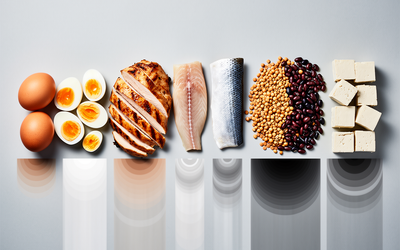
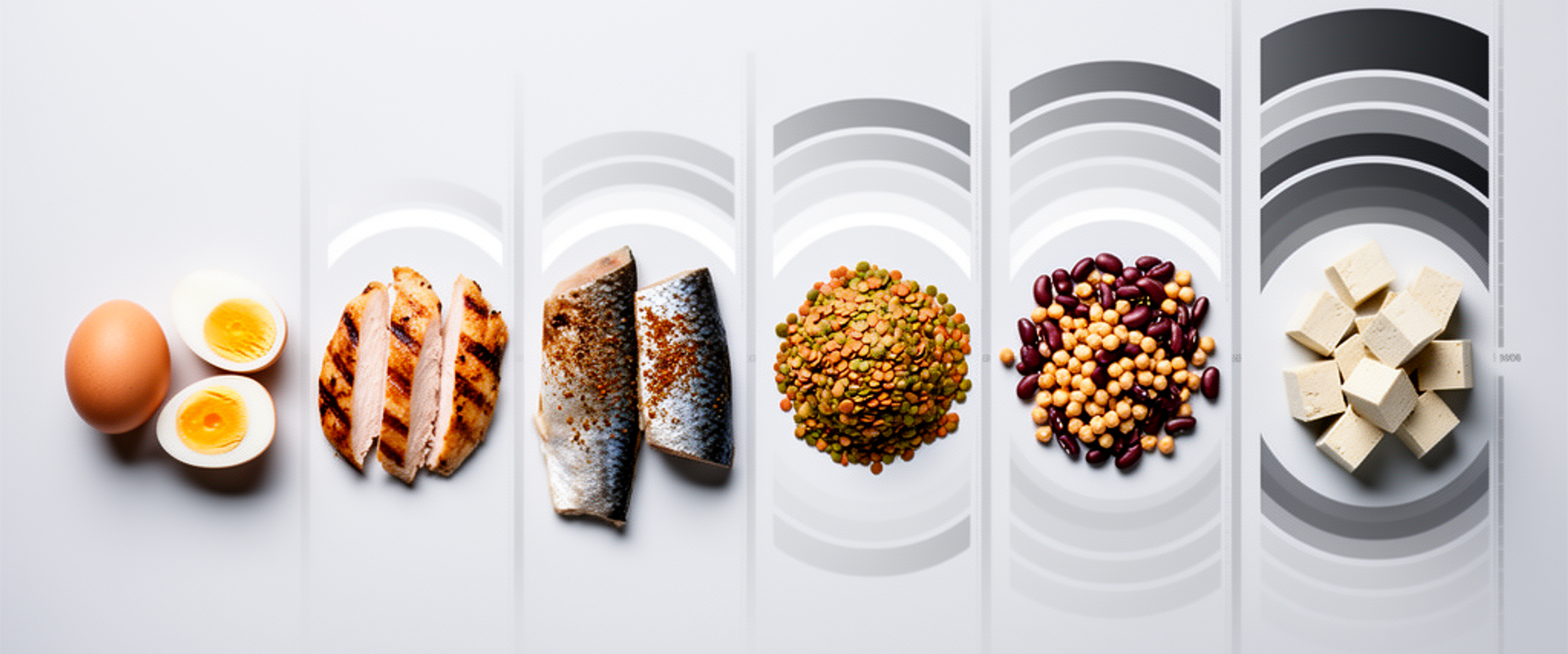
Nutrition math can feel abstract. Let's translate those grams into real, delicious food on a plate. Here is what approximately 25-30 grams of protein looks like:
- Chicken Breast: 4 ounces (about the size of a deck of cards)
- Salmon: 4 to 5 ounces
- Eggs: 4 large eggs (or 2 eggs + 1/2 cup liquid egg whites)
- Greek Yogurt: 1.5 cups of plain, non-fat Greek yogurt
- Cottage Cheese: 1 generous cup
- Tofu: 1 cup of firm tofu
- Lentils: 1.5 cups cooked lentils
- Edamame: 1.5 cups shelled edamame
- Protein Powder: 1 standard scoop of whey or plant-based protein
Practical, High-Protein Food Swaps
You do not need to overhaul your entire diet to hit your protein goals. Often, simple swaps can easily add 20 to 30 extra grams to your day without you even noticing.
- The Pasta Swap: Swap traditional wheat pasta for a legume-based pasta (like Banza chickpea pasta or red lentil pasta). This bumps the protein from 7 grams to 20 grams per serving.
- The Yogurt Swap: Trade standard yogurt for Icelandic Skyr or Greek yogurt. You will jump from 5 grams to 15-20 grams per serving.
- The Oatmeal Upgrade: Instead of making oatmeal with water, cook it in soy milk or ultra-filtered dairy milk (like Fairlife). Stir in 2 tablespoons of hemp hearts and a dollop of peanut butter. You just turned a 5-gram breakfast into a 20-gram powerhouse.
- The Snack Swap: Trade a handful of pretzels for a half-cup of dry-roasted edamame or roasted chickpeas.
A Day on a Plate: Hitting Your Protein Goals
Let's look at how this all comes together in real life. Here are two examples of a day of eating that provides roughly 120 to 130 grams of protein, focusing on whole, nourishing foods.
Option 1: The Omnivore Day (~130g protein)
- Breakfast (32g): 3-egg omelet cooked with spinach and feta cheese (20g), served with 1 slice of whole-wheat sourdough toast topped with 2 tablespoons of cottage cheese (12g).
- Lunch (35g): A large mixed greens salad topped with 4 ounces of grilled chicken breast (28g), cherry tomatoes, cucumbers, 1 tablespoon of pumpkin seeds (3g), and a vinaigrette dressing. 1/2 cup of quinoa on the side (4g).
- Snack (20g): 1 cup of plain Greek yogurt (20g) topped with a handful of fresh berries and a sprinkle of cinnamon.
- Dinner (43g): 5 ounces of baked salmon (35g), 1 cup of roasted broccoli (3g), and a medium baked sweet potato (5g).
Option 2: The Plant-Based Day (~120g protein)
- Breakfast (30g): Protein smoothie made with 1 scoop of pea protein powder (20g), 1 cup of soy milk (8g), a frozen banana, and a handful of spinach (2g).
- Lunch (35g): 1 cup of crumbled extra-firm tofu (20g) scrambled with bell peppers, onions, and turmeric, wrapped in two whole wheat tortillas (10g) with 1/4 cup of black beans (5g).
- Snack (17g): 1/2 cup of dry-roasted edamame (14g) and a crisp apple (3g).
- Dinner (38g): 1.5 cups of a hearty lentil and vegetable stew (26g) served over 1 cup of chickpea pasta (12g).
The Practical Takeaway
Nutrition doesn't have to be an all-or-nothing game. If you currently eat 50 grams of protein a day, do not stress about jumping to 130 grams tomorrow. Your digestive system needs time to adjust, and building new habits takes patience.
Start small. Look at the meal you currently struggle with the most—often breakfast—and ask yourself: "How can I add 10 to 15 more grams of protein to this plate?"
Maybe it means adding a side of scrambled eggs to your morning toast, stirring a scoop of protein powder into your oatmeal, or swapping your afternoon chips for roasted edamame.
By aiming for that sweet spot of 0.7 to 1 gram of protein per pound of body weight, and spreading it evenly throughout the day, you give your body the exact tools it needs to repair, recover, and keep you feeling energized for whatever life throws your way.