How Much Protein Do You Really Need? A Science-Based Guide
Confused by conflicting protein advice? Discover the science-backed sweet spot for your body weight, activity level, and goals, plus practical meal ideas to help you effortlessly hit your target.

If you have spent more than five minutes looking up nutrition advice online, you have probably experienced protein whiplash.
In one corner of the internet, fitness influencers insist you need to eat chicken breasts and protein shakes around the clock to see any results. In the other corner, standard government guidelines suggest that a mere 50 grams a day is plenty.
If you are feeling overwhelmed, you are not alone. As a nutrition professional, I see this confusion every single day. People who simply want to eat better, feel stronger, and have more energy are paralyzed by conflicting advice.
So, let us cut through the noise. We are going to look at what the current scientific evidence actually says about protein, why the official recommendations are likely too low for optimal health, and exactly how you can build a realistic, stress-free approach to eating enough protein.
The Baseline: Why the RDA is Just the Beginning
To understand the confusion, we have to look at where the standard advice comes from. The Recommended Dietary Allowance (RDA) for protein is currently set at 0.8 grams per kilogram of body weight, which translates to about 0.36 grams per pound.
For a 150-pound person, that equals roughly 54 grams of protein per day.
However, there is a massive misconception about what the RDA actually represents. The RDA is not the amount of protein you need to thrive, build muscle, or age gracefully. It is the absolute minimum amount required to prevent a nutritional deficiency. It was established decades ago using "nitrogen balance" studies, which essentially measure how much protein you need to eat to replace what your body loses through basic daily existence.
Think of the RDA as the minimum wage for your body. Yes, you can survive on it, but you probably will not thrive on it—especially if you lead an active lifestyle, are trying to change your body composition, or are getting older.
The Science-Backed Sweet Spot: 0.7 to 1 Gram Per Pound
Over the last two decades, sports nutrition researchers and longevity scientists have extensively studied protein needs for optimal human health. The overwhelming consensus from organizations like the International Society of Sports Nutrition (ISSN) is that the optimal intake for most people is significantly higher than the RDA.
For the vast majority of people looking to improve their health, support their metabolism, and maintain or build muscle, the sweet spot is between 0.7 and 1 gram of protein per pound of body weight.
Here is how that breaks down based on your lifestyle:
The Sedentary to Lightly Active Adult (0.5 to 0.7g per pound)
If you work a desk job, take occasional walks, and do not regularly engage in strenuous exercise, you do not need massive amounts of protein. However, you still need more than the RDA to support healthy aging and immune function. Aiming for 0.5 to 0.7 grams per pound is a great starting point. Example: A 150-pound person would aim for 75 to 105 grams per day.
The Active Adult and Strength Trainee (0.7 to 1.0g per pound)
If you are lifting weights, running, cycling, or doing Pilates a few times a week, your body is constantly breaking down and repairing muscle tissue. To recover properly and build strength, you need more building blocks. This is where the 0.7 to 1.0 gram per pound rule shines. Example: A 150-pound person would aim for 105 to 150 grams per day.
A Crucial Caveat for Larger Bodies
If you are carrying a significant amount of excess body fat, calculating your protein needs based on your total body weight might give you an unrealistically high number. In this case, it is more accurate and practical to calculate your protein needs based on your target body weight or your estimated lean body mass.
Why Your Body Loves Protein
Why go through the effort of eating more protein? It is not just about building biceps. Protein plays several vital roles in your everyday wellbeing.
1. It Keeps You Comfortably Full
Protein is the most satiating macronutrient. When you eat a protein-rich meal, your body reduces the production of ghrelin (the hunger hormone) and boosts the production of peptide YY and GLP-1 (hormones that make you feel full). If you constantly find yourself reaching for snacks an hour after lunch, a lack of protein is often the culprit.
2. It Protects Your Muscles as You Age
Starting in our 30s, we begin to lose muscle mass—a condition known as sarcopenia. This loss of muscle is a primary reason why people become frail or prone to falls later in life. Eating adequate protein, combined with resistance training, is the single highly effective way to halt this decline and protect your mobility.
3. It Has a High Thermic Effect
Your body actually burns calories just to digest the food you eat. This is called the Thermic Effect of Food (TEF). Fats and carbohydrates have a TEF of around 3% to 10%, meaning your body uses a small amount of energy to process them. Protein, however, has a TEF of 20% to 30%. While this is not a magic weight-loss solution, it does mean that a high-protein diet is incredibly supportive of a healthy metabolism.
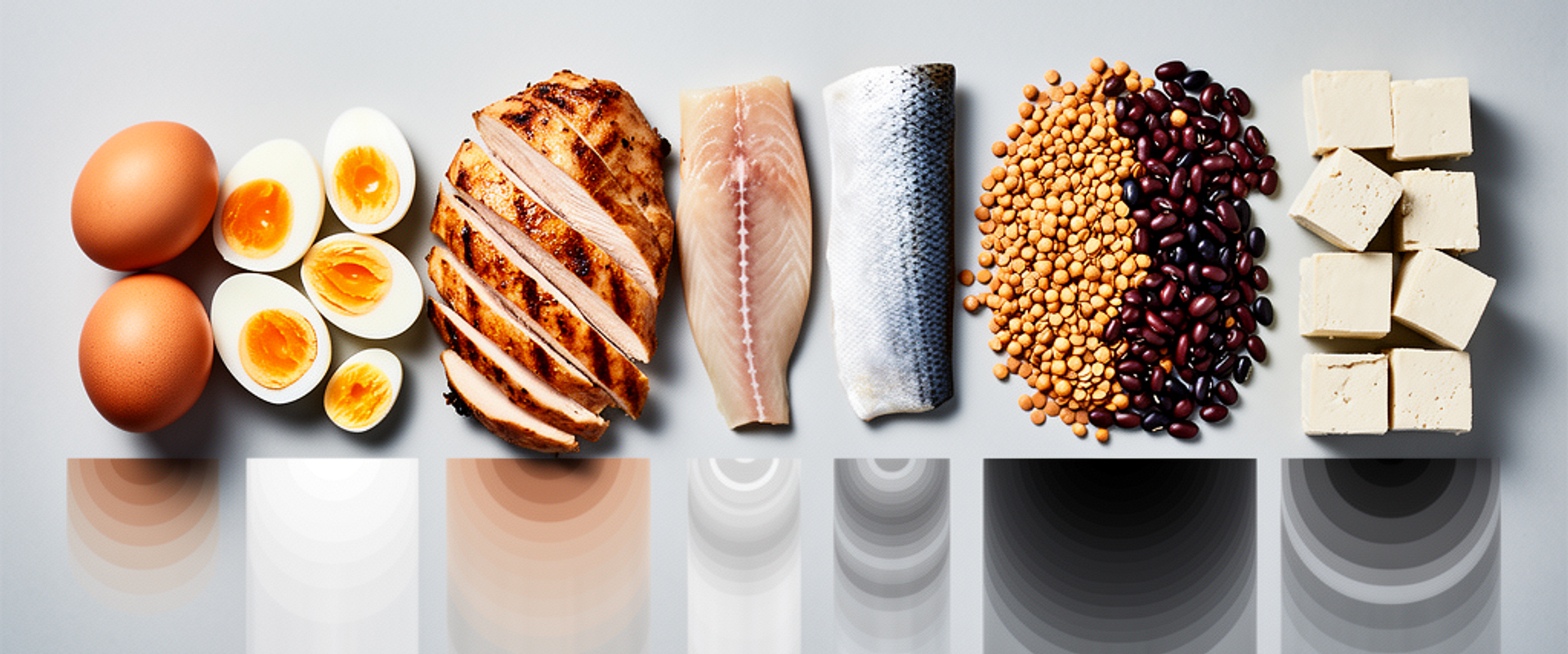
Translating Numbers to Food: What Does Protein Look Like?
Numbers and grams are great for scientists, but we eat food, not spreadsheets. To hit your protein goals, you need to know what these numbers look like on your plate.
Here is a practical cheat sheet of common protein sources and their approximate yields:
Animal-Based Sources
- Chicken or Turkey Breast: 4 oz (about the size of a deck of cards) = ~25 grams
- Salmon or Lean Beef: 4 oz = ~23 grams
- Eggs: 1 large egg = 6 grams (Tip: Use 2 whole eggs and 1/2 cup of liquid egg whites for a 25g protein scramble)
- Greek Yogurt: 1 cup (plain, non-fat or low-fat) = ~20 grams
- Cottage Cheese: 1/2 cup = ~14 grams
Plant-Based Sources
- Edamame: 1 cup (shelled) = ~17 grams
- Lentils: 1/2 cup (cooked) = ~9 grams
- Firm Tofu: 1/2 cup = ~10 to 12 grams
- Tempeh: 3 oz = ~16 grams
- Hemp Seeds: 3 tablespoons = ~10 grams
- Quinoa: 1 cup (cooked) = ~8 grams
Protein Pacing: Why Timing Matters (A Little)
While your total daily intake is the most important factor, how you space your protein out throughout the day matters, too.
Your body does not store protein the way it stores carbohydrates (as glycogen) or fat. Muscle protein synthesis—the process of repairing and building muscle—operates on a threshold system. To trigger this process, you need a certain amount of protein in one sitting, specifically an amino acid called leucine.
For most adults, hitting a minimum of 20 to 30 grams of protein per meal is the sweet spot to trigger muscle repair.
Instead of eating a bagel for breakfast (10g), a small salad for lunch (10g), and a massive 12-ounce steak for dinner (85g), you will feel better and absorb nutrients more efficiently if you distribute your protein somewhat evenly.
How to Eat Enough Without Stressing Out
Let us put this all together into a realistic day of eating. Imagine an active 150-pound woman aiming for roughly 120 grams of protein. Here is how she can easily hit that target using whole, delicious foods without obsessively tracking every bite.
Breakfast: The Power Parfait (~32g protein)
Most people struggle with protein at breakfast. Swap the standard cereal for this:
- 1 cup of plain Greek yogurt (20g)
- 1 scoop of collagen peptides or 1/2 scoop of protein powder mixed in (10g)
- 1/2 cup of berries and 1 tbsp of chia seeds (2g)
Lunch: The Upgraded Salad (~35g protein)
A salad with just greens and dressing will leave you starving by 3:00 PM. Let us upgrade it:
- Mixed greens, cucumbers, and tomatoes
- 4 oz of grilled chicken breast or baked tofu (25g)
- 1/2 cup of chickpeas (7g)
- 1 oz of feta cheese or pumpkin seeds (3g)
Afternoon Snack: The Savory Pick-Me-Up (~17g protein)
Skip the vending machine and try:
- 1 cup of steamed edamame in the pods with sea salt (17g)
Dinner: The Balanced Plate (~36g protein)
- 4 oz of baked salmon (23g)
- 1 cup of cooked quinoa (8g)
- 1 cup of roasted broccoli topped with 1 tbsp of nutritional yeast (5g)
Total Daily Protein: ~120 grams.
Notice that there is no extreme dieting here. There is no banning of carbohydrates or fats. It is simply about intentionally anchoring each meal with a solid source of protein.
Easy Food Swaps to Boost Your Intake Today
If you do not want to overhaul your entire diet, start by making small, effortless swaps.
- Swap regular pasta for chickpea or lentil pasta. (Boosts protein from 7g to 20g per serving).
- Swap regular yogurt for Icelandic Skyr or Greek yogurt. (Boosts protein from 5g to 15-20g per serving).
- Swap a splash of almond milk in your oatmeal for ultra-filtered dairy milk or soy milk. (Boosts protein from 1g to 8-13g per cup).
- Swap a standard granola bar for a handful of roasted edamame or almonds. (Provides more protein and healthy fats for sustained energy).
Your Practical Takeaway
Nutrition science can be incredibly complex, but your daily plate does not need to be. You do not need to weigh every ounce of chicken or panic if you fall short of your protein goal on a Tuesday.
If you are currently eating very little protein, do not jump straight to 150 grams a day. Your digestive system will not thank you. Instead, look at your current habits. Which meal is usually the lowest in protein? For most people, it is breakfast.
Start there. Focus on getting 20 to 30 grams of protein at your first meal of the day. Notice how it impacts your energy levels, your focus at work, and your cravings later in the afternoon. Once you have mastered breakfast, move on to lunch.
Aim for that sweet spot of 0.7 to 1 gram per pound of body weight, anchor your meals with protein, and remember that consistency always beats perfection. Your muscles, your metabolism, and your future self will thank you.