Carbs Are Not the Enemy: A Balanced Look at Carbohydrate Nutrition
Confused by the low-carb craze? Discover why carbohydrates are essential for energy, mood, and gut health. Learn the difference between complex and simple carbs, and get practical tips to enjoy them without guilt.

The War on Carbs: How We Got Here
"Bread makes you gain weight." "Pasta is a cheat meal." "Fruit has too much sugar." If you have spent any time reading about health, fitness, or nutrition over the last twenty years, you have undoubtedly encountered these phrases. Diet culture has spent decades painting carbohydrates as the ultimate nutritional villain, pushing us toward extreme low-carb regimens, keto diets, and a general fear of the breadbasket.
If you are feeling exhausted, brain-fogged, or just plain sad about skipping your favorite meals, take a deep breath. As a nutrition professional, I am here to share some highly liberating, science-backed news: carbs are not the enemy.
In fact, carbohydrates are your body's preferred source of energy. They are vital for brain function, athletic performance, and hormonal balance. The key to making peace with carbohydrates isn't about cutting them out; it is about understanding how they work, choosing the right types most of the time, and learning how to build a balanced plate. Let's unpack the science of carbohydrates without the guilt, shame, or extreme rules.
What Are Carbohydrates, Really? The Biology of Energy
At a fundamental biological level, carbohydrates are molecules made of carbon, hydrogen, and oxygen. When you eat a carbohydrate—whether it is a bowl of lentils or a handful of gummy bears—your digestive system breaks it down into glucose (blood sugar).
Glucose is the premium, high-octane fuel for your body. Your brain alone uses about 120 grams of glucose a day just to keep you thinking, breathing, and functioning. Your central nervous system relies on it, and your muscles store it as glycogen to power your workouts and daily movements.
When you severely restrict carbohydrates, your body goes into a state of metabolic stress. It is forced to break down dietary fats and even your own muscle tissue to create alternative fuel sources (ketones). While the body is incredibly adaptable and can survive this way, surviving is not the same as thriving. For most people, a balanced intake of carbohydrates leads to better energy, improved mood, and a more sustainable, enjoyable way of eating.
The Tale of Two Carbs: Complex vs. Simple
To understand how to eat carbs, we have to recognize that not all carbohydrates act the same way in the body. They generally fall into two categories: simple and complex.
Simple Carbohydrates
Simple carbohydrates have a basic chemical structure (one or two sugar molecules). Because they are so small and simple, your body breaks them down almost immediately. This results in a rapid spike in blood sugar, giving you a quick burst of energy followed by an inevitable crash.
Think of simple carbs like kindling on a campfire. They catch fire quickly and burn bright, but they burn out fast, leaving you cold (or in this case, hungry and lethargic) shortly after.
Sources of simple carbs include:
- Table sugar and syrups
- Soda and sweetened beverages
- White bread, white pasta, and pastries
- Fruit juice
Note: Whole fruits also contain simple sugars (fructose), but because they come packaged with water, vitamins, and fiber, they behave differently in the body. Fruit is always a healthy choice!
Complex Carbohydrates
Complex carbohydrates have a long, intricate chain of sugar molecules. Because of their complex structure, your digestive system has to work much harder and longer to break them down. This results in a slow, steady release of glucose into your bloodstream.
If simple carbs are the kindling, complex carbs are the thick, dense oak logs on the campfire. They take a while to get going, but they provide a sustained, steady, and long-lasting source of heat and energy.
Sources of complex carbs include:
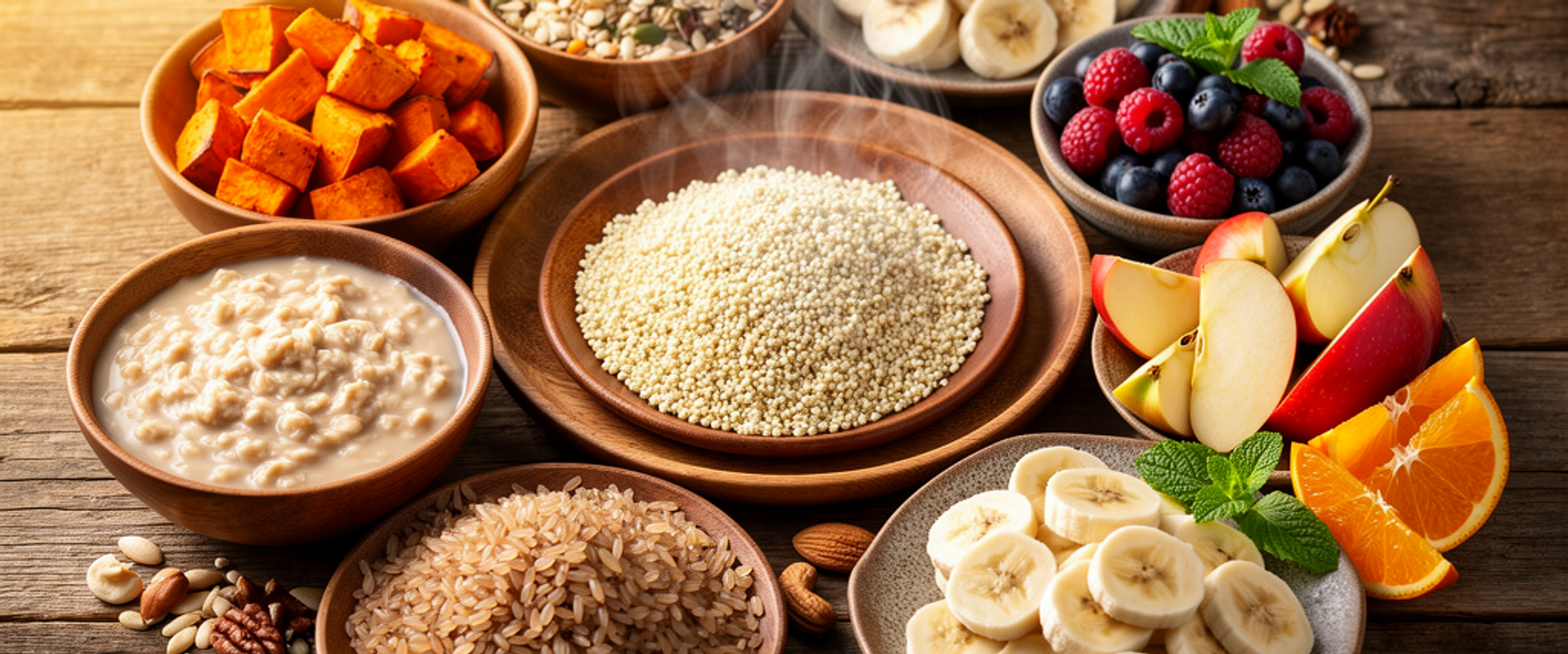
- Whole grains (oats, quinoa, brown rice, barley)
- Legumes (black beans, lentils, chickpeas)
- Starchy vegetables (sweet potatoes, butternut squash, peas)
Fiber: The Unsung Hero of the Carbohydrate Family
When we talk about complex carbohydrates, we have to talk about fiber. Fiber is a type of carbohydrate that your body actually cannot digest. Instead of being broken down into glucose, it passes through your digestive tract relatively intact.
Fiber is the absolute MVP of the carbohydrate world, yet most of us aren't getting nearly enough. The recommended daily intake is about 25 grams for women and 38 grams for men, but the average adult consumes only about 15 grams a day.
Why is fiber so important?
- It keeps you full: Fiber adds bulk to your meals, stretching the stomach and sending satiety signals to your brain. A 1/2 cup of high-fiber black beans will keep you full much longer than a 1/2 cup of low-fiber white rice.
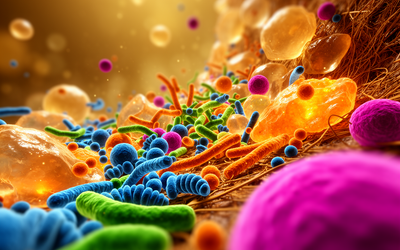
- It feeds your gut microbiome: The beneficial bacteria in your gut thrive on a specific type of fiber called prebiotic fiber. When these bacteria ferment fiber, they produce short-chain fatty acids (SCFAs) like butyrate, which reduce inflammation and support a healthy immune system.
- It protects your heart: Soluble fiber (found in oats, apples, and beans) binds to cholesterol in your digestive system and drags it out of the body, helping to lower your overall cholesterol levels.
Understanding the Glycemic Index (and Why You Shouldn't Obsess Over It)
The Glycemic Index (GI) is a tool used to measure how quickly a specific food raises your blood sugar. Foods are ranked on a scale from 0 to 100. Pure glucose is a 100. A baked potato is around 85 (high). Lentils are around 30 (low).
While the GI can be a helpful concept, it has a major flaw: it only measures foods eaten in complete isolation. But how often do you sit down and eat a plain baked potato with absolutely nothing else?
This brings us to one of the most practical, actionable nutrition strategies you can use: "Clothing" your carbs.
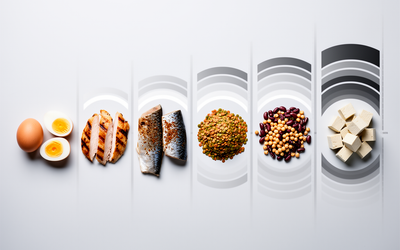
When you eat a carbohydrate naked (by itself), it digests quickly. However, when you "clothe" that carbohydrate by pairing it with a source of protein, healthy fat, or extra fiber, you completely change how your body processes it. Protein and fat slow down gastric emptying. This means the glucose from the carbohydrate enters your bloodstream at a slow, manageable trickle rather than a chaotic flood.
Examples of "Clothing" Your Carbs:
- Instead of eating an apple by itself, pair it with 2 tablespoons of almond butter (fat and protein).
- Instead of having a plain bowl of oatmeal, stir in 1 scoop of protein powder and 1 tablespoon of chia seeds (protein, fat, and fiber).
- Instead of plain white pasta, toss it with 3 ounces of grilled chicken, olive oil, and 1 cup of roasted broccoli.
Why Low-Carb Isn’t Automatically Better
In recent years, diets like Keto and extreme low-carb protocols have gained massive popularity. While they can lead to rapid initial weight loss, much of that early drop is simply water weight. (Carbohydrates are stored in the muscles as glycogen, and every gram of glycogen holds onto about 3 grams of water. When you cut carbs, you flush out this water).
However, long-term research paints a different picture about carbohydrate restriction. A massive, comprehensive study published in The Lancet examined the dietary habits of over 15,000 adults over 25 years. The researchers found a U-shaped curve when it came to carbohydrate intake and mortality. Both extreme low-carb diets (under 40% of daily calories) and extreme high-carb diets (over 70% of daily calories) were linked to a higher risk of early mortality.
The sweet spot for longevity? A moderate carbohydrate intake, making up about 50% to 55% of total daily calories.
We can also look to the "Blue Zones"—the regions of the world where people consistently live the longest, healthiest lives. In Okinawa, Japan, the dietary staple is the purple sweet potato. In Nicoya, Costa Rica, it is black beans and corn tortillas. In Sardinia, Italy, it is sourdough bread and pasta. These centenarians are not tracking macros or fearing carbs; they are eating robust amounts of complex, whole-food carbohydrates.
How to Build a Better Carb Plate (Actionable Swaps)
You don't need to overhaul your entire life to eat better. Small, sustainable swaps make the biggest difference. Here is how you can upgrade your carbohydrate choices without sacrificing flavor or satisfaction.
Swap This for That:
- Instead of: A giant bowl (3 cups) of plain white pasta.
- Try: 1.5 cups of whole wheat, lentil, or chickpea pasta, bulked up with 1 cup of sautéed spinach, mushrooms, and 3-4 ounces of turkey meatballs.
- Instead of: A sugary breakfast cereal with skim milk.
- Try: 1/2 cup of steel-cut or rolled oats cooked in milk, topped with 1/4 cup of chopped walnuts and 1/2 cup of fresh blueberries.
- Instead of: Skipping the sandwich at lunch and feeling starving by 3 PM.
- Try: Eating the sandwich! Just use two slices of sprouted grain bread (like Ezekiel bread), packed with 3 ounces of lean turkey, half a mashed avocado, and a handful of mixed greens.
- Instead of: A side of plain white rice (1 cup).
- Try: 1/2 cup of brown rice or quinoa mixed with 1/2 cup of riced cauliflower to boost the fiber and nutrient volume.
A Day on a Balanced, Carb-Inclusive Plate
Wondering what a day of healthy, carb-inclusive eating actually looks like? Here is an example of how to fuel your body properly, keeping portions mindful and ensuring every carb is "clothed" with protein and fat.
Breakfast: Power Oatmeal
- 1/2 cup rolled oats (complex carb)
- 1 cup unsweetened soy milk or dairy milk (protein/fat)
- 1 tablespoon ground flaxseed (fiber/healthy fat)
- 1/2 cup raspberries (fiber/antioxidants)
- 1 scrambled egg or 2 egg whites on the side (protein)
Lunch: Mediterranean Quinoa Bowl
- 1/2 cup cooked quinoa (complex carb)
- 4 ounces grilled chicken breast or tofu (protein)
- 1 cup chopped cucumbers, cherry tomatoes, and red onion (fiber/micronutrients)
- 2 tablespoons feta cheese and 1 tablespoon olive oil vinaigrette (fat)
Afternoon Snack: The Perfect Pair
- 1 medium crisp apple (complex carb/fiber)
- 1.5 ounces of sharp cheddar cheese or 2 tablespoons peanut butter (protein/fat)
Dinner: Comfort Food Upgraded
- 4 ounces baked salmon (protein/omega-3 fats)
- 1 medium baked sweet potato (complex carb)
- 1 teaspoon grass-fed butter or olive oil (fat)
- 1.5 cups roasted asparagus with garlic (fiber)
The Practical Takeaway
Carbohydrates are not your enemy. They are not the sole reason people gain weight, nor are they inherently unhealthy. The real issue is that modern food processing has stripped many carbohydrates of their natural fiber and nutrients, leaving us with ultra-processed foods that don't satisfy our biological needs.
By shifting your focus to complex, fiber-rich carbohydrates—like whole grains, beans, oats, and potatoes—and pairing them with adequate protein and healthy fats, you can stabilize your blood sugar, heal your relationship with food, and give your body the premium energy it deserves.
Eat the potato. Enjoy the fruit. Savor the pasta. Just do it mindfully, balance your plate, and watch your energy levels soar.