Protein Timing: Does When You Eat It Actually Matter?
Confused about the anabolic window and post-workout shakes? Discover the science-backed truth about protein timing, distribution, and how to practically hit your daily goals without the stress.

If you have ever sprinted from the gym floor to the locker room to chug a chalky protein shake within exactly thirty minutes of finishing your workout, you are not alone. For decades, fitness magazines and gym culture have preached the gospel of the 'anabolic window'—a brief, magical period where your muscles act like sponges, ready to absorb protein and grow. Miss that window, the myth suggests, and your entire workout was a waste.
For anyone just trying to eat a little better and feel a little stronger, this kind of advice is incredibly overwhelming. Nutrition shouldn't require a stopwatch.
So, does protein timing actually matter? The short answer is: yes, but probably not in the way you have been told. Let's strip away the extreme claims and look at what the science actually says about protein timing, how you should distribute it throughout your day, and how to make it work for your real, busy life.
The Myth of the Anabolic Window
The idea of the 30-minute post-workout window stems from early research showing that muscle protein synthesis (the process your body uses to repair and build muscle) increases after exercise. Early interpretations concluded that you needed to supply amino acids (the building blocks of protein) immediately to capitalize on this.
However, modern sports nutrition science has thoroughly debunked the idea of a rapidly closing window. Extensive research, including comprehensive meta-analyses by leading hypertrophy scientists, shows that the 'window of opportunity' is actually more like a giant barn door.
After a challenging workout, your muscles' heightened sensitivity to protein doesn't last for 30 minutes; it lasts anywhere from 24 to 48 hours. If you eat a meal containing protein a few hours before your workout, those amino acids are still circulating in your bloodstream and doing their job of repairing muscle tissue long after you have finished your last rep.
You don't need to panic-chug a shake in the parking lot. You have plenty of time to go home, shower, and cook a delicious, whole-food meal.
Step One: Total Daily Protein is the Real MVP
Before we even worry about the clock, we have to look at the calendar. When it comes to the hierarchy of protein needs, your total daily intake matters far more than when you eat it.
Think of building muscle or maintaining lean tissue like building a brick house. Protein timing is the delivery schedule of the bricks, but total daily protein is the actual number of bricks you ordered. If you don't order enough bricks, it doesn't matter how perfectly timed the delivery trucks are—you can't finish the house.
For most active adults looking to support their health, maintain muscle, and stay satisfied after meals, a practical, science-backed target is between 0.6 to 1.0 grams of protein per pound of body weight. For a 150-pound person, that is roughly 90 to 150 grams of protein per day.
If you are currently eating 40 grams of protein a day, don't worry about timing yet. Focus entirely on finding foods you enjoy to bring that daily total up.
The Case for Protein Distribution
Once you are consistently hitting your total daily protein goal, timing—specifically, how you distribute your protein across your meals—becomes the next most useful tool in your nutrition toolbox.
This is where the typical Western diet gets it wrong. Most people eat a tiny amount of protein at breakfast (maybe a piece of toast or a bowl of cereal), a moderate amount at lunch (a sandwich), and a massive amount at dinner (a huge steak or chicken breast).
Research shows this is not the optimal way to support your muscles or your metabolism. Here is why: your body does not store protein for later use in the same way it stores carbohydrates or fats.
Muscle protein synthesis acts a bit like a light switch. To flip the switch 'on,' you need a certain amount of a specific amino acid called leucine. For most adults, it takes about 20 to 30 grams of high-quality protein in a single meal to get enough leucine to flip that switch.
If you only eat 10 grams of protein at breakfast, the switch stays off. If you eat 80 grams of protein at dinner, the switch turns on, but it doesn't turn on 'extra.' Your body utilizes about 30 to 40 grams of that dinner protein for muscle building and repair, and the rest is used for energy or other bodily functions. (Note: It is not 'wasted' or automatically turned into fat, which is another common myth, but it isn't maximizing your muscle-building potential).
Because of this 'muscle full' effect, the most optimal strategy is to spread your protein intake relatively evenly across three or four meals. By eating 25 to 35 grams of protein at breakfast, lunch, and dinner, you flip the muscle-building switch three times a day instead of just once.
A Note on Aging and Protein
As we get older, our bodies experience something called 'anabolic resistance.' This simply means our muscles become a bit harder of hearing when protein knocks on the door. While a 20-year-old might trigger muscle protein synthesis with 20 grams of protein, a 60-year-old might need 35 to 40 grams per meal to get the exact same response. If you are over 50, prioritizing a robust serving of protein at every meal becomes even more beneficial for healthy aging and preventing muscle loss.
Pre- and Post-Workout Nutrition Made Simple
So, if the 30-minute window is a myth, how should you fuel your workouts?
The goal of pre-workout nutrition is to give you energy to perform, and the goal of post-workout nutrition is to kickstart repair. Here is a highly practical, stress-free approach:
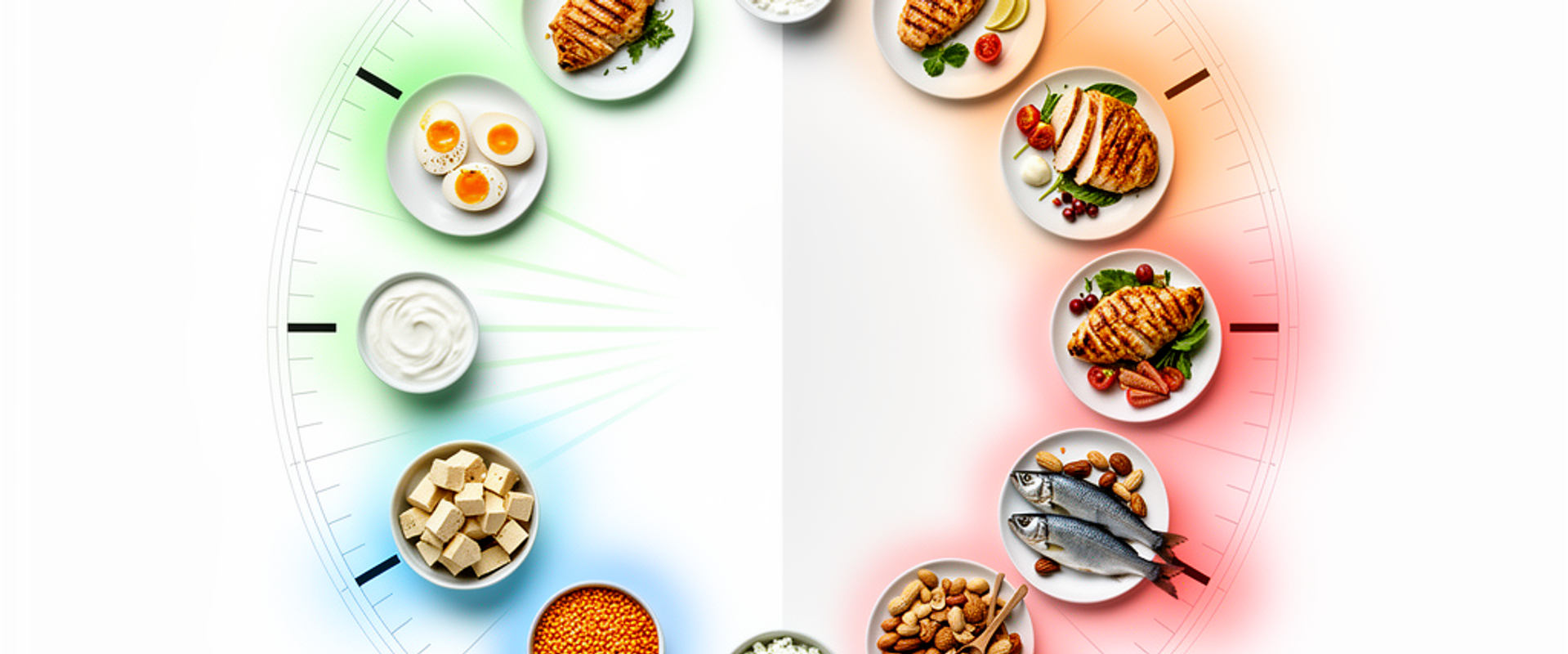
The 'Bracket' Method: As long as you have a solid, protein-rich meal within 2 to 3 hours before your workout, and another protein-rich meal within 2 to 3 hours after your workout, you are completely covered. You have effectively 'bracketed' your training with nutrients.
- If you work out in the morning: You might not want a heavy meal at 6:00 AM. Having a small, carb-heavy snack (like a banana) before your workout is fine. In this scenario, your post-workout breakfast becomes more important. Aim to eat a protein-rich breakfast within an hour or two of finishing.
- If you work out after work: If you had lunch at 1:00 PM and hit the gym at 5:30 PM, you don't necessarily need a pre-workout protein shake. Just go home and eat your normal, protein-rich dinner by 7:30 PM.
Actionable Meal Ideas and Protein Swaps
Knowing the science is great, but applying it to your grocery list is where the magic happens. Here is how you can easily distribute 25 to 35 grams of protein across your day using specific, delicious foods.
Breakfast: The Most Missed Opportunity
Breakfast is where most people fall short on protein. Upgrading this meal will keep you full until lunch and prevent mid-morning energy crashes.
- The Yogurt Power Bowl: 1 cup of plain non-fat Greek yogurt (20g) topped with 1/4 cup of almonds (7g) and a tablespoon of hemp hearts (3g). Total: 30g protein.
- The Upgraded Oatmeal: Instead of making oatmeal with water, cook 1/2 cup of dry oats in 1 cup of fairlife ultra-filtered milk (13g). Stir in 1 scoop of your favorite protein powder (20g) after cooking. Total: ~38g protein.
- Savory Scramble: 3 whole eggs (18g) scrambled with 1/2 cup of black beans (7g) and 1 ounce of cheddar cheese (7g). Top with salsa. Total: 32g protein.
Lunch: Beating the Afternoon Slump
A high-protein lunch is the secret to avoiding the 3:00 PM brain fog.
- Mason Jar Quinoa & Chicken: 4 ounces of chopped grilled chicken breast (25g), 1/2 cup of cooked quinoa (4g), mixed greens, cherry tomatoes, and 2 tablespoons of pumpkin seeds (5g). Total: 34g protein.
- Tuna Salad Swap: Mix 1 can of chunk light tuna (20g) with 1/4 cup of cottage cheese instead of mayo (7g) for creaminess. Serve on two slices of sprouted whole-grain bread (8g). Total: 35g protein.
- Plant-Based Powerhouse: 1 cup of edamame (17g) tossed with 1/2 cup of roasted chickpeas (7g), chopped bell peppers, and 3 ounces of baked tempeh (16g). Total: 40g protein.
Dinner: Keeping it Balanced
You are likely already eating enough protein at dinner, but here are some specific portion sizes to visualize what a healthy target looks like.
- Sheet Pan Salmon: 5 ounces of baked Atlantic salmon (30g) paired with roasted broccoli and a medium sweet potato.
- Lean Beef Stir-fry: 4 ounces of lean flank steak (23g) stir-fried with snap peas, broccoli, and served over 1 cup of soba noodles (8g). Total: 31g protein.
- Lentil Bolognese: 1 cup of cooked red lentils (18g) simmered in marinara sauce, served over 2 ounces of chickpea pasta (11g). Total: 29g protein.
Smart, High-Protein Snacks
If you find your meals are falling a bit short, snacks are a great way to bridge the gap.
- 1 cup of 2% cottage cheese with pineapple chunks (28g protein).
- 1 stick of string cheese and 1 ounce of turkey jerky (17g protein).
- 1 cup of dry-roasted edamame (20g protein).
The Practical Takeaway
If you are feeling overwhelmed by conflicting nutrition advice, let's simplify everything down to three practical rules:
- Focus on the total first: Aim for roughly 0.6 to 1.0 grams of protein per pound of body weight every day. If you do nothing else, do this.
- Spread it out: Try to divide that total relatively evenly across three or four meals. Aim for 25 to 35 grams of protein per sitting to keep your muscles fueled and your appetite satisfied.
- Don't stress the clock: The 30-minute anabolic window is a myth. Fuel your body with a good meal a few hours before you exercise, and eat another solid meal a few hours after.
Nutrition is meant to support your life, not dictate your schedule. By focusing on consistent, satisfying, protein-rich meals throughout the day, you can let go of the stopwatch, enjoy your food, and still get all the results you are working so hard for.