The Healthiest Cooking Oils: Smoke Points, Nutrition, and Best Uses
Confused by the cooking oil aisle? Learn the science behind smoke points, heart-healthy fats, and when to use olive, avocado, or coconut oil. Build a healthier kitchen with this practical, evidence-based guide to cooking oils.

Walk into any grocery store today, and the cooking oil aisle is enough to make anyone's head spin. You will find cold-pressed, unrefined, expeller-pressed, and high-oleic options, alongside bold internet claims that certain oils are 'toxic' while others are 'miracle foods.'
If you are feeling overwhelmed by conflicting nutrition advice, you are entirely normal. The truth is, there is no single 'perfect' cooking oil. The healthiest choice depends entirely on two factors: the oil's nutritional profile and how you plan to use it in the kitchen.
Let us cut through the noise, leave the food guilt behind, and look at the actual science of cooking oils. By understanding the basics of fats and smoke points, you can easily build a three-bottle kitchen that supports your heart health, elevates your meals, and takes the stress out of cooking.
The Science of Smoke Points and Fats
Before we rank the oils, we need to understand the two pillars of cooking oil science: what they are made of, and how they react to heat.
Understanding Dietary Fats
Oils are primarily made up of three types of dietary fats, which are just different shapes of molecules:
- Monounsaturated fats (MUFAs): These are the darlings of the nutrition world. Found abundantly in olive and avocado oils, MUFAs are linked to improved heart health, reduced inflammation, and better cholesterol levels.
- Polyunsaturated fats (PUFAs): Found in seeds, nuts, and fish. These include essential omega-3 and omega-6 fatty acids, which our bodies cannot produce on their own. They are highly beneficial but can be more delicate when exposed to heat.
- Saturated fats: Found in coconut oil, butter, and animal fats. These are solid at room temperature. While the science on saturated fat is evolving, major cardiovascular organizations still recommend using them thoughtfully and in moderation rather than as a primary fat source.
The All-Important Smoke Point
The 'smoke point' is the exact temperature at which an oil stops shimmering and starts burning, releasing a continuous bluish smoke.
Why does this matter? When an oil reaches its smoke point, its chemical structure begins to break down. This process, called lipid oxidation, destroys the oil's beneficial nutrients and antioxidants. Worse, it releases free radicals and a compound called acrolein, which gives burnt food that bitter, acrid taste. Using an oil past its smoke point negates its health benefits and ruins your meal. Therefore, matching the right oil to the right cooking temperature is the most important kitchen skill you can learn.
Extra Virgin Olive Oil: The Gold Standard
If there were a popularity contest among nutritionists, Extra Virgin Olive Oil (EVOO) would win by a landslide. It is the cornerstone of the Mediterranean Diet, which decades of research consistently rank as the most health-promoting dietary pattern globally.
The Nutrition
EVOO is unrefined, meaning it is mechanically pressed from olives without the use of heat or chemicals. Because of this gentle process, it retains a massive amount of bioactive compounds, particularly polyphenols. Polyphenols are powerful antioxidants that help neutralize cellular damage in the body. A landmark study known as PREDIMED demonstrated that a diet rich in EVOO significantly supports cardiovascular health and cognitive function.
The Smoke Point: Moderate (350°F to 410°F)
There is a persistent myth that you cannot cook with EVOO. This is false. While its smoke point is moderate, the high concentration of antioxidants in high-quality EVOO actually protects the oil from breaking down when heated. It is perfectly stable for everyday cooking.
Best Uses and Practical Tips
EVOO shines when its robust, peppery flavor can be front and center.
- Best for: Salad dressings, drizzling over finished dishes, low-to-medium heat sautéing, and baking savory breads.
- Practical Food Swap: Instead of buttering your morning toast, try rubbing a slice of whole-grain bread with a halved garlic clove and drizzling it with one teaspoon of EVOO.
- Meal Idea: Create a simple, heart-healthy dressing by whisking three tablespoons of EVOO, one tablespoon of balsamic vinegar, a teaspoon of Dijon mustard, and a pinch of salt. Toss with two cups of mixed greens.
Avocado Oil: The High-Heat Hero
Avocado oil has surged in popularity over the last decade, and for very good reason. It offers a nutritional profile remarkably similar to olive oil, but with a much higher tolerance for heat.
The Nutrition
Like olive oil, avocado oil is exceptionally high in oleic acid, a heart-healthy monounsaturated fat. It also contains lutein, an antioxidant that supports eye health, and it helps your body absorb fat-soluble vitamins (like Vitamins A, D, E, and K) from the vegetables you cook it with.
The Smoke Point: Very High (Up to 520°F for refined)
This is where avocado oil takes the crown. Because it can withstand incredibly high temperatures without breaking down or oxidizing, it is the safest, healthiest choice for high-heat cooking.
Best Uses and Practical Tips
Avocado oil has a mild, buttery, almost neutral flavor, meaning it will not overpower your food.
- Best for: Pan-searing proteins, high-temperature oven roasting, stir-frying, and grilling.
- Practical Food Swap: If you usually use vegetable oil to get a crispy sear on fish or tofu, swap it for avocado oil to get the same crispiness with a better nutritional profile.
- Meal Idea: High-heat roasted broccoli. Toss three cups of broccoli florets with one tablespoon of avocado oil, a pinch of salt, and garlic powder. Roast at 425°F for 15-20 minutes until the edges are crispy and deeply browned. The avocado oil handles the 425°F oven effortlessly.
The Coconut Oil Conundrum: Truth vs. Myth
Few foods have experienced the wild PR swing of coconut oil. Ten years ago, the internet dubbed it a 'superfood' cure-all. Today, some claim it is terrible for you. The science-based truth lies somewhere in the middle.
The Nutrition
Coconut oil is roughly 80 to 90 percent saturated fat, which is why it is solid at room temperature. The primary fat in coconut oil is lauric acid. While lauric acid does raise HDL (the 'helpful' cholesterol), it also raises LDL (the 'less helpful' cholesterol). Because of this, organizations like the American Heart Association advise using it in moderation rather than pouring it into your daily coffee.
The Smoke Point: Moderate (350°F for unrefined, 400°F for refined)
Unrefined (virgin) coconut oil has a distinct, sweet coconut flavor and a lower smoke point. Refined coconut oil is neutral in flavor and can handle slightly more heat.
Best Uses and Practical Tips
Think of coconut oil as a specialty ingredient rather than your everyday cooking oil. It is not something to fear, but it is also not a daily necessity.
- Best for: Plant-based baking (where you need a solid fat to replace butter), and specific flavor profiles like Southeast Asian curries.
- Practical Food Swap: When making a vegan dessert that requires the texture of butter, use coconut oil. Just be mindful of the portion.
- Meal Idea: Thai-inspired sweet potato curry. Sauté onions, ginger, and curry paste in one tablespoon of virgin coconut oil to build a rich, aromatic flavor base before adding coconut milk and vegetables.
What About Seed Oils? (Canola, Sunflower, Safflower)
If you spend time on social media, you have likely seen influencers warning against 'toxic seed oils.' Let us look at the actual science. Seed oils, such as canola, sunflower, and safflower, are primarily composed of polyunsaturated fats.
Are they toxic? No. Rigorous, peer-reviewed human trials do not support the claim that standard seed oils are inherently toxic or cause widespread inflammation when consumed as part of a balanced diet. Canola oil, for instance, actually has a very respectable ratio of omega-3 to omega-6 fatty acids.
However, seed oils are often highly refined and are the primary fats used in ultra-processed fast foods. The health issues associated with these foods are usually about the overall quality of the diet (high sodium, low fiber, high sugar) rather than just the seed oil itself. For home cooking, an expeller-pressed canola or sunflower oil is a perfectly fine, budget-friendly, neutral-tasting option for baking or moderate-heat cooking.
How to Store Your Oils Properly
Even the healthiest oil will degrade if stored improperly. Heat, light, and oxygen are the enemies of cooking oils. When oils oxidize in the bottle, they become rancid, tasting like old crayons or stale nuts, and lose their health benefits.
- Buy dark bottles: Light accelerates oxidation. Always choose EVOO and avocado oil sold in dark green or amber glass bottles, or opaque tins.
- Keep them cool: Do not store your oils right next to or above the stove. The ambient heat will degrade them quickly. Keep them in a cool, dark pantry or cupboard.
- Watch the clock: Unlike wine, oil does not get better with age. Once opened, try to use your oil within three to six months.
The Practical Takeaway: The Three-Bottle Kitchen
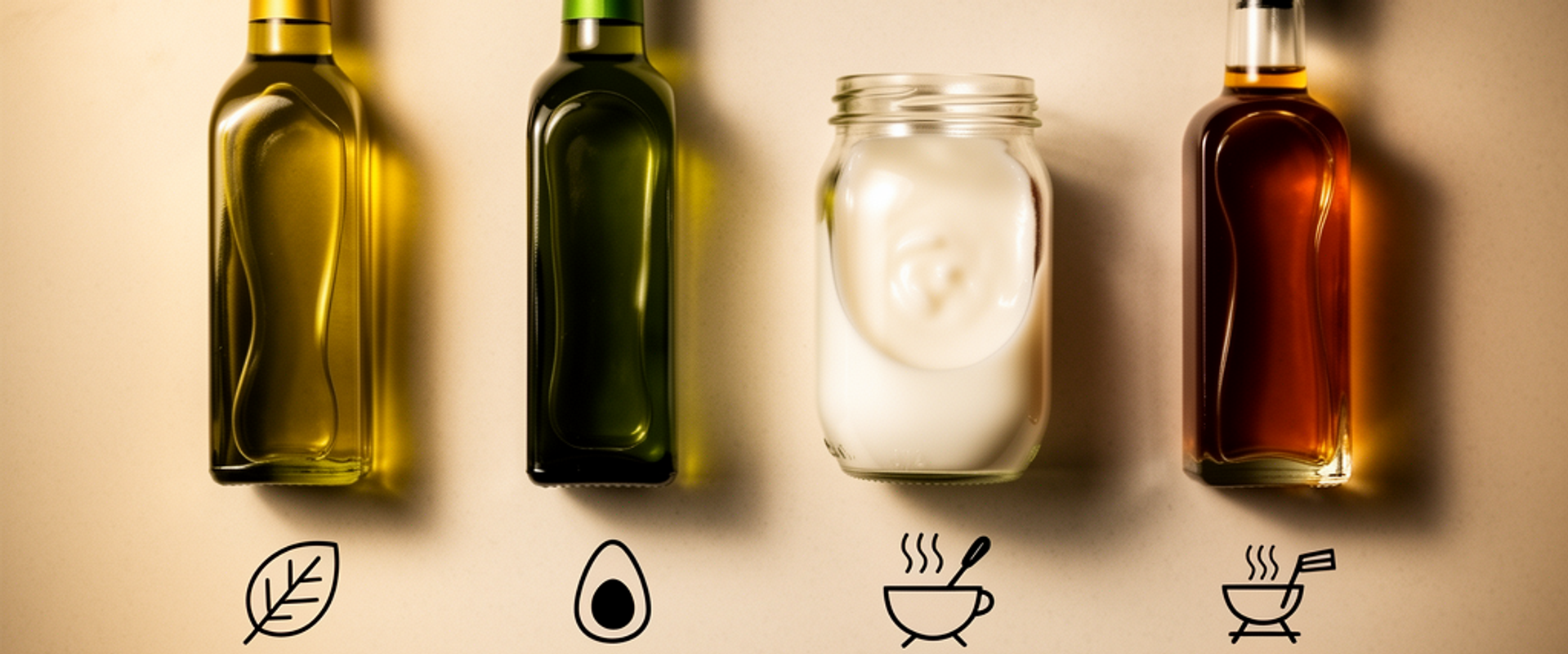
You do not need a pantry full of expensive, obscure oils to cook healthy, delicious meals. You can simplify your kitchen and optimize your health by adopting the 'Three-Bottle Kitchen' rule:
- The Flavor Enhancer (Extra Virgin Olive Oil): Keep a bottle of high-quality EVOO for salad dressings, drizzling over soups, and low-heat sautéing. This is your daily source of polyphenols and heart-healthy fats.
- The High-Heat Workhorse (Avocado Oil): Keep a bottle of avocado oil for roasting vegetables, searing proteins, and anything that requires a hot pan or an oven over 400°F.
- The Specialty/Baking Fat (Coconut Oil or Expeller-Pressed Canola): Keep one oil for specific textures or flavors. Use coconut oil for curries and vegan baking, or a neutral oil like canola for standard baking where you do not want an olive flavor.
Navigating nutrition does not have to be an all-or-nothing game. By understanding what makes these oils unique, you can confidently choose the right fat for the right job, nourishing your body while creating meals that taste absolutely fantastic.