The Truth About Processed Foods: What's Actually Harmful vs. Just Convenient
Not all processed foods are bad for you. Discover the science behind the processing spectrum, learn to spot ultra-processed culprits, and embrace healthy conveniences without the guilt.

If you have ever stood in a grocery store aisle, paralyzed by a bag of frozen broccoli because you heard "processed foods are toxic," you are not alone. The modern wellness world has villainized the word "processed" to the point where making simple, everyday food choices feels like navigating a nutritional minefield.
But here is a liberating, science-backed truth: not all processing is bad. In fact, human beings have been processing food since the discovery of fire. Cooking is processing. Chopping is processing. Fermenting, freezing, and canning are all forms of processing that have allowed our ancestors to survive winters and travel across oceans.
When we blindly label all processed foods as "bad," we accidentally strip away some of the most accessible, affordable, and convenient forms of nutrition available to us. To eat well consistently without burning out, we need to understand the processing spectrum. Let's break down the science of processed foods, learn how to identify what is actually harmful, and discover how to use healthy conveniences to your advantage.
The Processing Spectrum: Understanding the NOVA Classification
To make sense of the modern food supply, nutrition scientists rely on something called the NOVA classification system. Developed by researchers at the University of São Paulo, this system categorizes food not by its nutrients, but by the extent and purpose of its industrial processing.
Understanding these four categories is the key to ditching food guilt and making informed choices.
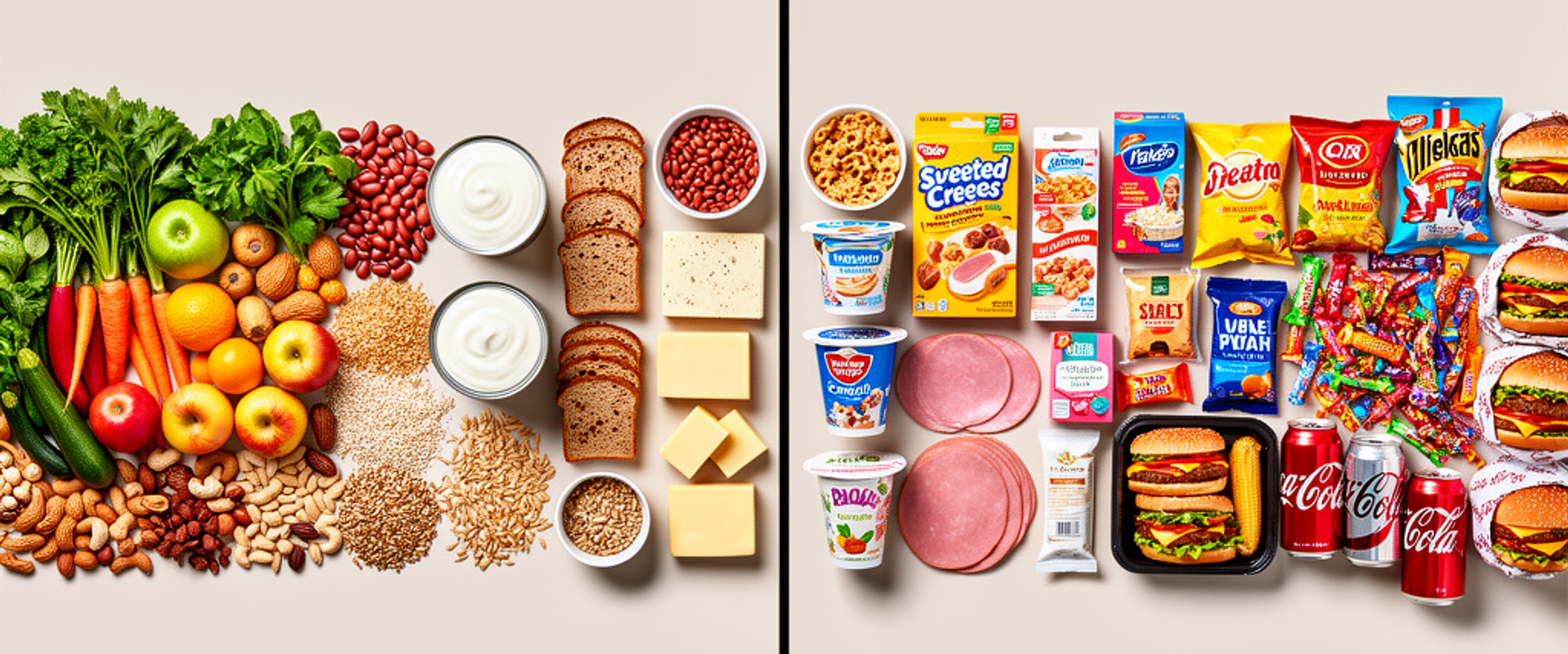
Group 1: Unprocessed or Minimally Processed Foods
These are the whole foods you likely already recognize as healthy. They are edible parts of plants or animals that have been altered only to remove unwanted parts, dry, crush, grind, roast, boil, or freeze them.
Examples include:
- Fresh fruits and vegetables
- Raw or dry-roasted nuts and seeds
- Dried lentils and beans
- Eggs
- Milk (pasteurization is a minimal process that makes milk safe to drink!)
- Plain, frozen vegetables (like a bag of frozen peas)
Group 2: Processed Culinary Ingredients
These are substances extracted from Group 1 foods or from nature, used to cook and season our meals. You do not typically eat these on their own, but they are essential for making healthy food taste delicious.
Examples include:
- Olive oil and avocado oil
- Butter
- Sea salt
- Maple syrup or honey
- Spices and dried herbs
Group 3: Processed Foods
This is where the confusion usually begins. Group 3 foods are made by combining Group 1 and Group 2 foods. The processing here is generally done to increase the food's durability or enhance its flavor. These foods are entirely healthy and can be massive time-savers.
Examples include:
- Canned beans, chickpeas, and lentils
- Canned fish (like wild-caught tuna or salmon in water or olive oil)
- Artisanal cheeses
- Freshly baked breads made with simple ingredients (flour, water, salt, yeast)
- Roasted salted nuts
Group 4: Ultra-Processed Foods (UPFs)
This is the category that deserves your attention and caution. Ultra-processed foods are industrial formulations made entirely or mostly from substances extracted from foods (oils, fats, sugar, starch, and proteins), derived from food constituents (hydrogenated fats and modified starch), or synthesized in laboratories (flavor enhancers, colors, and food additives).
Examples include:
- Sugary breakfast cereals
- Packaged cookies, cakes, and pastries
- Mass-produced packaged breads (the kind that stays soft on your counter for a month)
- Chicken nuggets and hot dogs
- Soda and sweetened energy drinks
Why Ultra-Processed Foods Are the Real Culprit
When public health experts warn about "processed foods," they are almost always talking about Group 4: Ultra-Processed Foods. But what exactly makes them harmful to our bodies?
First, they are designed to be hyper-palatable. Food manufacturers spend millions of dollars engineering foods to hit the "bliss point"—the perfect ratio of salt, sugar, and fat that overrides our brain's natural fullness signals.
A landmark 2019 study conducted by Dr. Kevin Hall at the National Institutes of Health (NIH) proved just how impactful this is. Researchers housed 20 adults in a clinical center for a month. For two weeks, they ate a diet of mostly ultra-processed foods. For the other two weeks, they ate a diet of minimally processed foods. Both diets were perfectly matched for calories, sugar, fat, fiber, and macronutrients. Participants were told to eat as much or as little as they wanted.
The results were staggering. When on the ultra-processed diet, participants naturally ate about 500 more calories per day and gained weight. When on the unprocessed diet, they naturally ate less and lost weight. The study strongly suggested that there is something inherent to the texture, speed of eating, and chemical makeup of UPFs that drives us to overconsume.
Furthermore, UPFs are typically stripped of their natural fiber and water content, meaning they digest incredibly quickly, spiking our blood sugar and leaving us hungry an hour later. They also often contain emulsifiers and artificial additives that emerging research suggests may disrupt our gut microbiome, leading to inflammation.
When Processing is Actually Your Best Friend
Now that we know ultra-processed foods are the ones to minimize, let's celebrate the processed foods that make healthy eating sustainable. If you are a busy parent, a stressed professional, or simply someone who doesn't want to spend three hours a day cooking, these processed foods are your greatest allies.
Frozen Fruits and Vegetables
Did you know that frozen produce is often more nutrient-dense than fresh? Vegetables chosen for freezing are picked at their absolute peak ripeness and flash-frozen within hours. This locks in heat-sensitive vitamins like Vitamin C. Fresh produce, on the other hand, is often picked before it is ripe so it can survive days on a truck, sitting in a warehouse, and resting on a grocery store shelf, losing nutrients every step of the way. Keep a bag of frozen broccoli or mixed berries in your freezer at all times.
Canned Beans and Legumes
Cooking dried black beans from scratch takes hours of soaking and simmering. Opening a can takes five seconds. Canned beans are an incredible source of plant-based protein, soluble fiber, and iron. If you are worried about the sodium content used in the canning process, simply dump the beans into a colander and rinse them under cold water for 30 seconds. This simple step washes away up to 40% of the added sodium.
Pre-Washed Greens and Chopped Veggies
Yes, you pay a premium for a plastic clamshell of triple-washed baby spinach or a bag of pre-chopped butternut squash. But if that convenience is the difference between you eating a serving of vegetables or ordering takeout, it is a phenomenal investment in your health.
Pre-Cooked Whole Grains
Microwavable pouches of plain quinoa, brown rice, or farro are fantastic staples. As long as the ingredient list is just the grain, water, and perhaps a little oil or salt, these are excellent, minimally processed carbohydrates that can form the base of a healthy meal in just 90 seconds.
How to Read Labels Like a Pro (Without Obsessing)
You don't need a degree in chemistry to navigate the grocery store. You just need a few practical rules of thumb to differentiate between a healthy processed food (Group 3) and an ultra-processed food (Group 4).
1. Look at the length of the ingredient list. Generally, the shorter the list, the better. If a food has three or four ingredients that you could buy in a store and cook with yourself, you are in great shape.
2. Spot the industrial ingredients. If you see words like high-fructose corn syrup, hydrogenated oils, modified food starch, soy lecithin, maltodextrin, or artificial food dyes (like Red 40 or Yellow 5), you are holding an ultra-processed food.
3. Check the "Added Sugars." Natural sugars (like those found in plain dairy or fruit) are perfectly healthy. It is the added sugars we want to watch. When buying packaged snacks, sauces, or yogurts, aim for products with less than 5 grams of added sugar per serving.
Practical Swaps You Can Make Today
You do not need to overhaul your entire pantry overnight. Small, consistent swaps make the biggest difference over time. Here are a few easy upgrades:
- Instead of: Sugary, brightly colored breakfast cereals (UPF).
Try: 1/2 cup of plain rolled oats cooked in milk or water, topped with 1 tablespoon of chia seeds, 1/2 cup of frozen blueberries (thawed), and a drizzle of maple syrup. You get the same sweetness, but with a massive boost of fiber and antioxidants.
- Instead of: Highly processed deli meats loaded with preservatives.
Try: 1 can of wild-caught salmon or chunk light tuna mixed with 1 tablespoon of olive oil mayonnaise and a squeeze of lemon, served over whole-grain crackers.
- Instead of: Flavored potato chips.
Try: 3 cups of air-popped popcorn tossed with 1 teaspoon of olive oil and a pinch of sea salt, or 1/2 cup of dry-roasted edamame. You still get that satisfying salty crunch, but with a solid dose of protein and fiber.
Quick, Healthy Meals Using Convenient Processed Foods
Healthy eating doesn't have to mean cooking everything from scratch. Here are two incredibly nourishing meals you can make in under 10 minutes using healthy processed foods.
The 5-Minute Mediterranean Bean Bowl
This requires zero cooking and relies entirely on healthy pantry staples.
- Ingredients: 1/2 cup canned chickpeas (rinsed), 1/2 cup canned white beans (rinsed), 1 cup pre-washed baby arugula, 1/4 cup diced cucumbers, 2 tablespoons feta cheese, 10 pitted Kalamata olives.
- Dressing: 1 tablespoon extra virgin olive oil, 1 tablespoon red wine vinegar, a pinch of dried oregano, and black pepper.
- Action: Toss everything in a bowl and eat. This provides approximately 15 grams of fiber and a wealth of heart-healthy fats.
The Freezer-Aisle Power Stir-Fry
Keep these ingredients in your freezer for nights when you are too tired to cook.
- Ingredients: 2 cups frozen mixed stir-fry vegetables, 3/4 cup frozen shelled edamame, 1 microwavable pouch of plain brown rice.
- Sauce: 1 tablespoon low-sodium soy sauce, 1 teaspoon toasted sesame oil, a dash of garlic powder.
- Action: Sauté the frozen veggies and edamame in a pan until warm (about 5-7 minutes). Microwave the rice. Combine in a bowl and toss with the sauce.
The Practical Takeaway
It is time to drop the all-or-nothing mindset when it comes to processed foods. The goal of healthy eating is not absolute purity; it is sustainable nourishment.
By understanding the processing spectrum, you can confidently utilize the convenience of canned beans, frozen vegetables, and pre-cooked grains to make healthy eating fit into your real life. Save your mental energy for minimizing ultra-processed foods—the ones packed with artificial additives and sneaky sugars—and embrace the healthy conveniences that help you put a nutritious meal on the table in minutes. Your body, your schedule, and your sanity will thank you.