The Ultimate Guide to Non-Dairy Calcium: Building Strong Bones at Every Age
Dairy isn't the only way to build strong bones. Discover science-backed, non-dairy calcium sources like leafy greens, tofu, and sardines, plus practical tips to effortlessly meet your daily needs at any stage of life.

For decades, the equation for strong bones seemed incredibly simple: drink your milk. Many of us grew up seeing celebrities sporting white milk mustaches in magazines, alongside campaigns promising that dairy was the single, undeniable key to a healthy skeleton.
But what if dairy doesn't agree with your digestion? What if you prefer a plant-based diet, or you simply want to diversify the foods you eat? If you step outside the dairy aisle, the conflicting nutrition advice can feel instantly overwhelming. Do you need expensive supplements? Can you really get enough calcium from plants?
Take a deep breath. As a nutrition professional, I am here to share some highly reassuring, science-backed news: dairy is just one of many ways to get calcium. Your body is incredibly adaptable, and nature has provided a rich, delicious, and diverse array of calcium-rich foods that go far beyond the milk carton.
Whether you are twenty-five and building your bone density, or sixty-five and working to maintain it, here is your complete, evidence-based guide to nourishing your bones without relying on dairy.
The Lifelong Job of Your Bones
It is easy to think of our skeleton as a fixed, rigid frame, much like the wooden studs holding up a house. In reality, your bones are living, dynamic tissues. They are constantly in a state of remodeling—breaking down old bone tissue and building up new bone tissue.
Calcium is the primary building block for this process. But calcium also has a demanding day job: it regulates muscle contractions (including your beating heart), helps blood clot, and transmits nerve signals. If your blood doesn't have enough calcium to perform these critical daily tasks, your body will make a withdrawal from its storage bank—your bones.
To prevent these withdrawals, we need to consume adequate calcium. Our needs shift depending on our stage of life:
- Children and Teens (9–18 years): 1,300 mg per day. This is the critical window where the body builds its peak bone mass.
- Adults (19–50 years): 1,000 mg per day. The goal here is maintenance and supporting overall metabolic function.
- Older Adults (51+ for women, 71+ for men): 1,200 mg per day. As estrogen and testosterone levels drop with age, bone breakdown naturally speeds up. Extra calcium helps slow this process.
The Secret to Calcium: It’s Not Just What You Eat, It’s What You Absorb
Before we dive into the food list, we need to talk about a fascinating concept in food science called bioavailability. Bioavailability simply means how much of a nutrient your body can actually extract and use from a food.
When it comes to calcium, bioavailability is everything. For example, spinach is famously packed with calcium. However, spinach also contains naturally occurring compounds called oxalates, which bind to calcium in the digestive tract and prevent your body from absorbing it. You only absorb about 5% of the calcium in spinach.
Does this mean spinach is bad? Absolutely not! It is still a wonderful source of iron, vitamin A, and fiber. It just means we shouldn't rely on it as our primary calcium source.
On the flip side, the calcium in low-oxalate vegetables—like bok choy, broccoli, and kale—is highly bioavailable. In fact, your body absorbs about 50% to 60% of the calcium from these greens, which is actually higher than the absorption rate of dairy milk (which sits around 30%).
The Non-Dairy Calcium All-Stars
Let’s look at the most powerful, evidence-backed sources of non-dairy calcium, complete with realistic portion sizes you can actually visualize.
1. Calcium-Set Tofu
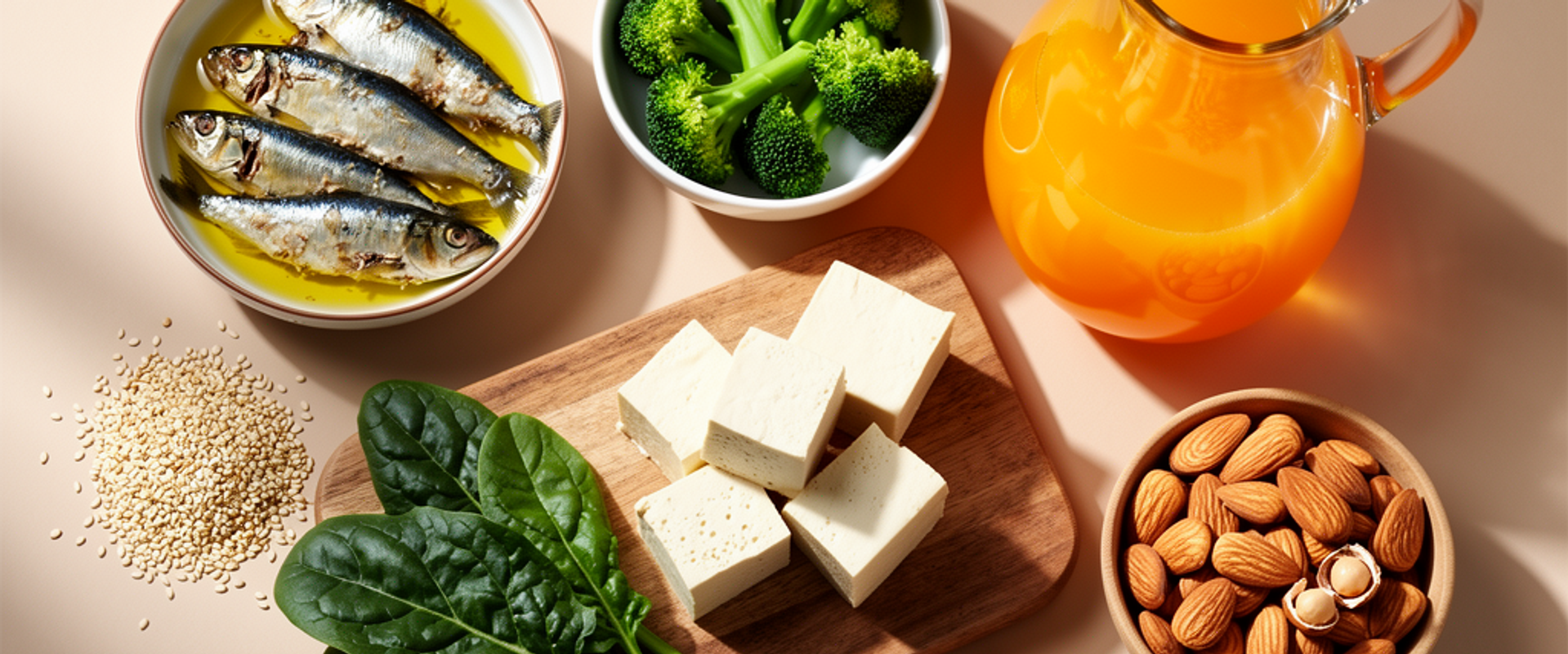
If you want a true heavyweight champion of plant-based calcium, look no further than tofu. But there is a catch: you must read the ingredient list. Tofu is made by coagulating soy milk, and many brands use calcium sulfate to do this.
- The Numbers: Just a half-cup (about 4 ounces) of firm, calcium-set tofu can provide between 250 mg and 430 mg of calcium.
- How to use it: Crumble it with turmeric and nutritional yeast for a morning tofu scramble, or cube it and toss it into a vegetable stir-fry.
2. The Low-Oxalate Leafy Greens
As mentioned, certain greens are calcium superstars because their calcium is so easily absorbed by your body.
- The Numbers: One cup of cooked collard greens offers about 268 mg of calcium. One cup of cooked bok choy provides about 160 mg, and a cup of cooked kale offers around 90 mg.
- How to use it: Sauté collard greens with a little olive oil and garlic. Add chopped bok choy to your soups in the last five minutes of cooking.
3. Sardines and Canned Salmon
If you eat fish, canned bone-in fish is one of the most efficient ways to support your own bones. The canning process softens the tiny fish bones, making them completely edible and unnoticeable, while providing a massive calcium boost alongside heart-healthy omega-3 fatty acids.
- The Numbers: A standard 3.75-ounce tin of sardines yields about 350 mg of calcium. A half-cup of canned salmon (with bones) provides about 240 mg.
- How to use it: Mash sardines onto whole-grain toast with a squeeze of fresh lemon juice, Dijon mustard, and cracked black pepper. Use canned salmon to make quick, pan-fried salmon patties.
4. Beans and Lentils
Legumes are foundational to longevity diets around the world, and their mineral content is a big reason why.
- The Numbers: One cup of cooked white beans (like cannellini or navy beans) provides roughly 160 mg of calcium. One cup of prepared edamame (young soybeans) offers about 100 mg.
- How to use it: Blend white beans into a creamy, dairy-free dip with garlic and rosemary, or toss them into salads to add satisfying texture and protein.
5. Nuts and Seeds
Don't underestimate the power of tiny packages. Seeds and nuts are incredibly dense sources of minerals.
- The Numbers: Just two tablespoons of chia seeds pack an impressive 179 mg of calcium. Almonds are the highest-calcium nut, offering about 76 mg per ounce (about 23 nuts). Tahini (sesame seed paste) provides about 64 mg per tablespoon.
- How to use it: Make chia pudding by soaking the seeds in plant milk overnight. Drizzle tahini over roasted sweet potatoes or use it as a base for salad dressings.
6. Fortified Foods (With a Crucial Caveat)
Food manufacturers often add calcium to products like plant milks (almond, oat, soy) and orange juice.
- The Numbers: One cup of fortified plant milk usually matches dairy milk, offering about 300 mg of calcium.
- The Caveat: The added calcium in plant milks is heavy and tends to sink to the bottom of the carton. If you just pour it into your coffee, the calcium stays trapped at the bottom. You must shake the carton vigorously every single time you use it to distribute the minerals.
Calcium’s Support Crew: Vitamins D and K
Nutrition doesn't happen in a vacuum. Nutrients work as a team, and calcium relies heavily on two specific partners to do its job properly: Vitamin D and Vitamin K.
Vitamin D: The Key to the Door
You can eat all the calcium in the world, but without Vitamin D, your body cannot absorb it from your intestines into your bloodstream. Vitamin D acts as the key that unlocks the door for calcium. Because very few foods naturally contain Vitamin D (fatty fish and UV-exposed mushrooms are exceptions), most of us rely on sunshine and supplements. If you live in a northern latitude or spend most of your time indoors, ask your doctor to check your Vitamin D levels. A supplement is highly recommended for most adults to ensure calcium absorption.
Vitamin K: The Traffic Cop
Once Vitamin D gets calcium into your bloodstream, Vitamin K acts like a traffic cop. It directs the calcium into your bones and teeth, and helps keep it out of your arteries and soft tissues. Fortunately, Vitamin K is abundant in the exact same leafy greens that provide calcium (like kale, collards, and broccoli). By eating a variety of greens, you are naturally getting the calcium and the Vitamin K needed to guide it to the right place.
Putting It Together: A Day of Dairy-Free Bone Building
Knowing the foods is one thing; putting them into practice without stress is another. Here is what a delicious, dairy-free day of bone-building might look like. Notice how we spread the calcium out—your body can only absorb about 500 mg of calcium at a time, so eating it throughout the day is much more effective than eating it all at once.
Breakfast: The Power Parfait
- 3/4 cup of plain, unsweetened almond milk yogurt (check for fortification).
- 2 tablespoons of chia seeds mixed in.
- Topped with a handful of fresh berries and 1 ounce of slivered almonds.
- Calcium estimate: ~350 mg
Lunch: The Mediterranean White Bean Salad
- 1 cup of cannellini beans tossed with cherry tomatoes, cucumbers, and olives.
- Served over 2 cups of fresh, massaged kale.
- Dressed with a generous drizzle of lemon-tahini dressing.
- Calcium estimate: ~300 mg
Afternoon Snack: Edamame Crunch
- 1 cup of steamed edamame in the pods, sprinkled with flaky sea salt.
- Calcium estimate: ~100 mg
Dinner: Calcium-Set Tofu Stir-Fry
- 4 ounces of firm, calcium-set tofu, crisped in a pan.
- 1 cup of chopped bok choy and 1 cup of broccoli florets.
- Served over brown rice with a savory soy-ginger sauce.
- Calcium estimate: ~450 mg
Total Daily Calcium: ~1,200 mg. You have hit your daily goal effortlessly, deliciously, and entirely without dairy.
Your Practical Takeaway
Building strong bones doesn't require a rigid diet, forced glasses of milk, or overwhelming anxiety about every bite you take. Your bones are resilient, and they thrive on consistency, not perfection.
If you want to start improving your bone health today, pick just one new habit from this guide. Swap your standard salad greens for kale or spinach for bok choy. Start shaking your almond milk carton before you pour it. Throw a can of white beans into your next soup.
By gently widening your culinary horizons to include these plant-powered and sea-sourced foods, you are doing far more than just replacing dairy. You are flooding your body with fiber, antioxidants, healthy fats, and the essential minerals needed to keep you standing strong, active, and vibrant for decades to come.