Understanding Macros: The Complete Beginner's Guide to Protein, Carbs, and Fat
Confused by nutrition advice? Discover what protein, carbs, and fats actually do for your body, and learn a science-backed, practical way to build balanced meals without obsessive tracking or food guilt.

If you have ever tried to improve your eating habits, you have likely been bombarded by a dizzying array of advice. One day, carbohydrates are the enemy; the next, a high-fat diet is the only way to thrive. Amidst the noise of wellness influencers and fad diets, it is incredibly easy to feel overwhelmed and disconnected from what your body actually needs.
Let us take a deep breath and step back from the chaos. Nutrition does not have to be a math equation, nor should it involve guilt, shame, or restrictive rules. At its core, human nutrition comes down to understanding macronutrients—affectionately known as "macros."
Macros are simply the categories of nutrients that provide your body with energy (calories) and the structural building blocks it needs to function, heal, and thrive. There are three primary macronutrients: protein, carbohydrates, and dietary fat.
In this guide, we are going to break down the science of what each macro does, how much you actually need, and how to balance them on your plate without downloading a tracking app or weighing every almond you eat.
Protein: The Builder and Repairer
When most people hear "protein," they picture bodybuilders chugging shakes. But protein is not just for building biceps; it is the fundamental building block of human life.
Every cell in your body contains protein. It is required to repair damaged tissues, build new cells, synthesize hormones (like insulin), and create enzymes that digest your food. Furthermore, protein plays a massive role in your immune system, as antibodies are made of specific protein structures.
From a daily eating perspective, protein is your best friend for satiety—the feeling of comfortable fullness after a meal. Research published in the American Journal of Clinical Nutrition consistently shows that protein is the most satiating macronutrient. It reduces levels of the hunger hormone ghrelin while boosting peptide YY, a hormone that tells your brain you are full.
How Much Protein Do You Need?
The Recommended Dietary Allowance (RDA) for protein is 0.8 grams per kilogram of body weight, but nutrition scientists widely agree this is merely the bare minimum to prevent a deficiency. For optimal health, muscle maintenance, and healthy aging, a more practical target is between 1.2 to 1.6 grams per kilogram of body weight (or roughly 0.6 to 0.75 grams per pound).
If you do not want to do the math, simply aim to include a substantial source of protein at every meal.
Practical Protein Sources and Portions
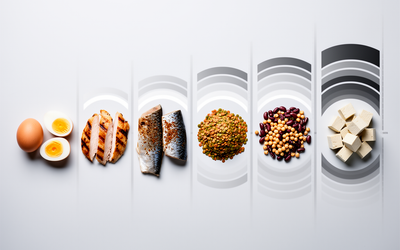
A visual way to measure a standard serving of protein is by using the palm of your hand (thickness and diameter). One "palm" equates to roughly 20 to 30 grams of protein.
- Chicken or Turkey Breast: 1 palm-sized piece (approx. 4 oz) = ~25-30g protein
- Greek Yogurt or Cottage Cheese: 1 cup = ~20-25g protein
- Eggs: 3 large eggs = ~18g protein
- Firm Tofu: 1/2 block (approx. 5 oz) = ~22g protein
- Edamame: 1 cup cooked = ~17g protein
- Lentils: 1 cup cooked = ~18g protein (Note: Lentils also contain carbohydrates!)
Carbohydrates: The Energizer
Carbohydrates have been unfairly demonized over the last two decades. Let us set the record straight: carbs are not inherently "bad," nor do they automatically turn into body fat. In fact, carbohydrates are your body's preferred and most efficient source of energy.
When you eat carbohydrates, your digestive system breaks them down into glucose (blood sugar). This glucose travels through your bloodstream, fueling everything from your high-intensity workouts to the beating of your heart. Your brain alone consumes about 120 grams of glucose every single day just to keep you thinking clearly, regulating your mood, and storing memories.
Not all carbs act the same way in the body, however. We can generally divide them into two categories based on their fiber content:
- Complex Carbohydrates: These are packed with dietary fiber, vitamins, and minerals. Because fiber cannot be broken down for energy, it slows digestion, preventing rapid spikes in blood sugar and keeping your energy levels stable.
- Simple Carbohydrates: These have been stripped of fiber (like white bread, pastries, or sugary drinks). They digest very quickly, offering a fast burst of energy followed by a crash.
While there is room for all foods in a balanced diet (yes, you can eat the cake at a birthday party), prioritizing complex, fiber-rich carbs for your daily meals will keep your energy steady and your gut microbiome happy.
How Much Carbohydrate Do You Need?
Carbohydrate needs are highly individualized and depend largely on your activity level. A marathon runner needs significantly more carbs than someone who works a desk job and takes light evening walks. Generally, carbohydrates should make up about 40% to 50% of your daily intake.
Practical Carbohydrate Sources and Portions
A great visual measure for a serving of dense carbohydrates is one cupped handful.
- Oats (Rolled or Steel Cut): 1/2 cup dry (cooks to 1 cup) = ~27g carbs, 4g fiber
- Sweet Potato: 1 medium potato = ~26g carbs, 4g fiber
- Quinoa or Brown Rice: 1 cupped hand (approx. 1/2 cup cooked) = ~20g carbs, 3g fiber
- Berries (Raspberries, Blackberries): 1 cup = ~15g carbs, 8g fiber
- Apples: 1 medium apple = ~25g carbs, 4g fiber
Dietary Fat: The Protector and Absorber
If you grew up in the 1980s or 90s, you might still carry a lingering fear of dietary fat. The "low-fat" era taught us that eating fat makes us fat. Science has since proven this entirely false.
Dietary fat is an absolute necessity for human health. It provides a dense source of long-lasting energy and is the structural component of your cell membranes. Fat is also crucial for hormone production, including reproductive hormones like estrogen and testosterone.
Furthermore, certain essential vitamins—specifically Vitamins A, D, E, and K—are "fat-soluble." This means your body literally cannot absorb them from your food unless they are consumed alongside dietary fat. Eating a dry salad of spinach and carrots without any dressing means you are missing out on a large percentage of the nutrients in those vegetables!
Like carbs, fats come in different forms:
- Unsaturated Fats: Found in plants and fish (olive oil, avocados, salmon, nuts). These are highly beneficial for heart health and reducing inflammation.
- Saturated Fats: Found mainly in animal products (butter, cheese, fatty meats) and tropical oils (coconut oil). These are fine in moderation but should not be the primary source of fat in your diet.
How Much Fat Do You Need?
Fats are more calorie-dense than proteins and carbs (9 calories per gram compared to 4 calories per gram). Therefore, you need a smaller physical volume of them.
Practical Fat Sources and Portions
A visual measure for dietary fat is roughly the size of your entire thumb, or a tablespoon.
- Extra Virgin Olive Oil: 1 thumb (1 tbsp) = 14g fat
- Avocado: 1/4 to 1/3 of a medium avocado = ~7-10g fat
- Almonds or Walnuts: 1 small, closed handful (approx. 1 oz) = ~14g fat
- Peanut or Almond Butter: 1 thumb (1 tbsp) = ~8g fat
- Chia Seeds or Flaxseeds: 2 tablespoons = ~8g fat
How to Balance Your Macros Without Obsessive Tracking
You do not need to weigh your food to the gram or log every bite into an app to eat a well-balanced diet. In fact, for many people, obsessive tracking leads to burnout and a negative relationship with food.
Instead, use the Plate Method. This is a highly effective, visual way to ensure you are getting a great balance of macros at almost every meal.
Imagine a standard 9-inch dinner plate:
- Fill Half (1/2) the Plate with Color: This is where your non-starchy vegetables go (spinach, broccoli, bell peppers, zucchini, carrots). These provide vital micronutrients, water, and fiber with very few calories.
- Fill One-Quarter (1/4) of the Plate with Protein: Add your palm-sized portion of chicken, tofu, fish, eggs, or Greek yogurt.
- Fill One-Quarter (1/4) of the Plate with Carbohydrates: Add your cupped handful of complex carbs like sweet potatoes, quinoa, beans, or whole-grain pasta.
- Add a Thumb of Fat: Cook your veggies in olive oil, top your salad with a vinaigrette, sprinkle nuts on your oatmeal, or add a slice of avocado to your plate.
By building your meals this way, you naturally create a balance of muscle-supporting protein, energy-sustaining carbs, hormone-protecting fats, and gut-friendly fiber.
Practical Meal Ideas and Easy Swaps
Knowing the science is great, but applying it to a busy Tuesday evening is what actually matters. Here are some examples of macro-balanced meals you can put together easily, along with simple food swaps to boost your nutrition.
Breakfast: The Sustained Energy Parfait
Many standard breakfasts (like cereal or a bagel with cream cheese) are high in simple carbs and low in protein, leading to a mid-morning crash.
- The Meal: 1 cup of plain Greek yogurt (Protein), topped with 1/2 cup of mixed berries (Carbs/Fiber), 1 tablespoon of chia seeds (Fat/Fiber), and a drizzle of honey (Carbs).
- Why it works: The thick Greek yogurt provides ~20g of protein, while the chia seeds and berries provide a massive dose of fiber and healthy fats to keep you full until lunch.
Lunch: The 5-Minute Power Bowl
Skip the sad desk salad that leaves you starving by 2:00 PM.
- The Meal: 2 cups of mixed greens (Color/Micros), topped with 1/2 cup canned chickpeas (Carbs/Protein), 1 palm-sized pouch of wild-caught tuna or baked tofu (Protein), 1/4 sliced avocado (Fat), and dressed with 1 tbsp olive oil and lemon juice (Fat).
- Why it works: You are getting high-quality lean protein, complex carbs from the chickpeas, and heart-healthy fats from the olive oil and avocado to absorb the fat-soluble vitamins in the greens.
Dinner: Sheet Pan Simplicity
- The Meal: 1 palm-sized filet of salmon (Protein/Fat), 1 cupped handful of diced sweet potatoes (Carbs), and a generous portion of asparagus spears (Color/Micros). Toss the potatoes and asparagus in 1 tbsp of olive oil (Fat) and roast at 400°F for 20 minutes.
- Why it works: Salmon is a "two-for-one" food, providing both high-quality protein and essential Omega-3 fatty acids. The sweet potatoes offer sustained energy, and cooking on a single pan means minimal cleanup.
Smart, Simple Macro Swaps
If you want to tweak your current diet without overhauling it, try these simple swaps to improve your macro balance:
- Swap sour cream for plain Greek yogurt: You get the exact same creamy texture and tang for tacos or baked potatoes, but with a massive boost in protein.
- Swap white pasta for chickpea or lentil pasta: You still get the comforting pasta experience, but with double the protein and triple the fiber.
- Swap a mid-day candy bar for an apple and a handful of almonds: You satisfy the craving for something sweet and crunchy, but replace simple sugars with complex carbs, fiber, and healthy fats.
The Practical Takeaway
Understanding macros is not about achieving mathematical perfection; it is about recognizing that food is a tool that supports the life you want to live.
Protein builds and repairs. Carbohydrates energize and sustain. Fats protect and absorb.
You do not need to be perfect to be healthy. By aiming to include a source of protein, a complex carbohydrate, a healthy fat, and a pop of color at most meals, you will naturally provide your body with the fuel it needs. Eat foods you genuinely enjoy, listen to your body's hunger cues, and remember that consistency will always beat perfection.