Understanding Macros: The Complete Beginner's Guide to Protein, Carbs, and Fats
Demystify nutrition with this jargon-free guide to macronutrients. Learn what protein, carbs, and fats actually do, and how to balance your plate for energy and health without obsessive tracking.

The Overwhelm of Modern Nutrition
If you have ever felt completely paralyzed in the grocery store aisle, wondering if you should be buying low-fat yogurt, high-protein cereal, or keto-friendly bread, you are not alone. We live in an era of nutritional information overload. One day, carbohydrates are the enemy; the next day, a new documentary claims that fat is the culprit behind all our health woes.
This constant whiplash is exhausting, and worse, it often leads to disordered eating habits or a complete abandonment of healthy habits. But here is the good news: beneath the trendy diets and flashy marketing buzzwords, human nutrition is actually built on a very stable, scientifically proven foundation.
That foundation is made up of macronutrients—commonly known as "macros."
Understanding macros is like learning the alphabet of nutrition. Once you know how the letters work, you can write any sentence you want. You do not need a restrictive meal plan, and you certainly do not need to weigh every single almond you eat. You just need to understand what protein, carbohydrates, and fats do in your body, and how to combine them to feel energized, satisfied, and strong.
What Actually Are Macros?
Macronutrients are the nutrients your body needs in large amounts (hence "macro") to survive, thrive, and produce energy. There are three primary macronutrients, and each provides a specific amount of energy, measured in calories:
- Protein: 4 calories per gram
- Carbohydrates: 4 calories per gram
- Fats: 9 calories per gram
(Note: Alcohol is technically a fourth macronutrient providing 7 calories per gram, but since it isn't essential for survival or health, we leave it out of the core three.)
Every food you eat is made up of one, two, or a combination of all three of these macros. An apple is mostly carbohydrates. A piece of chicken breast is mostly protein. Olive oil is entirely fat. A slice of pizza is a combination of all three.
No single macro is "good" or "bad." They are all biological necessities. Let's break down what each one does.
Protein: The Builder and Repairer
What It Does
If your body is a house, protein is the bricks, the wood, and the nails. When you eat protein, your digestive system breaks it down into smaller building blocks called amino acids. Your body uses these amino acids to build and repair muscle tissue, grow healthy hair and nails, create enzymes for digestion, and produce essential hormones.
The Science of Satiety
From a daily, practical standpoint, protein is your best friend for hunger management. Research consistently shows that protein is the most satiating macronutrient. It triggers the release of fullness hormones like peptide YY and GLP-1 while reducing levels of the hunger hormone ghrelin. Furthermore, protein has a high "Thermic Effect of Food" (TEF). This means your body actually burns more energy digesting protein (up to 20-30% of its usable calories) compared to digesting fats or carbs.
How Much Do You Need?
The standard dietary recommendation of 0.8 grams per kilogram of body weight is actually the bare minimum needed to prevent a deficiency, not the optimal amount for thriving. For most active adults looking to maintain muscle and feel full, aiming for 1.2 to 1.6 grams per kilogram of body weight (about 0.55 to 0.75 grams per pound) is highly beneficial.
Best Sources and Portion Sizes
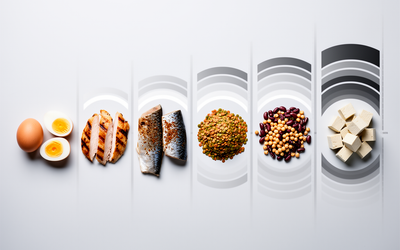
- Animal Sources: Chicken breast, turkey, salmon, tuna, eggs, Greek yogurt, cottage cheese.
- Plant-Based Sources: Tofu, tempeh, edamame, lentils, chickpeas, nutritional yeast, hemp seeds.
- The Visual Portion Guide: Without using a food scale, a standard portion of protein is roughly the size and thickness of your palm. This usually equates to about 20-30 grams of protein. Aim for one to two palm-sized portions per meal.
Carbohydrates: The Body's Preferred Fuel
What They Do
Despite what low-carb zealots might claim, carbohydrates are not inherently fattening. Carbs are your body's absolute favorite source of fast, efficient energy. When you eat carbohydrates, your body breaks them down into glucose (blood sugar). This glucose fuels everything from your brain's ability to focus on an email to your muscles' ability to lift a heavy box or go for a jog.
The Magic of Fiber
Not all carbs are created equal. The most crucial distinction to understand is the presence of fiber. Fiber is a type of carbohydrate that your body cannot digest. Instead of providing calories, it passes through your system, adding bulk to your stool, regulating blood sugar spikes, and—most importantly—feeding the beneficial bacteria in your gut microbiome. A healthy gut microbiome is linked to everything from a stronger immune system to better mental health.
How Much Do You Need?
Carbohydrate needs vary wildly depending on your activity level. A marathon runner needs drastically more carbs than someone who works a sedentary desk job. For generally healthy people, carbs should make up about 40-50% of your daily intake. The focus should be on quality rather than obsessing over the exact quantity.
Best Sources and Portion Sizes
- Complex Carbs (High Fiber, Slow Energy): Oats, quinoa, brown rice, sweet potatoes, black beans, apples, berries, broccoli, spinach.
- Simple Carbs (Low Fiber, Fast Energy): White rice, pasta, bread, fruit juice, honey. (These are great right before a workout for quick energy, but less ideal for sitting at a desk because they can cause a blood sugar crash).
- The Visual Portion Guide: A standard portion of complex carbohydrates is roughly the size of your cupped hand. Aim for one cupped handful per meal.
Dietary Fats: The Protector and Energizer
What They Do
For decades, fat was unfairly demonized. In reality, dietary fat is essential for life. Fats provide a dense, slow-burning source of energy. They act as a protective cushion for your vital organs and help maintain your core body temperature. Crucially, your body absolutely requires dietary fat to absorb vitamins A, D, E, and K.
The Science of Hormones and Brain Health
Your brain is nearly 60% fat! Essential fatty acids, particularly Omega-3s, are critical for cognitive function and reducing inflammation. Furthermore, fats are the foundational building blocks for your body's hormones, including testosterone and estrogen. A diet too low in fat can lead to hormone imbalances, chronic fatigue, and dry skin.
How Much Do You Need?
Fats are calorie-dense (9 calories per gram compared to 4 for carbs and protein), so a little goes a long way. General guidelines suggest fats should make up about 25-35% of your daily intake. Focus on unsaturated fats (found in plants and fish) while being mindful of saturated fats (found in fatty meats and butter).
Best Sources and Portion Sizes
- Monounsaturated & Polyunsaturated (The "Heart-Healthy" Fats): Avocados, extra virgin olive oil, almonds, walnuts, chia seeds, flaxseeds, salmon, mackerel.
- Saturated Fats (Eat in Moderation): Butter, cheese, coconut oil, fatty cuts of beef or pork.
- The Visual Portion Guide: A standard portion of dense fats (like oil, butter, or peanut butter) is roughly the size of your thumb. For whole-food fats like nuts or avocado, a small handful or a quarter of an avocado is a great target. Aim for one to two thumb-sized portions per meal.
How to Balance Your Macros Without Obsessive Tracking
Tracking every gram of food in an app like MyFitnessPal can be a great educational tool for a few weeks, but for many, it quickly becomes tedious and can trigger obsessive behaviors. You do not need a spreadsheet to eat well.
Instead, use The Plate Method. This is a highly visual, stress-free way to ensure you are getting a balance of all three macros at every meal:
- Half your plate: Fill 50% of your plate with colorful, non-starchy vegetables (spinach, peppers, broccoli, carrots). This provides volume, micronutrients, and fiber (carbs) for very few calories.
- A quarter of your plate: Add a palm-sized portion of lean protein (chicken, tofu, fish).
- A quarter of your plate: Add a cupped handful of complex, starchy carbohydrates (sweet potato, quinoa, beans).
- The finishing touch: Incorporate a thumb-sized portion of healthy fats (a drizzle of olive oil over the veggies, a sprinkle of feta cheese, or some sliced avocado).
When you build meals this way, you naturally regulate your blood sugar, maximize your nutrient intake, and stay full for hours.
Bring It to the Table: Macro-Balanced Meal Ideas
Theory is great, but what does this look like on a Tuesday night when you are tired and hungry? Here are some simple, macro-balanced meal ideas and easy swaps you can use today.
Breakfast: The Energizer
Skip the bare-toast-and-coffee routine, which is all carbs and caffeine leading to a 10:00 AM crash.
- Meal Idea: A bowl of rolled oats (Carbs) topped with a scoop of protein powder or a side of Greek yogurt (Protein), and a tablespoon of chia seeds or walnuts (Fats/Fiber). Add some blueberries for extra micronutrients.
- Easy Swap: If you love cereal, swap your sugary, low-fiber cereal for a high-fiber bran or oat cereal, and use ultra-filtered milk (like Fairlife) or soy milk instead of almond milk to double the protein content.
Lunch: The Midday Sustainer
Avoid the heavy, carb-only pasta lunches that make you want to sleep under your desk at 2:00 PM.
- Meal Idea: A large "kitchen sink" salad. Start with a massive handful of mixed greens (Veggies), add a palm-sized portion of grilled chicken or baked tempeh (Protein), a half-cup of roasted chickpeas or quinoa (Carbs), and dress it with a tablespoon of olive oil and lemon juice (Fat).
- Easy Swap: If you are grabbing a sandwich, swap standard white bread for a hearty whole-grain sourdough (better for the gut), and ask for double the turkey to hit your protein needs.
Dinner: The Recovery Meal
- Meal Idea: A baked salmon fillet (Protein and healthy Omega-3 Fats), served alongside a roasted sweet potato (Carb) and a large portion of asparagus roasted with a touch of olive oil and garlic (Veggies/Fat).
- Easy Swap: If you are having a taco night, swap standard sour cream for plain, non-fat Greek yogurt. It tastes nearly identical, but drastically increases the protein content while lowering the saturated fat.
Smart Snacks
If you get hungry between meals, try to pair a Carb with a Protein or a Fat. Eating carbs alone (like just eating an apple or a handful of crackers) spikes blood sugar quickly. Pairing it slows digestion.
- An apple (Carb) with a tablespoon of peanut butter (Fat/Protein).
- Carrot sticks (Carb) with a quarter cup of hummus (Fat/Protein).
- A half-cup of cottage cheese (Protein) with pineapple chunks (Carb).
The Takeaway: Consistency Over Perfection
Nutrition doesn't have to be a math equation, and it certainly shouldn't be a source of guilt. By understanding the simple roles of protein (building and repairing), carbohydrates (fueling), and fats (protecting and balancing), you take the power back from fad diets.
Your goal isn't to hit perfect macro numbers every single day. Your goal is to consistently provide your body with the diverse building blocks it needs to function at its best. Start by looking at your next meal and simply asking: "Where is my protein? Where are my colorful carbs? Where is my healthy fat?"
Make small adjustments, listen to your body's hunger and fullness cues, and remember that eating well is a lifelong practice, not a 30-day challenge.